Artemis II astronauts say landing on the Moon is "absolutely doable" soon
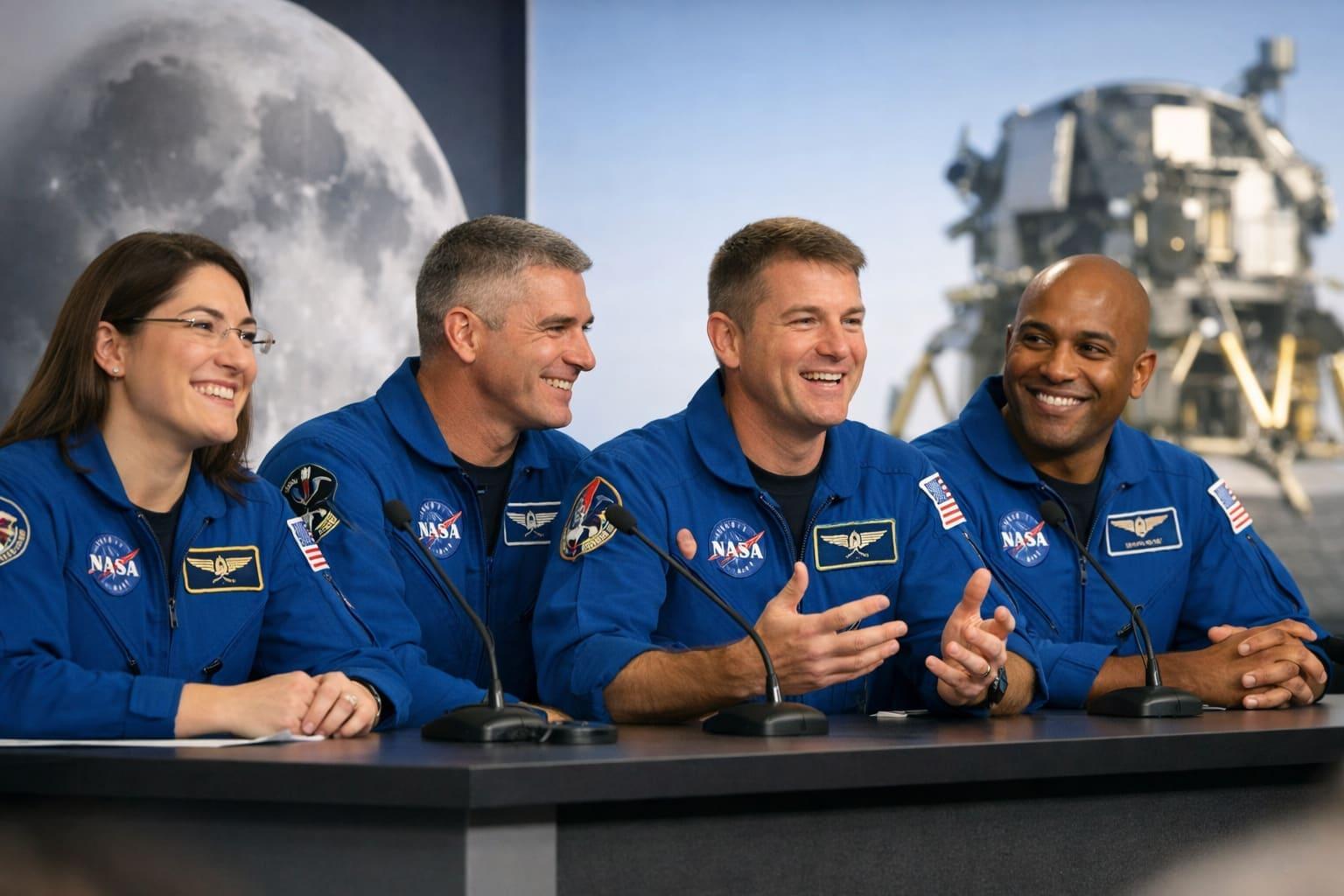
The Artemis II crew expressed confidence in landing on the Moon, stating it is 'absolutely doable' following their successful mission. The astronauts, energized by NASA's plans for a lunar base, highlighted their readiness for future lunar operations. Their mission marked a significant step in NASA's Artemis program, aiming for sustained human presence on the Moon.
At a glance
Location and topic
Region
United States
Tag cluster
Trend count
+15 related briefs
What happened
The Artemis II crew, consisting of astronauts Christina Koch, Jeremy Hansen, Reid Wiseman, and Victor Glover, recently returned to Earth after a groundbreaking mission that tested NASA's capabilities for deep space travel. Their journey, which concluded on April 10, 2026, marked the first human flight into deep space in over fifty years, a significant milestone in NASA's Artemis program aimed at returning humans to the Moon. During a news conference held shortly after their return, the astronauts expressed their eagerness to land on the Moon, with Wiseman stating, "If you had given us the keys to the lander, we would have taken it down and landed on the Moon." This enthusiasm was fueled by NASA Administrator Jared Isaacman's announcement just a week prior, which shifted the agency's focus from developing a lunar space station to establishing a permanent lunar base. Koch emphasized that the crew felt energized by this new direction, stating, "We were very much lifted up by the notion that we would get to contribute to astronauts doing this all over again, much sooner than we thought." The astronauts also reflected on their training, noting that they were well-prepared to handle any challenges that arose during the mission. Koch remarked, "This mission taught me that the unknown is way scarier than the known," highlighting the importance of teamwork and preparation. Hansen added that as NASA ventures further into deep space, astronauts must be ready to embrace risks, stating, "We have to be willing to accept a little more risk than we were willing to accept in the past." Overall, the mission was deemed a resounding success, showcasing the astronauts' readiness for future lunar operations and the feasibility of landing on the Moon soon.
Why this matters
The Artemis II mission is a pivotal step towards establishing a sustainable human presence on the Moon, which is a key objective of NASA's Artemis program. The successful completion of this mission not only demonstrates the capabilities of the astronauts but also highlights significant advancements in space technology and mission planning. The crew's confidence in the feasibility of lunar landings reflects a renewed commitment to exploration and innovation in space, which is essential for future missions to Mars and beyond. The shift in focus towards a lunar base indicates a long-term vision for human activities on the Moon, emphasizing the importance of international collaboration and technological development in achieving these ambitious goals. As the Artemis program progresses, it will serve as a foundation for future exploration efforts, inspiring new generations of scientists, engineers, and explorers.
What changed
The announcement of a lunar base development represents a significant shift in NASA's approach to lunar exploration. Previously, the agency had focused on creating a lunar space station, but the new direction emphasizes the establishment of a permanent base on the Moon. This change indicates a long-term vision for human activities on the lunar surface, which will facilitate sustained exploration and research. The successful Artemis II mission has also demonstrated the effectiveness of the astronauts' training and teamwork, paving the way for future missions. The crew's experiences and insights gained during this mission will inform the planning and execution of subsequent Artemis missions, ensuring that NASA is well-prepared for the challenges of establishing a lunar base and conducting further exploration. This evolution in strategy reflects a broader understanding of the complexities involved in deep space missions and the need for adaptability and resilience in the face of unforeseen challenges.
Bigger picture
The Artemis II mission is a crucial component of NASA's broader Artemis program, which aims to return humans to the Moon and establish a sustainable presence there. This initiative is not only significant for lunar exploration but also serves as a stepping stone for future missions to Mars and beyond. By developing a lunar base, NASA intends to gain valuable experience in living and working on another celestial body, which will be essential for the challenges of long-duration space travel. The commitment to a lunar base reflects a strategic shift in space exploration, emphasizing the importance of international collaboration and technological innovation. As interest in space exploration continues to grow, the success of Artemis II could inspire new generations of scientists, engineers, and explorers, fostering a renewed enthusiasm for STEM fields. Additionally, the Artemis program has the potential to strengthen partnerships with other space agencies and private companies, creating a collaborative environment that could lead to groundbreaking advancements in space technology. The lessons learned from the Artemis missions will be instrumental in shaping the future of human space exploration, ensuring that humanity is well-prepared for the next frontier.
Looking Towards the Future
As NASA continues to develop plans for the lunar base and future Artemis missions, it will be important to monitor upcoming announcements regarding the timeline and specific objectives of these initiatives. The progress of the Artemis program will play a crucial role in shaping the future of human space exploration and international collaboration in space. Additionally, keep an eye on the involvement of international partners and private companies in the Artemis program, as their contributions could enhance the capabilities and reach of NASA's lunar exploration efforts. The next steps in the Artemis program will be critical in determining how quickly and effectively NASA can establish a sustainable presence on the Moon.
Story timeline
Artemis II Launch
The Artemis II mission launched, marking the first human flight into deep space in over fifty years.
Crew Returns to Earth
The Artemis II crew successfully returned to Earth after completing their mission.
NASA Announces Lunar Base Plans
NASA announced a shift in focus from a lunar space station to a lunar base development.
Sources behind this brief
2 total
Ars Technica
Original article detailing the Artemis II mission and astronaut statements.
Spaceflight News API
Corroborating source on the Artemis II crew's confidence in lunar landings.
Further reading on this topic
3 links
Context zone
United States
Context zone
United States
On this map
Artemis II astronauts say landing on the Moon is "absolutely doable" soon
United States
World leaders react to White House press dinner shooting: no place for violence in democracy
Washington, United States
Following a shooting incident at the White House Correspondents' Dinner, global leaders condemned the violence and emphasized the importance of safety in democratic events. Many praised the quick response of security forces, highlighting the need for vigilance in protecting public gatherings. The incident has sparked discussions about security measures at such high-profile events.
Smart Probes Illuminate Proteins in Living Cells with Unprecedented Clarity
United States
Researchers at Albert Einstein College of Medicine and the Salk Institute have developed a new imaging technology using engineered fluorescent nanobodies. This innovation allows for precise visualization of proteins inside living cells, significantly reducing background noise and enhancing clarity. The VIS-Fb probes can track multiple proteins simultaneously, providing insights into cellular processes and disease progression.
Obama and Mamdani Sing with Children in New York
New York, United States
Former President Barack Obama and New York City Mayor Zohran Mamdani met at a Bronx child care center, where they sang with preschoolers. The event highlighted their shared vision for early childhood education and community engagement. Obama humorously noted the generational gap while interacting with the children.
Blue Origin reuses New Glenn booster for the first time in Florida launch
Cape Canaveral, United States
Blue Origin successfully reused a New Glenn rocket booster during a launch from Florida, marking a significant milestone in its space operations. This achievement demonstrates the company's capability to refurbish and recover rocket components, enhancing its competitiveness against SpaceX. The booster, which underwent extensive modifications, successfully landed on a floating platform after launching a communications satellite.
Protein-Engineering Breakthrough Generates Over 10M Data Points in Three Days
United States
Researchers at Rice University have developed a method called Sequence Display that generates over 10 million data points for protein activity in just three days. This breakthrough enables the training of AI models to optimize protein functions, addressing a significant bottleneck in AI-guided protein engineering. The approach combines activity-based barcoding with next-generation sequencing, allowing for efficient identification of beneficial mutations in proteins.
Trump Deletes AI Image of Himself as Jesus-Like Figure Following Backlash
United States
Donald Trump faced significant backlash after posting an AI-generated image depicting himself as a Christ-like figure. The post, which was shared on Truth Social, drew criticism even from his conservative Christian supporters, leading to its deletion shortly after. This incident highlights the ongoing tensions between political figures and religious sentiments.