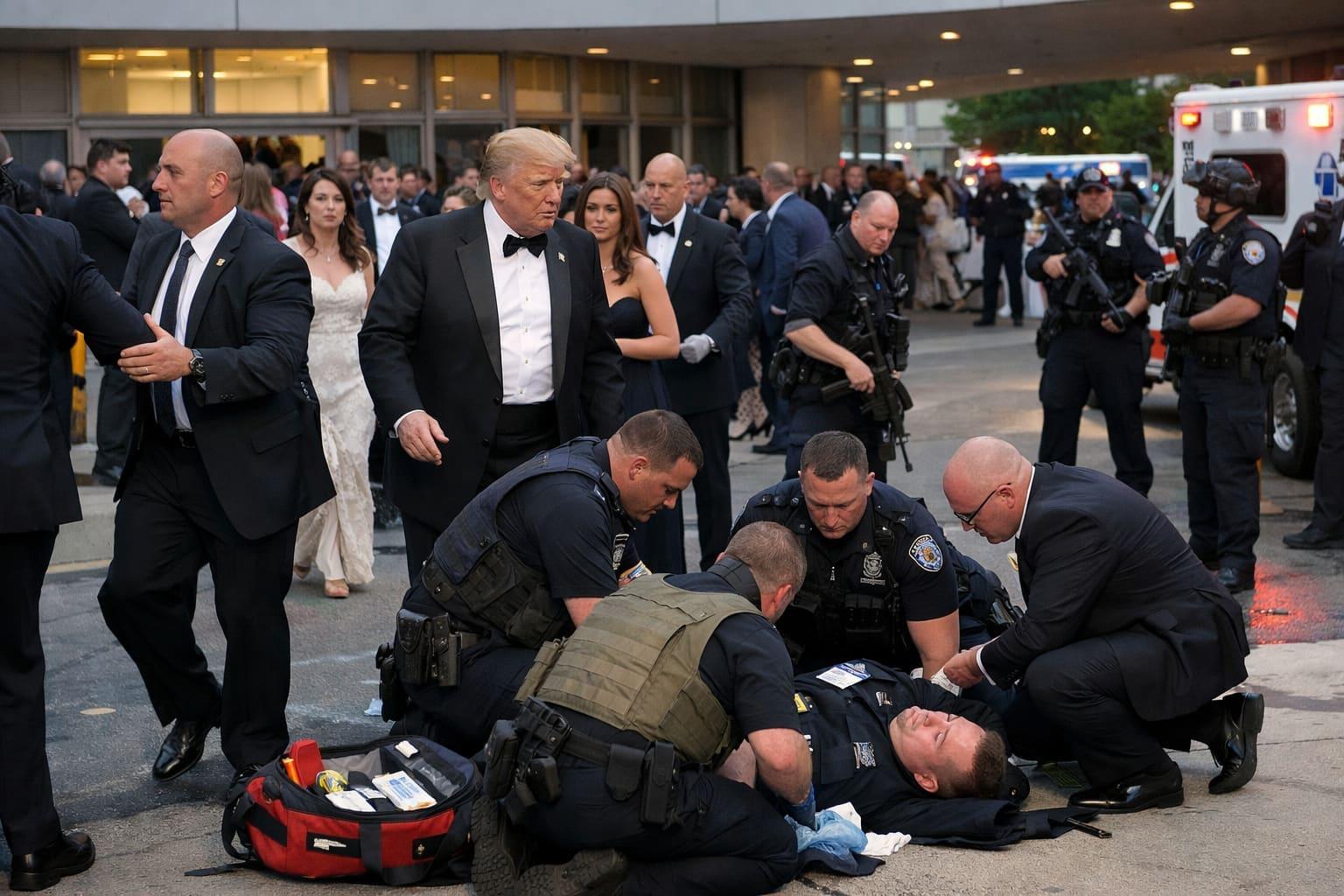
World leaders react to White House press dinner shooting: no place for violence in democracy
Following a shooting incident at the White House Correspondents' Dinner, global leaders condemned the violence and emphasized the importance of safety in democratic events. Many praised the quick response of security forces, highlighting the need for vigilance in protecting public gatherings. The incident has sparked discussions about security measures at such high-profile events.
The story
On April 25, 2026, an alarming incident unfolded at the White House Correspondents' Dinner, held at the Washington Hilton. An armed individual, later identified as a suspect with a history of mental health issues, attempted to breach security, resulting in a chaotic scene that left one police officer injured. The assailant was quickly subdued by law enforcement, and the officer, who was wearing a bulletproof vest, was reported to be in good condition following the incident. President Donald Trump, who was present at the event, expressed gratitude for the swift actions of the Secret Service and local police, emphasizing their role in ensuring the safety of attendees. In the aftermath, world leaders reacted with shock and condemnation, underscoring the message that violence has no place in a democracy. Many took to social media to express their support for the injured officer and to call for a reassessment of security measures at similar gatherings. The incident has reignited discussions about the safety of public events and the responsibilities of organizers to ensure the well-being of attendees. The shooting not only disrupted the evening's festivities but also raised serious concerns about the security protocols in place for high-profile events that attract significant media attention and political figures. As the investigation continues, the focus will likely shift to understanding how such a breach could occur and what measures can be implemented to prevent future incidents.
Why it matters
The shooting at the White House Correspondents' Dinner serves as a stark reminder of the fragility of democratic institutions and the increasing threats faced by public figures and journalists. This incident highlights the urgent need for robust security measures to protect public gatherings, especially those involving political discourse. The global condemnation of violence reflects a collective commitment to uphold democratic values and the principle that dialogue should prevail over aggression. Ensuring safety at such events is crucial for maintaining public trust in democratic processes and the media's role in informing the public. The incident has sparked a renewed focus on the responsibilities of event organizers to prioritize security and the well-being of attendees, which is essential for fostering an environment where free speech and open dialogue can thrive without fear of violence.
Evidence and context
The shooting at the White House Correspondents' Dinner is part of a larger trend of increasing violence and threats against public figures and journalists, particularly in the context of rising political tensions globally. As political polarization intensifies, the safety of individuals at public events has become a pressing concern, with many incidents of violence reported in recent years. This incident serves as a reminder of the need for vigilance and proactive measures to protect democratic institutions and the individuals who participate in them. The growing hostility towards journalists and public officials, often fueled by divisive rhetoric, poses a significant challenge to the integrity of democratic discourse. In this climate, the importance of safeguarding the freedom of the press and the safety of those who report on political matters cannot be overstated. The international community's response to this incident will likely influence how similar events are managed in the future, as leaders emphasize the need for unity against violence and a commitment to democratic principles. The implications of this shooting extend beyond the immediate context, as it raises questions about the broader societal attitudes towards political discourse and the role of security in maintaining a healthy democracy.
Limits and unknowns
Historically, the White House Correspondents' Dinner has been a platform for humor and camaraderie among journalists and political figures, dating back to its inception in 1920. However, it has also faced security challenges, particularly in recent years as political polarization has intensified. The event has evolved from a lighthearted gathering into a more contentious affair, reflecting the growing divide in American politics. The incident on April 25, 2026, echoes past occurrences where public safety was compromised, such as the assassination of political figures and attacks on journalists. This troubling trend underscores the need for heightened security measures and a reevaluation of how such events are conducted in an era where threats to public figures are increasingly common. The shooting not only disrupts the tradition of the dinner but also serves as a critical juncture for reassessing the balance between free expression and the safety of individuals in the public eye.
What happens next
In the coming weeks, watch for potential changes in security policies for public events, especially those involving political figures. The response from law enforcement agencies and government officials will be critical in shaping future security measures. Additionally, monitor discussions around the safety of journalists and public officials, as this incident may catalyze broader reforms in how such events are managed. The implications of this shooting may lead to increased scrutiny of security protocols at similar gatherings, prompting organizers to implement more stringent measures to ensure the safety of attendees. Furthermore, keep an eye on the public discourse surrounding the incident, as it may influence legislative discussions regarding the protection of journalists and the regulation of firearms at public events.
Follow the story
Share it, watch the explainer, or continue with the reporting trail.
Story timeline
Shooting Incident
An armed individual attempted to breach security at the White House Correspondents' Dinner, resulting in a shooting.
Immediate Response
Law enforcement quickly subdued the assailant, and one officer was injured but protected by a bulletproof vest.
Global Reactions
World leaders condemned the violence and praised the response of security forces.
Further reading on this topic
3 links
World leaders react to White House press dinner shooting: no place for violence in democracy
A short visual explainer for readers who want the story in a different rhythm.