Roman Space Telescope Launching in September
NASA has announced that the Nancy Grace Roman Space Telescope is set to launch in September 2026, ahead of schedule and under budget. This telescope will complement the James Webb Space Telescope by surveying the universe broadly, identifying targets for more detailed examination. Named after NASA's first Chief of Astronomy, Nancy Grace Roman, the telescope aims to uncover new insights about the universe, including the nature of dark energy and the expansion of the cosmos.
At a glance
Location and topic
Region
USA
Tag cluster
Trend count
+8 related briefs
What happened
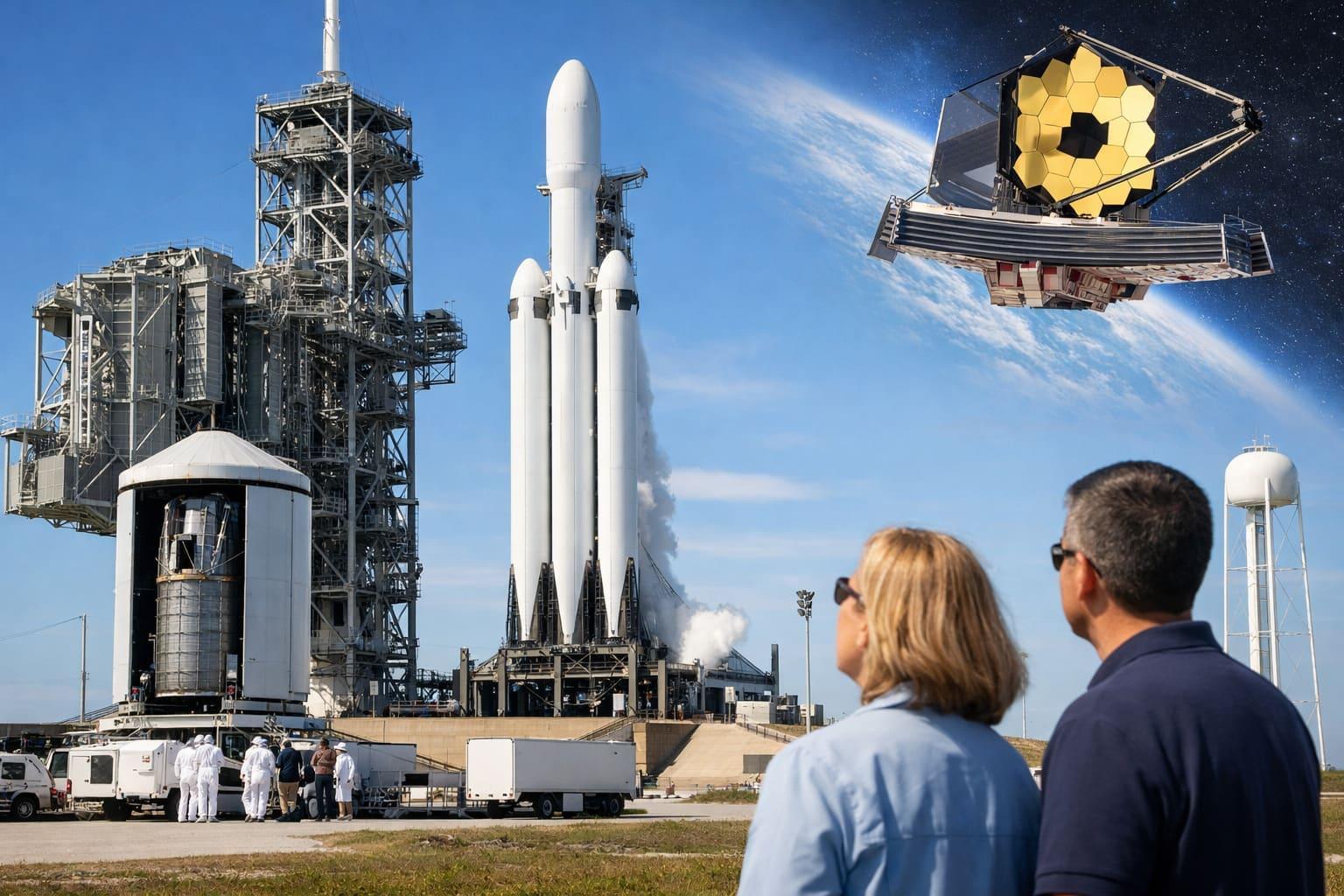
NASA has confirmed that the Nancy Grace Roman Space Telescope is set to launch in September 2026, eight months ahead of its original schedule. This telescope, previously known as the Wide-Field Infrared Space Telescope (WFIRST), is designed to conduct broad surveys of the universe, complementing the detailed observations made by the James Webb Space Telescope (JWST). Roman will focus on identifying targets for JWST to study in greater detail, thus enhancing our understanding of cosmic phenomena. The telescope is named after Nancy Grace Roman, who played a pivotal role in the development of the Hubble Space Telescope. Roman served as NASA's first Chief of Astronomy in the 1960s and 1970s, earning the title "Mother of Hubble" for her contributions to space science. The Roman Space Telescope will utilize a Wide-Field Instrument and a coronagraph to conduct its observations. Over its five-year primary mission, it is expected to discover tens of thousands of planets, billions of galaxies, and tens of billions of stars. NASA Administrator Jared Isaacman highlighted the project's success in staying under budget and ahead of schedule, attributing this to effective planning and consistent support from NASA Headquarters and Congress. The telescope will be launched aboard SpaceX's Falcon Heavy rocket to the Sun-Earth L-2 Lagrange point, approximately one million miles from Earth, where it will operate alongside JWST. This strategic location allows both telescopes to work in tandem, maximizing their observational capabilities and providing a more comprehensive view of the universe. Roman's mission will not only focus on exoplanets and galaxy formation but also aim to address fundamental questions about the nature of dark energy and the expansion of the universe. Julie McEnery, Roman's Senior Project Scientist, emphasized that current observations suggest the standard model of the universe may be incorrect, and Roman's findings could help clarify these discrepancies. The telescope's advanced technology and broad survey capabilities position it to make significant contributions to our understanding of the cosmos.
Why this matters
The Roman Space Telescope is poised to provide groundbreaking insights into the universe, potentially reshaping our understanding of fundamental cosmological concepts. Its findings could lead to significant advancements in astrophysics and our comprehension of dark energy and the universe's expansion. The discrepancies in the Hubble constant measurements, which suggest that the universe's expansion rate is not consistent across different epochs, highlight the need for further investigation. Roman's ability to conduct wide-field surveys will allow scientists to gather data on a scale previously unattainable, enabling them to explore the universe's structure and evolution in unprecedented detail. This mission not only honors Nancy Grace Roman's legacy but also represents a collaborative effort in the scientific community to explore the cosmos. The telescope's discoveries could have far-reaching implications for our understanding of the universe, influencing future research directions and inspiring new generations of astronomers and astrophysicists. As the scientific community anticipates the launch, there is a palpable excitement about the potential revelations that Roman may bring, particularly in relation to the mysteries of dark energy and the formation of galaxies.
What changed
The launch timeline for the Roman Space Telescope has been accelerated, now set for September 2026, which is eight months earlier than initially planned. This change reflects NASA's commitment to efficient project management and cost-effective execution. The telescope's capabilities will allow for broader surveys of the universe, marking a shift in how astronomical observations are conducted, particularly in relation to the detailed studies enabled by JWST. The successful management of the project, which has remained under budget, is a testament to the effective planning and execution by the team involved. Project Manager Jamie Dunn noted that the design process incorporated a focus on cost control from the outset, ensuring that the mission would not only achieve its scientific goals but also adhere to budgetary constraints. This proactive approach has resulted in a stable funding environment, allowing the team to deliver on their commitments year after year. The Roman Space Telescope's ability to complement JWST's detailed observations with its wide-field surveys represents a significant evolution in astronomical research, enabling a more comprehensive understanding of the universe's complexities.
Bigger picture
The Roman Space Telescope is part of NASA's ongoing efforts to advance space exploration and astronomical research. It follows a lineage of significant space telescopes, including Hubble and JWST, which have transformed our understanding of the universe. Hubble, launched in 1990, provided stunning images and data that reshaped our knowledge of galaxies, star formation, and the expansion of the universe. JWST, launched in 2021, further enhanced our observational capabilities, focusing on infrared wavelengths to peer deeper into the cosmos. The Roman Space Telescope builds on these advancements, aiming to address unresolved questions in cosmology and astrophysics. As the scientific community prepares for Roman's launch, there is a growing anticipation for the discoveries it will facilitate, particularly regarding the nature of dark energy and the formation of galaxies. The mission underscores the importance of continued investment in space science and technology, fostering international collaboration and inspiring future generations of scientists. The Roman Space Telescope's findings could lead to a paradigm shift in our understanding of the universe, potentially revealing new insights into the fundamental forces that govern cosmic evolution. This mission not only represents a significant step forward in our quest to understand the universe but also highlights the collaborative spirit of the global scientific community, as researchers from various institutions and countries come together to explore the cosmos.
History
The development of space telescopes has a rich history, beginning with the launch of the Hubble Space Telescope in 1990, which provided unprecedented views of the universe. Hubble's ability to capture high-resolution images in the visible spectrum revolutionized astronomy, allowing scientists to study distant galaxies, nebulae, and other celestial phenomena in detail. Following Hubble, the James Webb Space Telescope was launched in 2021, further enhancing our observational capabilities with its infrared technology. The Roman Space Telescope builds on these advancements, aiming to address unresolved questions in cosmology and astrophysics. Named after Nancy Grace Roman, a pioneer in astronomy, this telescope represents a continuation of efforts to explore and understand the cosmos. Roman's contributions to the field, particularly her advocacy for space-based astronomy, laid the groundwork for the development of Hubble and subsequent missions. The Roman Space Telescope is expected to play a crucial role in the next phase of astronomical research, focusing on broad surveys that will complement the detailed studies conducted by its predecessors.
Looking Towards the Future
As the launch date approaches, attention will be focused on the final preparations for the Roman Space Telescope, including its integration with the Falcon Heavy rocket. Observers should also watch for updates on its scientific objectives and potential collaborations with other space missions. The scientific community will be eager to see how Roman's findings will complement those of JWST and influence future research directions in astrophysics. Additionally, the mission's implications for our understanding of dark energy and the expansion of the universe will be closely monitored, as these are critical areas of inquiry in modern cosmology. The successful launch and operation of the Roman Space Telescope could pave the way for future missions aimed at exploring the universe's most profound mysteries.
Story timeline
Launch Announcement
NASA announces the launch of the Roman Space Telescope set for September 2026.
Hubble's 36th Anniversary
NASA celebrates the 36th anniversary of the Hubble Space Telescope.
Launch Date
The Roman Space Telescope is scheduled to launch aboard SpaceX's Falcon Heavy.
Sources behind this brief
2 total
SpacePolicyOnline.com
Original article detailing the launch announcement.
NASA
Official NASA announcement regarding the launch timeline.
Further reading on this topic
2 links
Context zone
USA
Context zone
USA
On this map
Roman Space Telescope Launching in September
USA
Astronauts Experience Awe-Inspiring Solar Eclipse from Lunar Orbit
United States
During the Artemis II mission, astronauts witnessed a total solar eclipse from lunar orbit, marking a historic first. This unique perspective allowed them to see the moon completely obscuring the sun, with Earthshine illuminating the lunar surface. Such experiences can profoundly impact astronauts' perceptions of their place in the universe.
NASA’s Hubble Dazzles With Young Stars in Trifid Nebula
USA
NASA celebrates the 36th anniversary of the Hubble Space Telescope with a stunning new image of the Trifid Nebula, showcasing its vibrant star-forming region. The telescope's advanced capabilities allow for detailed observations of changes in the nebula over time, revealing the dynamic processes of star formation. This latest image highlights the impact of massive stars on their surroundings, triggering new waves of star birth.
NASA’s Perseverance, Curiosity Panoramas Capture Two Sides of Mars
United States
NASA's Curiosity and Perseverance rovers have unveiled stunning 360-degree panoramas of Mars, showcasing the planet's diverse geological history. Curiosity explores younger terrains while Perseverance investigates some of the oldest landscapes, revealing insights into Mars' past and potential for life. These images highlight the rovers' contributions to understanding the Red Planet's formation and ancient environments.
NASA Laser Terminal enhances views during Artemis II mission
United States
NASA's Artemis II mission showcased the effectiveness of laser communications, enabling high-definition data transfer between the Orion spacecraft and Earth. The optical terminal transmitted 484 gigabytes of data, significantly improving real-time science operations and public engagement. This advancement marks a pivotal step in enhancing future space missions.
NASA’s Curiosity Finds Organic Molecules Never Seen Before on Mars
United States
NASA's Curiosity rover has discovered the most diverse collection of organic molecules on Mars, including seven never seen before. This significant finding suggests that ancient Mars had the right chemistry to support life. The results were published in Nature Communications, highlighting the potential for future exploration and understanding of Martian chemistry.