Protein-Engineering Breakthrough Generates Over 10M Data Points in Three Days
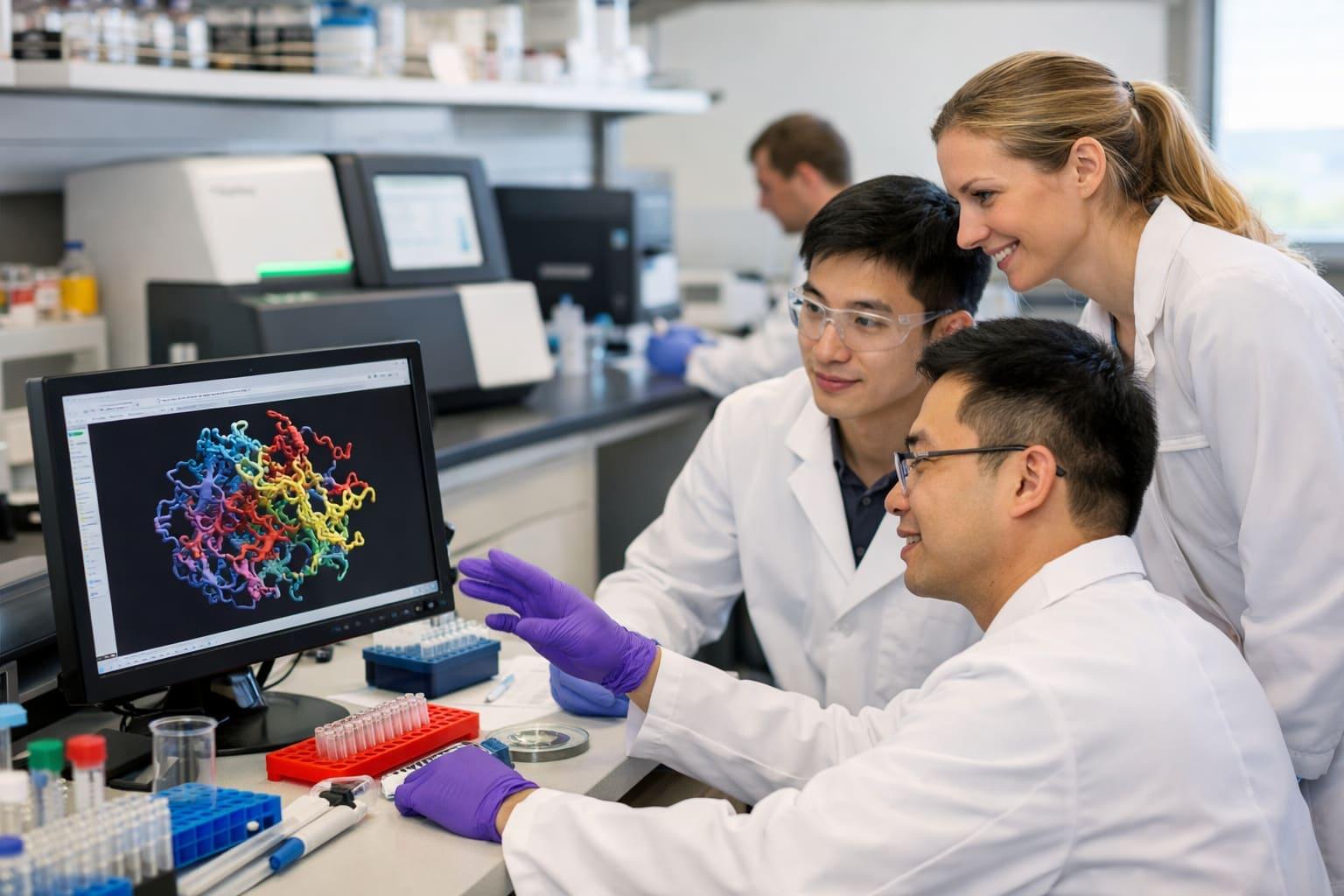
Researchers at Rice University have developed a method called Sequence Display that generates over 10 million data points for protein activity in just three days. This breakthrough enables the training of AI models to optimize protein functions, addressing a significant bottleneck in AI-guided protein engineering. The approach combines activity-based barcoding with next-generation sequencing, allowing for efficient identification of beneficial mutations in proteins.
At a glance
Location and topic
Region
United States
Tag cluster
Trend count
+14 related briefs
What happened
Researchers at Rice University, in collaboration with Johns Hopkins University and Microsoft, have introduced a groundbreaking method called Sequence Display, which can generate over 10 million data points in a single experiment. This innovative approach addresses a critical challenge in AI-guided protein engineering: the lack of sufficient experimental data to train accurate machine learning models. Protein engineering involves modifying proteins by substituting one of 20 different amino acids to optimize their functions. For a protein composed of just 50 amino acids, this results in approximately 1.13x10^65 potential combinations, a number far beyond what can be feasibly tested in a laboratory setting. Han Xiao, a professor at Rice University and director of the SynthX Center, emphasized that the primary bottleneck in AI-guided protein engineering is not the development of machine-learning models but rather the generation of adequate experimental data to train these models effectively. To overcome this limitation, Xiao's team developed an activity-based barcoding system that records the activity of individual protein variants, creating a comprehensive dataset necessary for effective AI training. The process begins with mutating the DNA that encodes a specific protein, in this case, a small CRISPR-Cas protein, which is known for its ability to cut DNA but has limited activity. Each variant of the protein is tagged with a DNA barcode that changes in response to the protein's activity level. As the activity of the protein increases, so does the change in the barcode, allowing researchers to classify the variants based on their functional performance. This data is then analyzed using next-generation sequencing, which scans the barcodes and categorizes each sequence according to its activity level. The team successfully applied this method to various proteins, including aminoacyl-tRNA synthetases and uracil glycosylase inhibitors, demonstrating its versatility and potential for broader applications in protein engineering. The results were remarkable: the Sequence Display method not only provided the necessary data foundation for AI models but also enabled the prediction of mutations that significantly enhance protein activity. Linqi Cheng, a graduate student at Rice and the first author of the study, noted that the AI models developed from this data could efficiently search a vast space of potential mutations to identify strong candidates for further research. This synergy between experimental data generation and AI modeling represents a significant advancement in the field of protein engineering, allowing for more efficient discovery of advanced research tools and next-generation therapeutic proteins.
Why this matters
This breakthrough is crucial as it addresses a significant limitation in protein engineering, where the lack of data has hindered the development of effective AI models. The ability to generate large datasets rapidly allows researchers to optimize protein functions more efficiently, paving the way for advancements in biotechnology and medicine. The integration of AI with experimental data enhances the potential for discovering new therapeutic proteins and research tools, which could have far-reaching implications for drug development and personalized medicine. As the demand for innovative solutions in healthcare and environmental sustainability grows, this method could play a pivotal role in addressing complex biological challenges. The rapid generation of data not only accelerates research timelines but also improves the accuracy of predictions made by AI models, ultimately leading to more effective applications in various fields, including synthetic biology and genetic engineering.
What changed
The introduction of Sequence Display marks a transformative shift in how protein engineering can leverage AI. Previously, the lack of sufficient data was a major bottleneck, limiting the ability of researchers to develop accurate predictive models. With this new method, the rapid generation of extensive datasets allows for a more streamlined process in optimizing protein functions. This change enhances the overall efficiency of research in this field, enabling scientists to explore a wider range of protein variants and their potential applications. The ability to generate over 10 million data points in just three days represents a significant acceleration in the research process, allowing for quicker iterations and refinements in protein design. This advancement not only improves the speed of discovery but also increases the likelihood of identifying successful protein variants that can be utilized in therapeutic contexts. As a result, the landscape of protein engineering is evolving, with AI becoming an integral part of the experimental process rather than a standalone tool.
Bigger picture
The advancement of Sequence Display is part of a broader trend in biotechnology where AI is increasingly integrated into research methodologies. As the demand for innovative solutions in healthcare and environmental sustainability grows, the ability to rapidly generate and analyze data becomes essential. This breakthrough not only enhances the capabilities of researchers but also aligns with global efforts to harness AI for solving complex biological problems. The implications extend beyond protein engineering, potentially influencing various fields such as drug development, synthetic biology, and personalized medicine. For instance, the ability to quickly identify and optimize therapeutic proteins could lead to more effective treatments for diseases, including cancer and genetic disorders. Furthermore, as researchers continue to refine and expand the applications of Sequence Display, it may pave the way for new biotechnological innovations that address pressing global challenges, such as antibiotic resistance and the development of sustainable biofuels. The integration of AI into experimental biology is likely to accelerate the pace of discovery, enabling scientists to tackle increasingly complex questions about protein function and interaction in living systems. This shift could ultimately transform the landscape of biological research, making it more data-driven and efficient.
Looking Towards the Future
Keep an eye on further developments from Rice University and its collaborators as they explore additional applications of Sequence Display in protein engineering. The potential for this method to revolutionize therapeutic protein development and other biotechnological innovations is significant. Future research may reveal new insights into optimizing protein functions and expanding the capabilities of AI in scientific research. Additionally, monitoring how this technology is adopted by other research institutions and its impact on the broader field of biotechnology will be crucial. As the integration of AI and experimental data continues to evolve, it will be interesting to see how these advancements influence the development of new therapies and research tools, potentially leading to breakthroughs in various areas of medicine and environmental science.
Story timeline
Research Publication
The findings on Sequence Display and its capabilities are published.
Method Development
Researchers finalize the Sequence Display method for protein activity data generation.
Collaboration Announcement
Rice University announces collaboration with Johns Hopkins University and Microsoft.
Sources behind this brief
2 total
Phys.org
Original article detailing the protein-engineering breakthrough.
Nature Biotechnology
Publication of the research findings related to Sequence Display.
Further reading on this topic
4 links
Context zone
United States
Context zone
United States
On this map
Protein-Engineering Breakthrough Generates Over 10M Data Points in Three Days
United States
NASA Laser Terminal enhances views during Artemis II mission
United States
NASA's Artemis II mission showcased the effectiveness of laser communications, enabling high-definition data transfer between the Orion spacecraft and Earth. The optical terminal transmitted 484 gigabytes of data, significantly improving real-time science operations and public engagement. This advancement marks a pivotal step in enhancing future space missions.
Astronauts Experience Awe-Inspiring Solar Eclipse from Lunar Orbit
United States
During the Artemis II mission, astronauts witnessed a total solar eclipse from lunar orbit, marking a historic first. This unique perspective allowed them to see the moon completely obscuring the sun, with Earthshine illuminating the lunar surface. Such experiences can profoundly impact astronauts' perceptions of their place in the universe.
Rare two-colored lobster caught by fishermen off Cape Cod donated to aquarium
Falmouth, United States
A unique two-colored lobster, brown on one side and bright orange on the other, was caught off Cape Cod and donated to the Woods Hole Science Aquarium. This rare specimen will be displayed to the public when the aquarium reopens, highlighting the fascinating genetic anomalies in marine life. The donation reflects a commitment to conservation and education about marine biodiversity.
NASA’s Perseverance, Curiosity Panoramas Capture Two Sides of Mars
United States
NASA's Curiosity and Perseverance rovers have unveiled stunning 360-degree panoramas of Mars, showcasing the planet's diverse geological history. Curiosity explores younger terrains while Perseverance investigates some of the oldest landscapes, revealing insights into Mars' past and potential for life. These images highlight the rovers' contributions to understanding the Red Planet's formation and ancient environments.
World leaders react to White House press dinner shooting: no place for violence in democracy
Washington, United States
Following a shooting incident at the White House Correspondents' Dinner, global leaders condemned the violence and emphasized the importance of safety in democratic events. Many praised the quick response of security forces, highlighting the need for vigilance in protecting public gatherings. The incident has sparked discussions about security measures at such high-profile events.
NASA’s Curiosity Finds Organic Molecules Never Seen Before on Mars
United States
NASA's Curiosity rover has discovered the most diverse collection of organic molecules on Mars, including seven never seen before. This significant finding suggests that ancient Mars had the right chemistry to support life. The results were published in Nature Communications, highlighting the potential for future exploration and understanding of Martian chemistry.