Rare two-colored lobster caught by fishermen off Cape Cod donated to aquarium
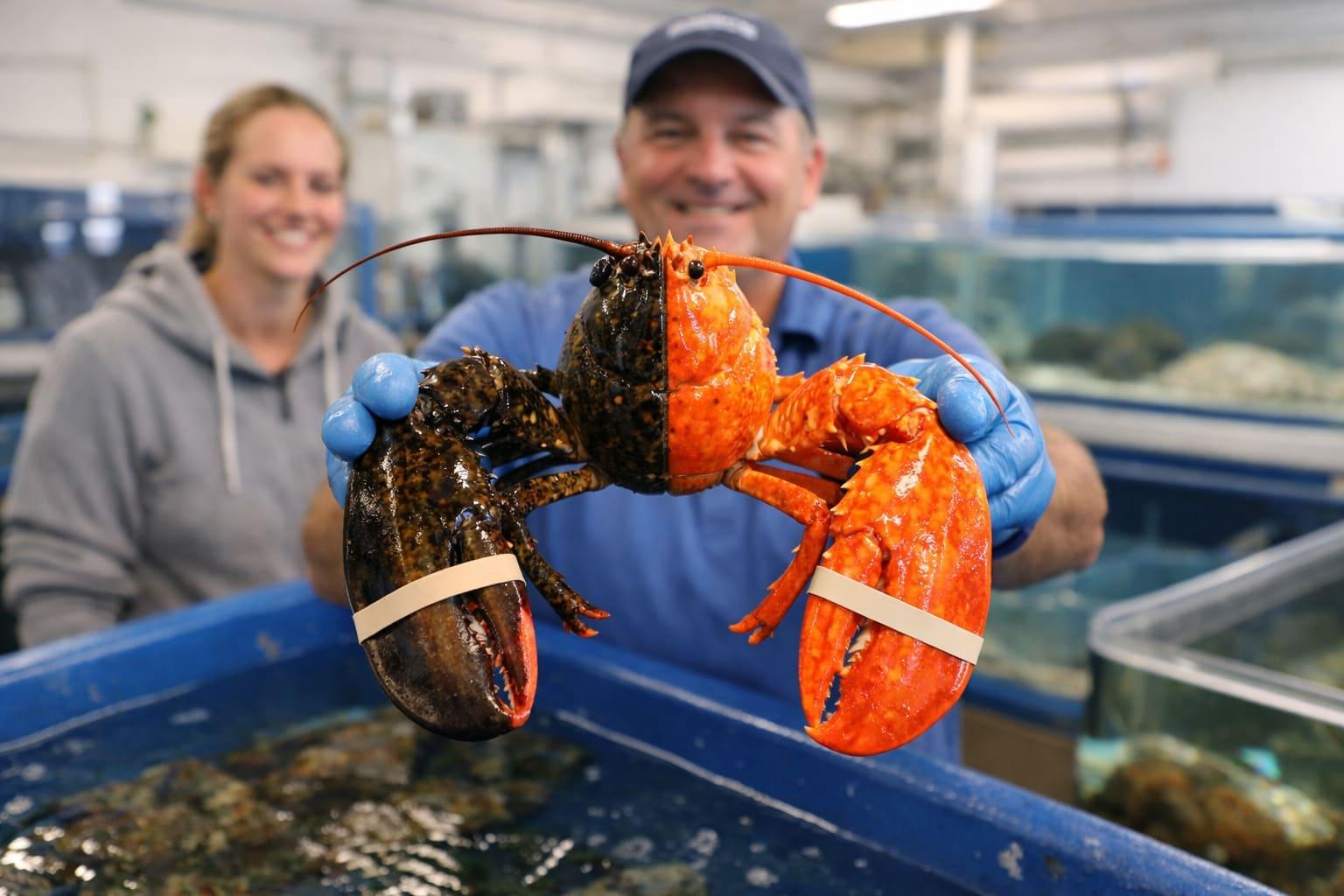
A unique two-colored lobster, brown on one side and bright orange on the other, was caught off Cape Cod and donated to the Woods Hole Science Aquarium. This rare specimen will be displayed to the public when the aquarium reopens, highlighting the fascinating genetic anomalies in marine life. The donation reflects a commitment to conservation and education about marine biodiversity.
At a glance
Location and topic
Region
Falmouth, United States
Tag cluster
Trend count
+11 related briefs
What happened
On April 16, 2026, fishermen from the Wellfleet Shellfish Company, based in Eastham, Massachusetts, made a remarkable catch off the coast of Cape Cod: a rare two-colored lobster. This unique specimen exhibits a striking coloration, with one side a typical mottled brown and the other a vibrant orange. Such a two-toned pattern is not only visually stunning but also indicative of a rare genetic anomaly. The lobster's unusual appearance is believed to result from either a genetic mutation affecting the proteins that bind to its pigments or the fusion of two separate lobster eggs during development, a phenomenon explained by marine sciences professor Markus Frederich from the University of New England. Recognizing the lobster's uniqueness and the public interest it generated, the Wellfleet Shellfish Company decided to donate it to the Woods Hole Science Aquarium in Falmouth, Massachusetts. The aquarium is currently undergoing renovations, and the lobster is being housed in holding tanks at the Marine Biological Laboratory until the facility reopens. Once the aquarium is ready to welcome visitors again, the two-colored lobster will be put on public display, allowing guests to marvel at one of nature's most striking anomalies. The Wellfleet Shellfish Company has reported receiving numerous inquiries about the lobster, reflecting a strong public fascination with this rare find and the broader implications of genetic diversity in marine life.
Why this matters
The donation of the two-colored lobster is significant for several reasons. Firstly, it represents a rare genetic occurrence that captivates the public's imagination and highlights the incredible diversity found within marine ecosystems. By choosing to donate the lobster rather than sell it for consumption, the Wellfleet Shellfish Company is making a statement about the value of preserving unique marine specimens for educational purposes. This decision not only spares the lobster from being boiled in a pot but also contributes to the aquarium's mission of educating the public about marine life and the importance of conservation. Such initiatives can foster a greater appreciation for ocean ecosystems and the need to protect them, especially as human activities continue to threaten marine biodiversity. The presence of this lobster in the aquarium will serve as a tangible example of the wonders of nature, inspiring visitors to learn more about marine biology and the genetic variations that exist within species.
What changed
The donation of the two-colored lobster marks a notable shift in how unique marine specimens are perceived and valued within the seafood industry. Traditionally, rare finds like this might have been sold or consumed, but the decision to donate it to the Woods Hole Science Aquarium reflects a growing trend towards conservation and education. This approach emphasizes the importance of preserving marine life and using unique specimens as educational tools. By showcasing the lobster, the aquarium will provide visitors with an opportunity to learn about genetic diversity and the various anomalies that can occur in marine species. This shift in perspective may encourage other seafood companies to consider the ecological impact of their practices and to engage in similar conservation initiatives, ultimately benefiting marine life and promoting sustainable practices within the industry.
Bigger picture
The fascination with rare marine specimens, such as the two-colored lobster, underscores the critical importance of biodiversity in our oceans. As climate change, pollution, and overfishing continue to threaten marine ecosystems, highlighting unique species can serve as a powerful tool for raising awareness and promoting conservation efforts. The public's interest in this lobster may inspire more seafood companies to adopt sustainable practices and engage in conservation initiatives, recognizing the value of preserving marine biodiversity. Furthermore, the display of this lobster at the Woods Hole Science Aquarium will likely attract attention from both locals and tourists, potentially leading to increased support for marine conservation efforts. This event serves as a reminder of the interconnectedness of human activities and marine health, emphasizing the need for a collective commitment to protecting our oceans. As more people become aware of the unique characteristics of marine life, there is hope that this will translate into greater advocacy for policies aimed at preserving marine habitats and species. The two-colored lobster is not just a curiosity; it represents a broader narrative about the need to respect and protect the natural world.
History
The occurrence of uniquely colored lobsters has been documented for centuries, with various color mutations reported among American lobsters. These anomalies, while rare, have sparked interest in marine biology and genetics, leading to a deeper understanding of the factors that contribute to such variations. Historically, lobsters have been a significant part of New England's fishing industry, and the discovery of unusual specimens has often captured the public's imagination. The donation of this two-colored lobster reflects a broader trend in recent years towards conservation and public education about marine life. As awareness of environmental issues has grown, so too has the recognition of the importance of protecting unique species and their habitats. This event highlights the ongoing efforts to balance commercial fishing practices with the need for sustainable management of marine resources, emphasizing the role that education and public engagement play in fostering a culture of conservation.
Looking Towards the Future
As the Woods Hole Science Aquarium prepares to reopen, it will be interesting to observe how the two-colored lobster is received by the public. Its display may lead to increased interest in marine biology and conservation efforts, particularly among younger audiences. Additionally, keep an eye out for potential collaborations between seafood companies and conservation organizations aimed at promoting sustainable practices. The success of this initiative could inspire similar efforts across the industry, encouraging a shift towards more responsible fishing practices and greater awareness of marine biodiversity. Furthermore, the aquarium's educational programs may expand to include more information about genetic diversity in marine species, using the two-colored lobster as a focal point for discussions about conservation and the health of our oceans.
Story timeline
Lobster Caught
A rare two-colored lobster is caught off Cape Cod by fishermen.
Donation to Aquarium
The lobster is donated to the Woods Hole Science Aquarium for public display.
Aquarium Reopening
The Woods Hole Science Aquarium is set to reopen, featuring the two-colored lobster.
Sources behind this brief
2 total
Phys.org
Original article detailing the lobster's capture and donation.
Associated Press
Coverage of the lobster's unique characteristics and public interest.
Further reading on this topic
3 links
NOAA Fisheries
Provides information about the Woods Hole Science Aquarium, including its history, exhibits, and current closure for repairs.
Wikipedia
Offers a detailed overview of the Woods Hole Science Aquarium, its establishment, and notable exhibits.
NOAA Fisheries
Details the mission and programs of the Woods Hole Science Aquarium, emphasizing its role in marine education and conservation.
Context zone
United States
Context zone
United States
On this map
Rare two-colored lobster caught by fishermen off Cape Cod donated to aquarium
Falmouth, United States
Every dollar spent on forest fuel treatments saves $3.75 in wildfire damages, study finds
United States
A recent study from UC Davis reveals that investing in forest fuel treatments, such as thinning and prescribed burns, can save $3.75 for every dollar spent by preventing wildfire damages. The research analyzed nearly 300 wildfires across the western United States and found that these treatments significantly reduced wildfire spread and severity, preventing an estimated $2.8 billion in damages. The findings highlight the importance of investing in preventive forest management to mitigate the increasing risks of wildfires due to climate change.
Florida baby ‘born twice’ after elaborate surgery involving partial delivery
Orlando, United States
Cassian Joubert, a Florida infant, underwent a groundbreaking surgery that involved a partial delivery to save his life. This innovative procedure allowed doctors to create an airway for him while still in the womb, leading to his eventual birth. The Jouberts celebrate Cassian's unique journey with two birthdays, marking both his surgery and his birth.
Hundreds of animals rescued from ‘appalling’ conditions at California sanctuary
Julian, United States
Over 400 animals, including horses, cats, and dogs, were rescued from a California sanctuary facing bankruptcy and severe neglect. The San Diego Humane Society led the operation, uncovering widespread malnutrition and untreated injuries among the animals. This rescue highlights the ongoing challenges in animal welfare and the importance of vigilance in ensuring proper care.
US Supreme Court asked to restore abortion pill access
United States
Danco Laboratories has requested the US Supreme Court to intervene after a Fifth Circuit ruling reinstated in-person requirements for obtaining mifepristone, the abortion pill. This decision temporarily limits access to the medication, which has been available by mail since 2023. The case highlights ongoing tensions surrounding abortion access in the US, particularly in states with restrictive laws.
NASA Laser Terminal enhances views during Artemis II mission
United States
NASA's Artemis II mission showcased the effectiveness of laser communications, enabling high-definition data transfer between the Orion spacecraft and Earth. The optical terminal transmitted 484 gigabytes of data, significantly improving real-time science operations and public engagement. This advancement marks a pivotal step in enhancing future space missions.
Astronauts Experience Awe-Inspiring Solar Eclipse from Lunar Orbit
United States
During the Artemis II mission, astronauts witnessed a total solar eclipse from lunar orbit, marking a historic first. This unique perspective allowed them to see the moon completely obscuring the sun, with Earthshine illuminating the lunar surface. Such experiences can profoundly impact astronauts' perceptions of their place in the universe.