‘Coming home’: kiwi enter parliament for first time as New Zealand marks conservation win
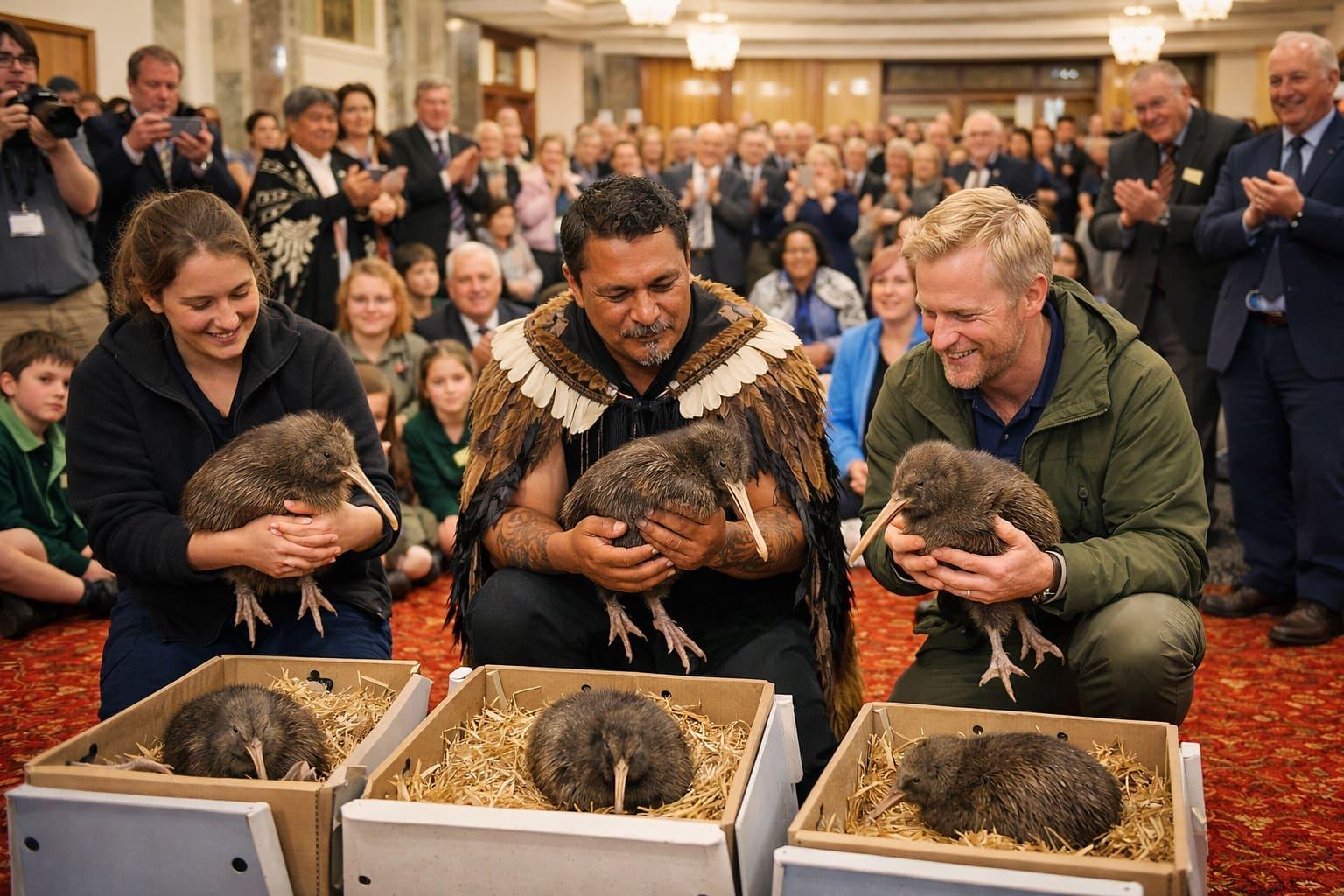
In a historic event, five kiwi were presented in New Zealand's parliament, marking a significant conservation achievement. This moment celebrated the successful reintroduction of kiwi to Wellington after over a century. The Capital Kiwi Project has played a crucial role in restoring the kiwi population, showcasing community involvement and dedication to biodiversity.
At a glance
Location and topic
Region
Wellington, New Zealand
Tag cluster
Trend count
+7 related briefs
What happened
On April 29, 2026, a historic event unfolded in New Zealand's parliament as five kiwi were presented to an audience of 300 people, marking the first time these iconic birds had ever entered the building. The gathering took place in the banquet hall of the Parliament House in Wellington, where attendees included politicians, children, Māori groups, and environmental advocates, all eager to witness the culmination of a six-year conservation project aimed at reintroducing kiwi to the Wellington region. The kiwi, a flightless bird and a national symbol of New Zealand, had been absent from the area for over a century due to habitat loss and predation by introduced species. The Capital Kiwi Project, initiated in 2022, has been instrumental in reversing this trend, successfully releasing a total of 250 kiwi into the wild. The project has achieved an impressive 90% chick survival rate, far exceeding the required 30% set by the Department of Conservation. This success has transformed Wellington into a unique urban environment where residents coexist with wild kiwi, a feat that was once thought impossible. As the event concluded, the kiwi were transported to Terawhiti Station, one of New Zealand's oldest sheep stations located on the Mākara coast, where they were released into their new habitat. The sight of the kiwi stepping out into the night was a poignant moment, symbolizing not just the return of a species but also the collective effort of the community to restore biodiversity in an urban setting. Paul Ward, founder of the Capital Kiwi Project, emphasized the significance of this moment, stating, "This is our manu [birds] coming home to the place they have inhabited for millions of years but which they had a brief exile from."
Why this matters
The successful reintroduction of kiwi to Wellington's ecosystem is a landmark achievement in conservation, underscoring the critical role that community involvement plays in environmental efforts. This event is not merely a celebration of the kiwi's return; it serves as a powerful reminder of the interconnectedness of culture, identity, and nature in New Zealand. The kiwi is more than just a bird; it is a symbol of national pride and a representation of the unique biodiversity that defines the country. The Capital Kiwi Project has demonstrated that urban areas can support wildlife, challenging the notion that cities are incompatible with nature. This initiative highlights the potential for similar projects in other urban settings, where community engagement can lead to significant ecological restoration. The event also raises awareness about the importance of protecting vulnerable species and the need for ongoing conservation efforts, particularly in the face of climate change and habitat destruction. As urbanization continues to expand, the lessons learned from this project could inform future conservation strategies, making it a pivotal moment in New Zealand's environmental history.
What changed
The Capital Kiwi Project has fundamentally altered Wellington's relationship with its native wildlife, fostering a sense of community responsibility towards conservation. The successful reintroduction of kiwi has not only increased their population but has also heightened awareness about the importance of protecting vulnerable species. This initiative has set a precedent for future conservation efforts in urban settings, demonstrating that with the right community support and innovative strategies, it is possible to restore native species and enhance urban biodiversity. The project has engaged over 100 landowners who allowed the installation of 4,600 stoat traps across a 24,000-hectare habitat, creating the largest intensive stoat trapping network in New Zealand. This collaborative effort has united schools, iwi, volunteers, and local organizations, showcasing the power of community action in conservation. The event at parliament served as a celebration of these collective efforts, reinforcing the idea that restoring biodiversity is a shared purpose that can bring people together. As a result, Wellington has become a model for other cities looking to integrate wildlife conservation into urban planning, paving the way for a more sustainable coexistence between humans and nature.
Bigger picture
The event at New Zealand's parliament reflects a broader trend in conservation where urban areas are increasingly recognized as vital habitats for wildlife. As cities expand and encroach upon natural landscapes, the need for biodiversity preservation becomes more pressing. The Capital Kiwi Project serves as a model for other urban conservation initiatives, demonstrating that with community support and innovative strategies, it is possible to restore native species and enhance urban biodiversity. This success story encourages similar efforts worldwide, emphasizing the role of local communities in environmental stewardship. The project not only revitalizes the kiwi population but also fosters a deeper connection between residents and their natural environment, promoting a culture of conservation that can have lasting impacts. As urban centers grapple with the challenges of climate change and habitat loss, the lessons learned from Wellington's experience could inspire a new wave of conservation efforts that prioritize ecological health alongside urban development. The integration of wildlife conservation into city planning is not just beneficial for the environment; it also enriches the quality of life for residents, creating spaces where nature and urban living coexist harmoniously. This event marks a significant step forward in redefining how cities can contribute to wildlife conservation, showcasing a collaborative model that could inspire similar initiatives globally.
History
Historically, kiwi populations in New Zealand have faced severe declines due to habitat loss and introduced predators, such as stoats and rats, which have devastated their numbers. Conservation efforts have been ongoing for decades, with various initiatives aimed at protecting and restoring kiwi habitats. However, the Capital Kiwi Project represents a new approach by integrating community involvement and urban ecology into conservation strategies. Launched in 2022, the project has successfully reintroduced kiwi to Wellington, a city where they had been absent for over a century. This marks a turning point in how urban environments can contribute to wildlife conservation, showcasing a collaborative model that could inspire similar initiatives globally. The project’s success in Wellington not only highlights the resilience of the kiwi but also serves as a testament to the power of community engagement in environmental restoration. As cities continue to grow, the lessons learned from this project could inform future conservation efforts, emphasizing the importance of integrating biodiversity into urban planning.
Looking Towards the Future
As the Capital Kiwi Project continues to monitor the reintroduced kiwi population, observers should look for updates on their adaptation and breeding success in the wild. The project's impact on local biodiversity and community engagement will be crucial indicators of its long-term success. Future conservation initiatives in urban settings may draw inspiration from this project, potentially leading to more collaborative efforts across New Zealand and beyond. Additionally, the ongoing involvement of local schools, iwi, and volunteers will be essential in sustaining the momentum of this initiative. As the kiwi population grows, it will be interesting to see how Wellingtonians adapt to living alongside these iconic birds and what measures will be taken to ensure their continued protection in an urban environment.
Story timeline
First kiwi released in Wellington
The first cohort of kiwi was released into the wild as part of the Capital Kiwi Project.
Kiwi presented in parliament
Five kiwi were presented in New Zealand's parliament, marking a significant conservation milestone.
Community involvement in conservation
The Capital Kiwi Project engaged over 100 landowners and numerous volunteers in conservation efforts.
Sources behind this brief
2 total
The Guardian
Original article detailing the event and its significance.
New Zealand Department of Conservation
Official information on kiwi conservation efforts.
Further reading on this topic
2 links
Context zone
New Zealand
Context zone
New Zealand
On this map
‘Coming home’: kiwi enter parliament for first time as New Zealand marks conservation win
Wellington, New Zealand
No other published articles from this region yet. This marker anchors the story for future regional clustering.