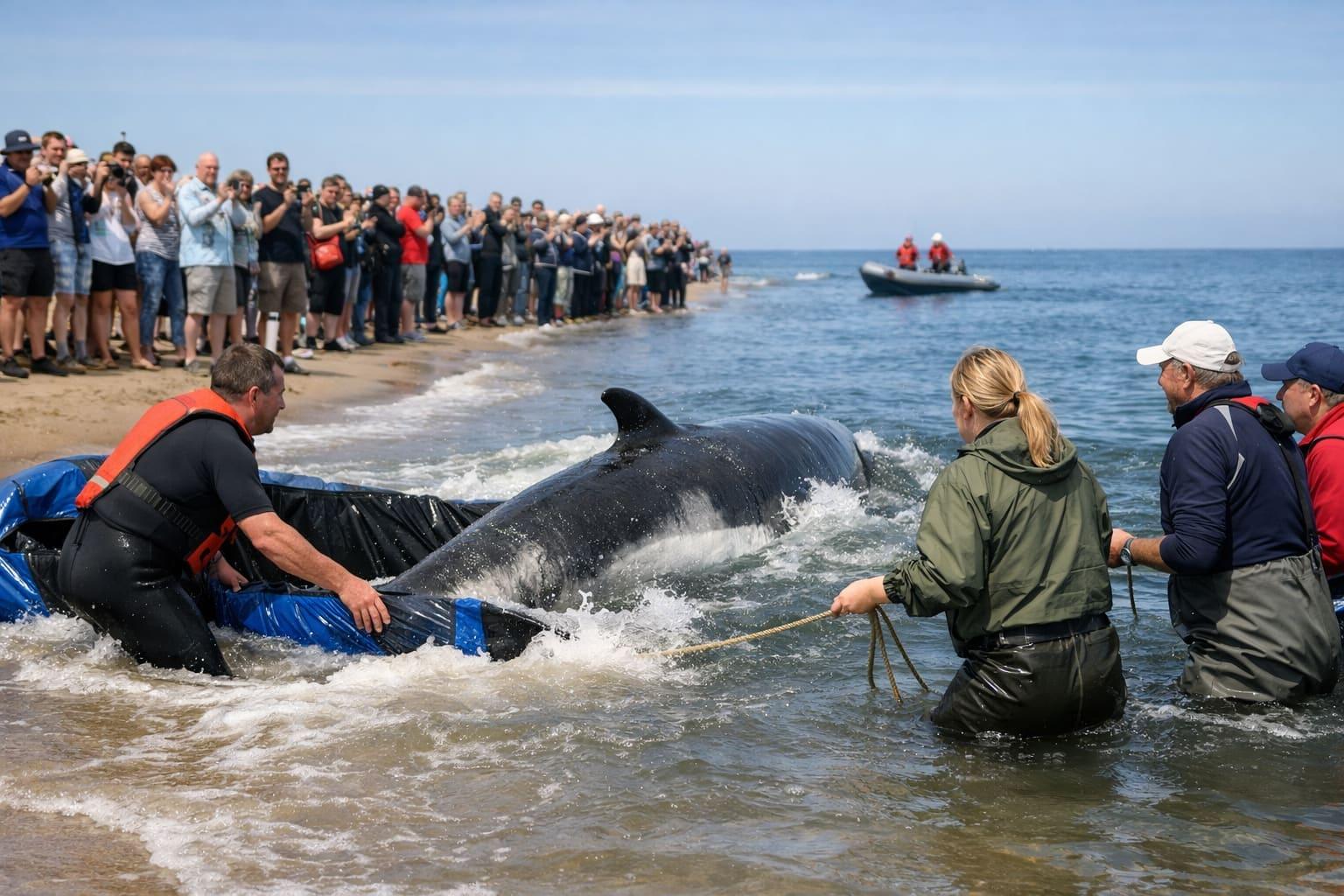
Timmy the Stranded Whale Is Released After an Elaborate Rescue
Timmy, a whale that had been stranded, was successfully rescued and released back into the ocean. The rescue operation involved a collaborative effort from marine biologists and volunteers, showcasing the dedication to wildlife conservation. This event highlights the importance of protecting marine life and the positive outcomes of community involvement.
The story
Timmy, a young whale, was found stranded on a beach in Germany, prompting a swift and coordinated rescue operation that involved marine biologists, local volunteers, and wildlife organizations. The incident occurred on April 25, 2026, when beachgoers noticed the distressed whale struggling on the sand near the coastal town of Cuxhaven. Local authorities were alerted, and a team of marine biologists from the nearby Alfred Wegener Institute quickly mobilized to assess the situation. Upon arrival, the team conducted a thorough medical examination of Timmy, which revealed signs of dehydration and stress but no life-threatening injuries. The rescue operation was complex and required specialized equipment, including a large inflatable sling designed to safely lift and transport the whale. Volunteers from the community joined the biologists, working together to keep Timmy calm and hydrated while preparations for his transport were made. After several hours of careful planning and execution, Timmy was successfully lifted onto a rescue truck and transported to a rehabilitation facility for further care. During his time at the facility, Timmy received additional medical attention, including fluids and a diet tailored to help him regain strength. After a week of rehabilitation, the team deemed him fit for release. On May 2, 2026, a crowd gathered at the beach to witness the momentous occasion as Timmy was returned to the ocean. The release was marked by cheers and applause from onlookers, symbolizing a successful collaboration between scientists and the community in wildlife conservation efforts.
Why it matters
The rescue of Timmy underscores the critical role that community involvement plays in wildlife conservation. It serves as a powerful reminder that collective action can lead to successful outcomes for stranded marine animals, fostering a sense of responsibility and stewardship among local populations. This event not only highlights the immediate impact of volunteer efforts but also emphasizes the need for ongoing education and training in marine wildlife rescue. By showcasing the dedication of both professionals and volunteers, the rescue of Timmy can inspire similar initiatives in other coastal communities, encouraging individuals to take an active role in protecting marine life. Furthermore, it raises awareness about the challenges faced by marine animals, such as habitat loss, pollution, and climate change, prompting discussions about the importance of sustainable practices and conservation efforts.
Evidence and context
The rescue of Timmy is emblematic of a larger movement towards marine conservation, which is becoming increasingly vital as ocean habitats face mounting threats from pollution, climate change, and overfishing. This event serves as a catalyst for raising awareness about the importance of protecting marine life and the ecosystems they inhabit. The collaborative effort involved in Timmy's rescue highlights the role of community engagement in conservation initiatives, demonstrating that local action can lead to significant positive outcomes. As marine environments continue to degrade, the need for effective conservation strategies becomes more pressing. The incident has sparked discussions about the importance of establishing more comprehensive marine protected areas and enhancing regulations to safeguard vulnerable species. Additionally, it emphasizes the necessity for ongoing research and monitoring of marine ecosystems to better understand the challenges they face. The collective action seen in Timmy's rescue can inspire similar efforts globally, reinforcing the idea that every individual can contribute to the health of our oceans. As communities come together to protect marine life, the potential for meaningful change grows, paving the way for a more sustainable future for our oceans.
Limits and unknowns
Historically, marine wildlife rescue operations have evolved significantly over the past few decades, reflecting a growing awareness of the need to protect marine life. The rise of environmental movements in the late 20th century led to more organized efforts to rescue stranded animals and rehabilitate them. In the early 2000s, the establishment of dedicated marine rescue organizations and increased funding for conservation initiatives marked a turning point in how communities approached wildlife rescue. This incident with Timmy illustrates the culmination of these efforts, showcasing the importance of community involvement and the collaboration between scientists and volunteers. As public interest in marine conservation has grown, so too has the commitment to protecting marine ecosystems, making events like Timmy's rescue a vital part of the ongoing narrative of wildlife conservation.
What happens next
In the coming months, it will be crucial to monitor the ongoing efforts in marine conservation, particularly in the wake of Timmy's rescue. Observing how local communities respond to this event may provide valuable insights into the effectiveness of public engagement in wildlife protection. Additionally, tracking Timmy's recovery and any follow-up initiatives will be essential to understanding the long-term impact of this rescue. Stakeholders, including local governments and conservation organizations, may implement new training programs and resources for volunteers, which could enhance future rescue operations. Furthermore, it will be important to watch for any legislative changes or increased funding for marine conservation efforts that may arise as a result of heightened awareness surrounding this event. The success of Timmy's rescue could serve as a model for similar initiatives, inspiring communities worldwide to take action in protecting their local marine environments.
Follow the story
Share it, watch the explainer, or continue with the reporting trail.
Story timeline
NYT World
Timmy the Stranded Whale Is Released After an Elaborate Rescue
NYT World
Timmy the Stranded Whale Is Released After an Elaborate Rescue
Timmy Stranded
Timmy the whale was found stranded on a beach in Germany.
Rescue Operation Begins
Marine biologists and volunteers began the rescue operation for Timmy.
Successful Release
Timmy was successfully released back into the ocean after recovery.
Further reading on this topic
3 links
Timmy the Stranded Whale Is Released After an Elaborate Rescue
A short visual explainer for readers who want the story in a different rhythm.