What Wild Honey from the Philippine Jungle Reveals About Biodiversity
Recent research highlights the significance of wild honey from the Philippines, particularly from Palaui Island, in understanding local biodiversity. The study reveals that honey from this region is predominantly derived from the narra tree, emphasizing its ecological importance and the need for conservation efforts. This research not only aids in identifying nectar sources but also underscores the relationship between Indigenous communities and their environment.
At a glance
Location and topic
Region
Philippines
Tag cluster
Trend count
+7 related briefs
What happened
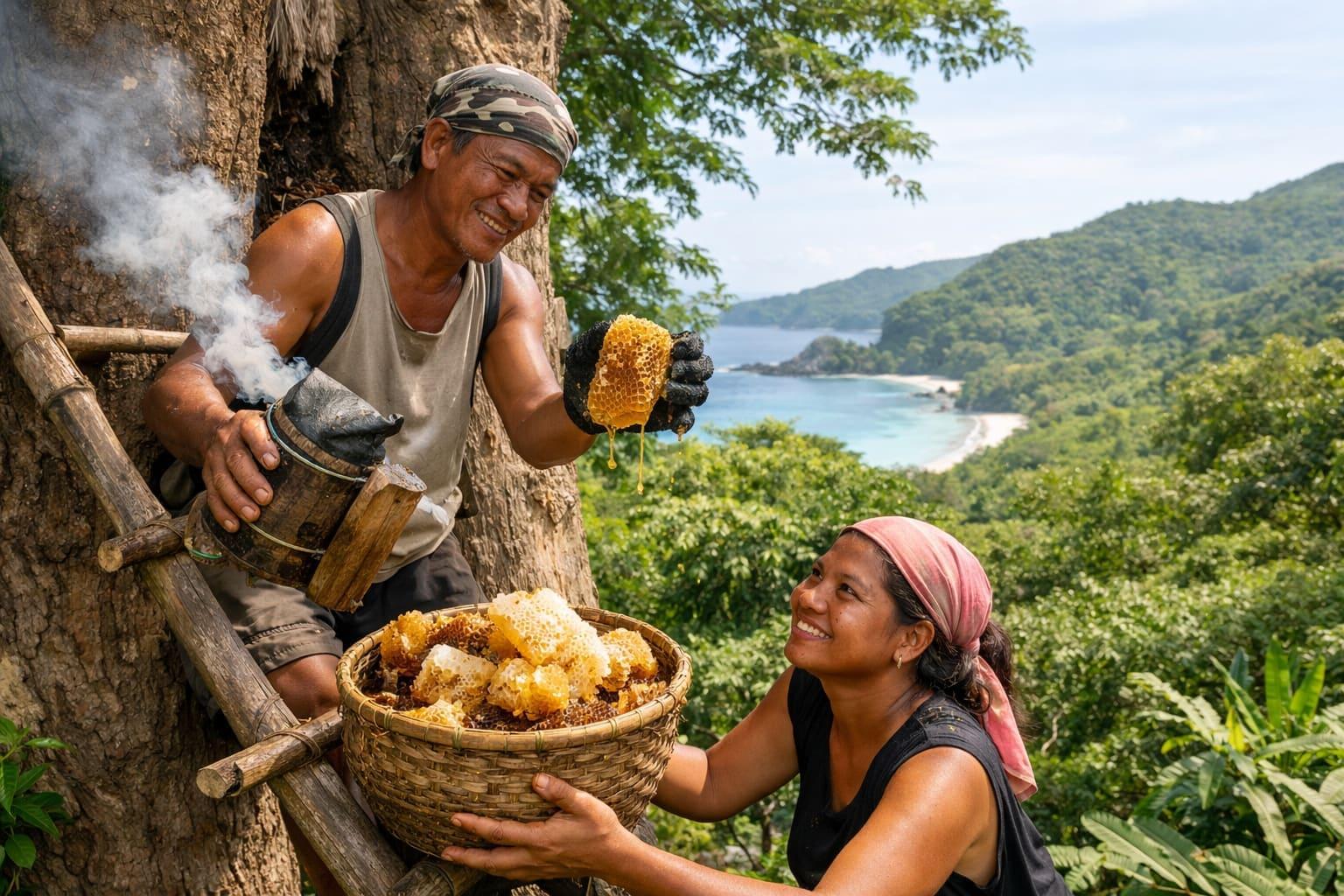
In the Philippines, Indigenous communities have been harvesting wild honey sustainably for centuries, a practice deeply rooted in their culture and economy. A recent study conducted by scientists from Leiden University and the University of the Philippines has shed light on the biodiversity of this region through a detailed chemical analysis of honey collected from three different islands. The research revealed that honey from Palaui Island is predominantly monofloral, primarily sourced from the narra tree (Pterocarpus indicus), which is recognized as the national tree of the Philippines. This finding underscores the ecological significance of the narra tree, which is currently under threat due to illegal logging and the high demand for its hardwood in furniture making. The researchers employed advanced chemical analysis techniques to identify metabolites in the honey, which serve as indicators of the plant species from which the nectar is collected. The results showed that while honey from two of the test locations was multifloral, the honey from Palaui Island was unique due to its high concentration of hypaphorine, a compound specifically linked to the narra tree. This discovery emphasizes the importance of protecting the narra tree not only for its ecological role but also for the livelihoods of the Indigenous Agta people who depend on honey harvesting for food and income. The study highlights the intricate relationship between local flora, Indigenous practices, and biodiversity, revealing how honey can serve as a chemical fingerprint of the local ecosystem. The researchers are keen to support the local population in protecting the narra tree, which is vital for both biodiversity and cultural heritage.
Why this matters
The findings of this study are crucial for understanding the complex relationships between local flora, Indigenous practices, and biodiversity. Protecting the narra tree is not just about preserving a vital species; it is also about supporting the cultural heritage and economic stability of Indigenous communities like the Agta people. The honey harvested from these trees is not only a source of nutrition but also a means of income for these communities. By highlighting the significance of the narra tree, the research can guide future conservation efforts and policies aimed at safeguarding both the environment and the people who depend on it. This study serves as a reminder of the importance of integrating Indigenous knowledge and practices into modern conservation strategies, ensuring that the voices of those who have lived in harmony with nature for generations are heard and respected.
What changed
The research has brought to light the critical role of the narra tree in the ecosystem of Palaui Island, prompting calls for enhanced conservation measures. The findings may lead to increased awareness and support for Indigenous rights and land stewardship, as the local population plays a vital role in protecting this species. The study introduces a new analytical technique that could be applied in other regions to assess biodiversity through honey analysis, potentially revolutionizing how scientists understand and monitor ecosystems. This approach not only aids in identifying nectar sources but also provides insights into the presence of specific flora, which can be crucial for conservation planning. As a result, there is a growing recognition of the need to protect not just the narra tree but also the broader ecosystem that supports it, ensuring that both biodiversity and Indigenous livelihoods are preserved for future generations.
Bigger picture
This research fits into a broader context of global biodiversity conservation efforts, particularly in regions where Indigenous communities are integral to environmental stewardship. As biodiversity continues to decline worldwide, understanding local ecosystems and the species that inhabit them becomes increasingly important. The study not only highlights the ecological significance of the narra tree but also serves as a reminder of the interconnectedness of culture, economy, and environmental health. By supporting Indigenous practices and protecting key species, we can work towards a more sustainable future. The findings also resonate with global initiatives aimed at recognizing the rights of Indigenous peoples and their role in conservation. As countries grapple with the challenges of climate change and habitat loss, integrating Indigenous knowledge into conservation strategies could provide innovative solutions to these pressing issues. The research underscores the need for collaborative efforts between scientists, policymakers, and Indigenous communities to create effective conservation frameworks that respect both ecological integrity and cultural heritage.
History
The relationship between Indigenous communities and their environment in the Philippines has a long history, with practices such as honey harvesting being passed down through generations. The narra tree, recognized as the national tree, has been a vital resource for both ecological balance and cultural identity. However, increasing deforestation and illegal logging have put this species at risk, prompting a need for renewed conservation efforts and recognition of Indigenous rights. Historically, the narra tree has been celebrated not only for its hardwood but also for its role in supporting local biodiversity. The decline of this species reflects broader environmental challenges faced by the Philippines, including habitat destruction and climate change. The current research highlights the urgent need to protect such keystone species, which are essential for maintaining the health of forest ecosystems and the livelihoods of the communities that depend on them.
Looking Towards the Future
Future developments in conservation policies regarding the narra tree and the role of Indigenous communities in biodiversity protection will be crucial. Observers should also monitor the application of the new honey analysis technique in other regions, which could provide insights into the health of various ecosystems. Additionally, the ongoing efforts of researchers and local communities to protect their natural resources will be significant in shaping sustainable practices. As the global community increasingly recognizes the importance of biodiversity, the outcomes of this research could influence conservation strategies not only in the Philippines but also in other biodiversity hotspots around the world. The collaboration between scientists and Indigenous peoples may serve as a model for future conservation initiatives, emphasizing the need for inclusive approaches that honor traditional knowledge and practices.
Story timeline
Research Publication
The study on wild honey and biodiversity is published, revealing significant findings about the narra tree.
Indigenous Honey Harvesting
Indigenous communities in the Philippines have been harvesting wild honey sustainably for centuries.
Narra Tree Recognition
The narra tree is recognized as the national tree of the Philippines, highlighting its cultural and ecological importance.
Sources behind this brief
2 total
Phys.org
Original article detailing the research findings.
Leiden University
Institution involved in the research.
Further reading on this topic
4 links
Context zone
Philippines
Context zone
Philippines
On this map
What Wild Honey from the Philippine Jungle Reveals About Biodiversity
Philippines
No other published articles from this region yet. This marker anchors the story for future regional clustering.