Energy Sovereignty: Remote Indigenous Towns Invest in Microgrids
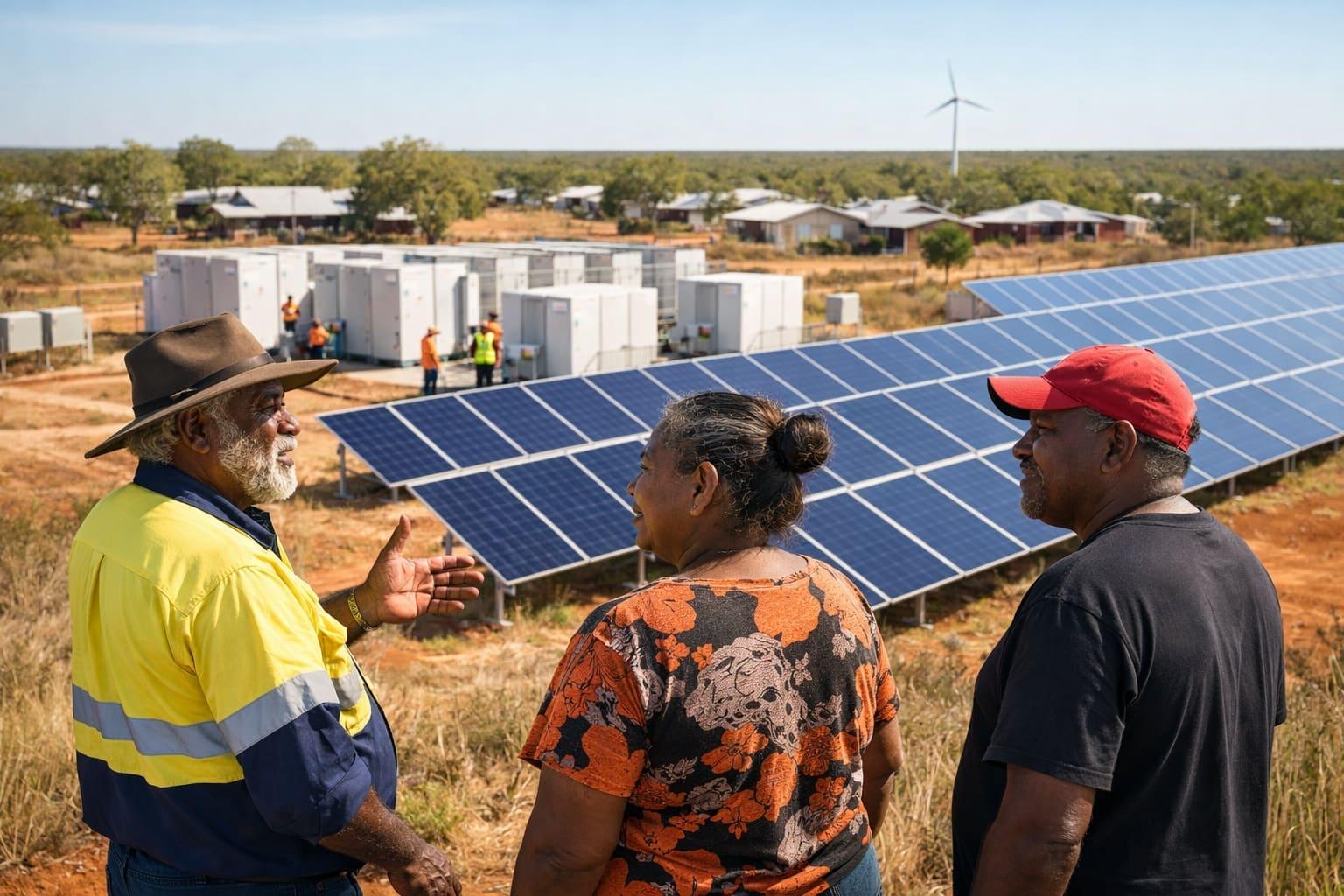
Indigenous communities in remote Australia are taking charge of their energy needs by investing in solar microgrids. The Djarindjin community plans to meet 80% of its energy requirements through a multimillion-dollar solar and battery project, reducing reliance on diesel generators. This initiative reflects a broader movement towards energy self-determination among Indigenous Australians.
At a glance
Location and topic
Region
Australia
Tag cluster
Trend count
+3 related briefs
What happened
In Djarindjin, a remote community located 200 kilometers north of Broome in Western Australia, local leaders have embarked on an ambitious project to install a solar and battery farm, named Aalga Goorlil, which translates to 'sun turtle' in the local Bardi language. This initiative aims to meet 80% of the community's energy needs through renewable sources, significantly reducing their reliance on diesel generators provided by Horizon Power, a government-owned energy retailer. The community, home to nearly 400 Bardi and Jawi people, has already invested $2 million in feasibility studies and submitted a comprehensive business case to the Western Australian government for funding. Nathan McIvor, the chief executive of the Djarindjin Aboriginal Corporation, emphasized the importance of energy self-determination, stating that the community is tired of relying on a system that does not serve their needs. The push for renewable energy in Djarindjin is part of a broader trend among Indigenous communities in Australia, as they seek to take control of their energy resources amid rising fuel costs and supply challenges exacerbated by geopolitical tensions, such as the ongoing conflict in the Middle East. Other remote communities, including Borroloola in the Northern Territory, are also making strides in renewable energy. The Ngardara Solar Microgrid project in Borroloola received $8.3 million in federal funding to install a 2.1MW solar array and a 1.8MW/6.6MWh battery, which is expected to meet 80% of the community's energy needs and save the Northern Territory government approximately 1.2 million liters of diesel annually. This project, along with others like it, not only aims to provide reliable energy but also fosters local workforce development, creating job opportunities in construction and renewable energy pathways. Similarly, the community of Ltyentye Apurte, also known as Santa Teresa, is set to begin construction on a microgrid in March 2027, which will help stabilize power reliability and reduce electricity costs for residents. These initiatives reflect a growing recognition of the need for sustainable energy solutions in remote areas, empowering Indigenous communities to take charge of their energy futures.
Why this matters
The movement towards energy self-determination is crucial for Indigenous communities, as it allows them to take control of their energy resources and reduce vulnerability to external market fluctuations. By investing in renewable energy, these communities can enhance their resilience against climate change and economic challenges. The reliance on diesel generators has historically left many remote communities exposed to rising fuel prices and supply disruptions, which can have devastating effects on their daily lives. Transitioning to renewable energy not only mitigates these risks but also promotes local job creation, as seen in the workforce development programs associated with these projects. This empowerment enables residents to invest in their own futures, fostering a sense of ownership and community pride. Furthermore, these initiatives align with broader national and global efforts to combat climate change, showcasing the potential for Indigenous communities to lead the way in sustainable practices and energy innovation.
What changed
The shift towards microgrids represents a significant change in how remote Indigenous communities approach energy generation. Previously reliant on diesel generators, these communities are now exploring sustainable alternatives that offer greater control and reliability. The transition to renewable energy sources like solar and battery storage not only addresses immediate energy needs but also fosters a sense of ownership and empowerment among community members. This change is particularly important in the context of rising fuel costs and the need for energy security, as communities can now generate their own power and reduce their dependence on external suppliers. The successful implementation of these microgrid projects could serve as a model for other remote communities across Australia, encouraging a broader movement towards energy independence and sustainability. Additionally, the focus on community-led initiatives ensures that the solutions developed are tailored to the unique needs and circumstances of each community, further enhancing their effectiveness and impact.
Bigger picture
The broader context of this movement highlights a growing recognition of the need for sustainable energy solutions in remote areas. As fuel prices rise and climate change impacts become more pronounced, communities are seeking ways to become self-sufficient. The success of these microgrid projects could inspire similar initiatives across Australia and beyond, promoting a shift towards renewable energy and community-led development. This trend aligns with global efforts to transition to cleaner energy sources and combat climate change, showcasing the potential for Indigenous communities to lead the way in sustainable practices. The Australian government has acknowledged the importance of these community-led projects, emphasizing their role in improving energy security and affordability in remote areas. By reducing reliance on diesel and fostering local job opportunities, these initiatives not only enhance the quality of life for residents but also contribute to the broader goal of achieving a sustainable energy future. As more communities embrace renewable energy, the potential for economic growth and environmental stewardship increases, paving the way for a more resilient and equitable energy landscape in Australia.
History
Historically, Indigenous communities in Australia have faced significant challenges related to energy access and reliance on external systems. The introduction of diesel generators was often seen as a temporary solution to energy needs, but it has led to ongoing issues with reliability, high costs, and environmental concerns. Many remote communities have struggled with frequent power outages and the financial burden of purchasing diesel fuel, which is subject to market fluctuations. The current push for microgrids marks a significant turning point, as these communities seek to reclaim their energy sovereignty and develop sustainable solutions tailored to their unique needs. This movement is not only about improving energy access but also about empowering Indigenous peoples to take control of their resources and futures, fostering a sense of agency and resilience in the face of historical injustices and ongoing challenges.
Looking Towards the Future
As these microgrid projects progress, it will be important to monitor their impact on energy costs, reliability, and community engagement. Observers should pay attention to how government support evolves in response to these initiatives, particularly regarding funding and policy decisions that could affect the future of renewable energy in remote communities. Additionally, the success of these projects could influence broader discussions about energy policy in Australia, potentially leading to increased investment in Indigenous-led initiatives and sustainable energy solutions. The outcomes of these projects will also serve as a critical test case for similar efforts in other regions, providing valuable insights into the challenges and opportunities associated with transitioning to renewable energy in remote and Indigenous communities.
Story timeline
Djarindjin Microgrid Proposal
Djarindjin community submits a business case for a solar and battery microgrid project.
Funding Announcement for Borroloola
Federal government announces funding for the Ngardara Solar Microgrid project in Borroloola.
Community Solar Initiatives
Djarindjin community begins installing solar panels on street lights.
Sources behind this brief
2 total
The Guardian
Original reporting on Indigenous energy initiatives.
ABC News
Coverage of Indigenous communities' renewable energy projects.
Further reading on this topic
4 links
Clean Energy Regulator
Case studies on solar power integration in remote Indigenous communities.
Centre for Indigenous Policy Research
Research on renewable energy projects on Indigenous land.
University of Technology Sydney
Study on Indigenous-led clean energy opportunities on Aboriginal land.
Australian Government Department of Industry, Science and Resources
Information on First Nations-led microgrid projects in remote communities.
Context zone
Australia
Context zone
Australia
On this map
Energy Sovereignty: Remote Indigenous Towns Invest in Microgrids
Australia