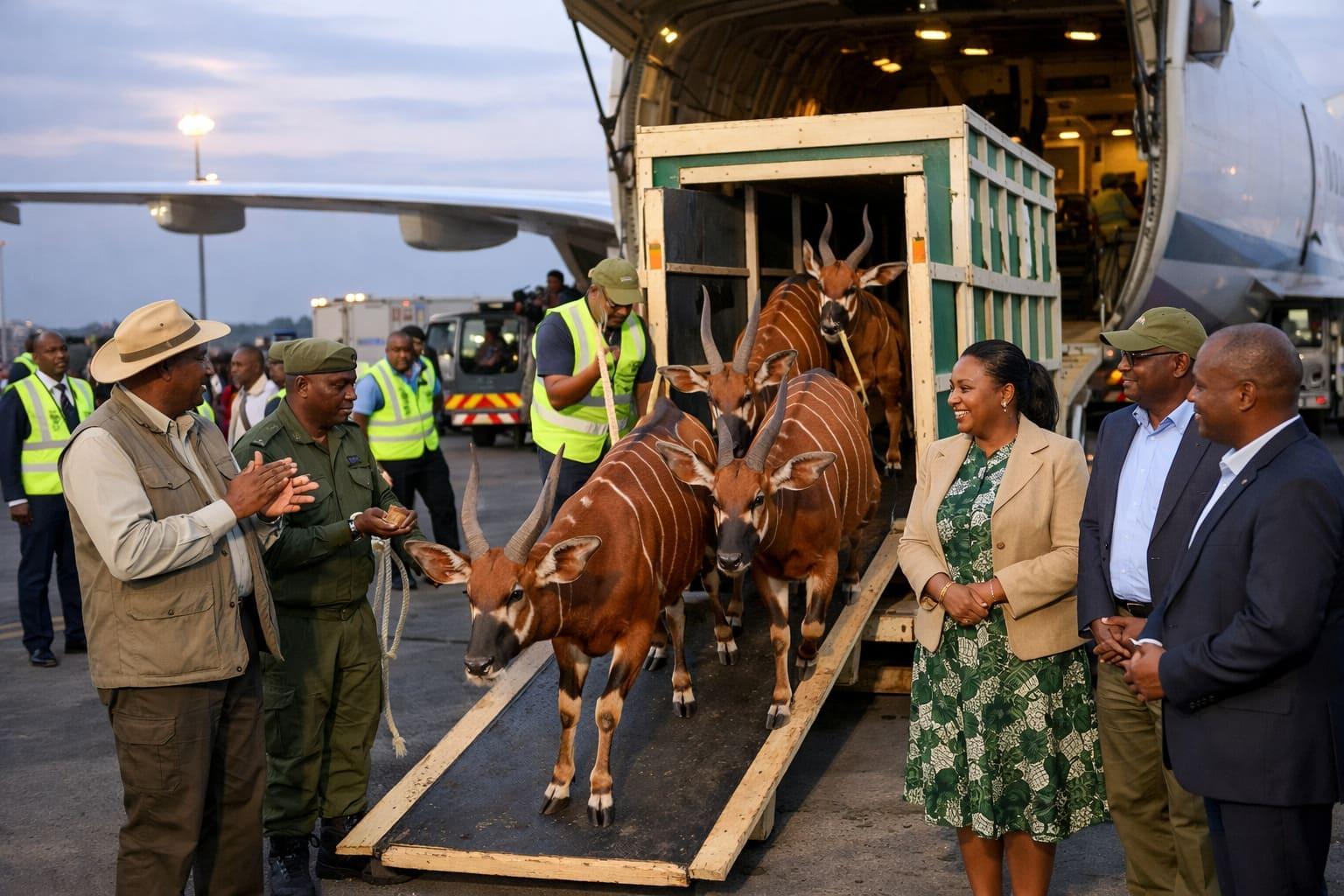
Endangered antelopes flown to Kenya from Czech zoo in 'historic homecoming'
Four critically endangered mountain bongos have been flown from a Czech zoo to Kenya, marking a significant step in conservation efforts. The Kenya Wildlife Service (KWS) welcomed the antelopes, which are expected to enhance the genetic diversity of the species in the wild. This initiative aims to bolster the dwindling population of mountain bongos, which has seen a dramatic decline over the decades.
The story
On Tuesday night, four male mountain bongos, a critically endangered species of antelope native to Kenya, arrived at Nairobi's Jomo Kenyatta International Airport after being flown from Prague Zoo in the Czech Republic. This event was marked by a warm welcome from officials, including Kenya's foreign and tourism ministers, who celebrated the arrival as a 'historic homecoming.' The Kenya Wildlife Service (KWS) described this moment as a significant step towards the recovery of the mountain bongo population, which has seen a dramatic decline over the decades. In the 1970s, there were approximately 500 mountain bongos in the wild, but today, fewer than 100 remain, making their repatriation particularly crucial. The KWS emphasized that these four bongos will play a vital role in enhancing the genetic diversity of the existing population, which currently consists of 102 individuals housed at the Mount Kenya Wildlife Conservancy (MKWC). The bongos will undergo a series of adaptation phases to build the necessary immunity for survival in the wild before being integrated into the MKWC's breeding program. This initiative is part of a broader national recovery plan aimed at increasing the mountain bongo population to around 700 by the year 2050. The KWS has previously repatriated mountain bongos, with notable efforts including the return of 17 individuals from the Rare Species Conservation Foundation in Florida last year. The first successful repatriation occurred in 2004, when 18 mountain bongos were flown back to Kenya. The KWS has reported that some previously repatriated bongos have successfully adapted to the wild and begun breeding, although challenges such as tick-borne diseases have also impacted their survival. The arrival of these four bongos is seen as a beacon of hope for the future of this rare species, with KWS director-general Erustus Kanga expressing optimism about their potential to contribute to the recovery of mountain bongos in their natural habitat.
Why it matters
The successful repatriation of the mountain bongos from Prague Zoo to Kenya is a critical milestone in the ongoing efforts to conserve this rare species. With their population dwindling to alarming levels, the introduction of these four individuals is expected to enhance the genetic diversity of the existing population, which is essential for the long-term survival of the species. This initiative highlights the importance of international collaboration in wildlife conservation, as it brings together resources and expertise from different countries to address the challenges faced by endangered species. The KWS's commitment to restoring the mountain bongo population reflects a broader recognition of the need for proactive measures to prevent extinction. The repatriation also serves as a reminder of the vital role that genetic diversity plays in the resilience of species, allowing them to adapt to changing environments and resist diseases. As conservationists work to secure a future for the mountain bongo, this event underscores the urgency of ongoing efforts to protect and restore endangered populations worldwide.
Evidence and context
The repatriation of mountain bongos from the Czech Republic to Kenya is part of a larger global movement aimed at conserving endangered species and restoring their habitats. As wildlife populations continue to decline due to habitat loss, poaching, and climate change, initiatives like this one are essential for maintaining biodiversity and ensuring the survival of vulnerable species. The KWS's efforts to increase the mountain bongo population align with broader conservation goals, emphasizing the need for sustainable practices and habitat protection. This event serves as a model for other countries facing similar challenges with endangered species, showcasing the potential for successful international collaboration in wildlife conservation. The plight of the mountain bongo is emblematic of the broader issues facing many species around the world, where human activities have led to significant declines in populations. By focusing on genetic diversity and the reintroduction of captive-bred individuals into the wild, conservationists are taking proactive steps to address these challenges. The success of this initiative could inspire similar efforts for other endangered species, highlighting the importance of a coordinated approach to wildlife conservation that involves governments, NGOs, and local communities. As the KWS continues to work towards its recovery goals, the mountain bongo's story serves as a reminder of the ongoing struggle to protect our planet's biodiversity and the critical role that each species plays in the ecosystem.
Limits and unknowns
Historically, mountain bongos have faced significant threats from habitat loss and poaching, leading to their drastic decline over the years. Once abundant in the highland forests of Kenya, their numbers began to dwindle in the late 20th century due to increased human encroachment and illegal hunting. Conservation efforts began in earnest in the early 2000s, with the first successful repatriation of bongos to Kenya occurring in 2004, when 18 individuals were flown back from captivity. Since then, various organizations, including the KWS and the Rare Species Conservation Foundation, have worked tirelessly to breed and reintroduce these animals into the wild. The challenges have been significant, with some previously repatriated bongos struggling to adapt to their new environment and facing threats from diseases. However, the ongoing efforts to restore the mountain bongo population reflect a growing recognition of the need to protect this unique species and its habitat. The recent arrival of the four bongos from Prague Zoo represents a hopeful chapter in the conservation history of this rare antelope, as stakeholders continue to collaborate on strategies to ensure their survival.
What happens next
As the four mountain bongos acclimate to their new environment at the Mount Kenya Wildlife Conservancy, observers should closely monitor their integration into the existing population. The success of their adaptation and future breeding outcomes will be critical indicators of the effectiveness of this conservation effort. Additionally, the KWS's progress towards its ambitious goal of increasing the wild mountain bongo population to 700 by 2050 will be an important development to follow. Stakeholders will be watching for updates on the health and well-being of the bongos, as well as any challenges they may face in their new habitat. The ongoing collaboration between international conservation organizations and local authorities will also be key in ensuring the long-term success of this initiative, as it highlights the importance of a united front in the fight against wildlife extinction.
Follow the story
Share it, watch the explainer, or continue with the reporting trail.
Story timeline
First Repatriation
The first successful repatriation of mountain bongos to Kenya occurred.
Population Decline
Mountain bongo population estimated at about 500, facing significant threats.
Current Population
Less than 100 mountain bongos estimated to remain in the wild.
Further reading on this topic
3 links
Mountain Bongo Project
Dedicated to the conservation of Kenya's wild mountain bongos and their forest habitat.
Mount Kenya Wildlife Conservancy
Organization involved in breeding and rewilding programs for mountain bongos.
International Bongo Foundation
Provides detailed information about the mountain bongo species and conservation efforts.
Endangered antelopes flown to Kenya from Czech zoo in 'historic homecoming'
A short visual explainer for readers who want the story in a different rhythm.