Florida baby ‘born twice’ after elaborate surgery involving partial delivery
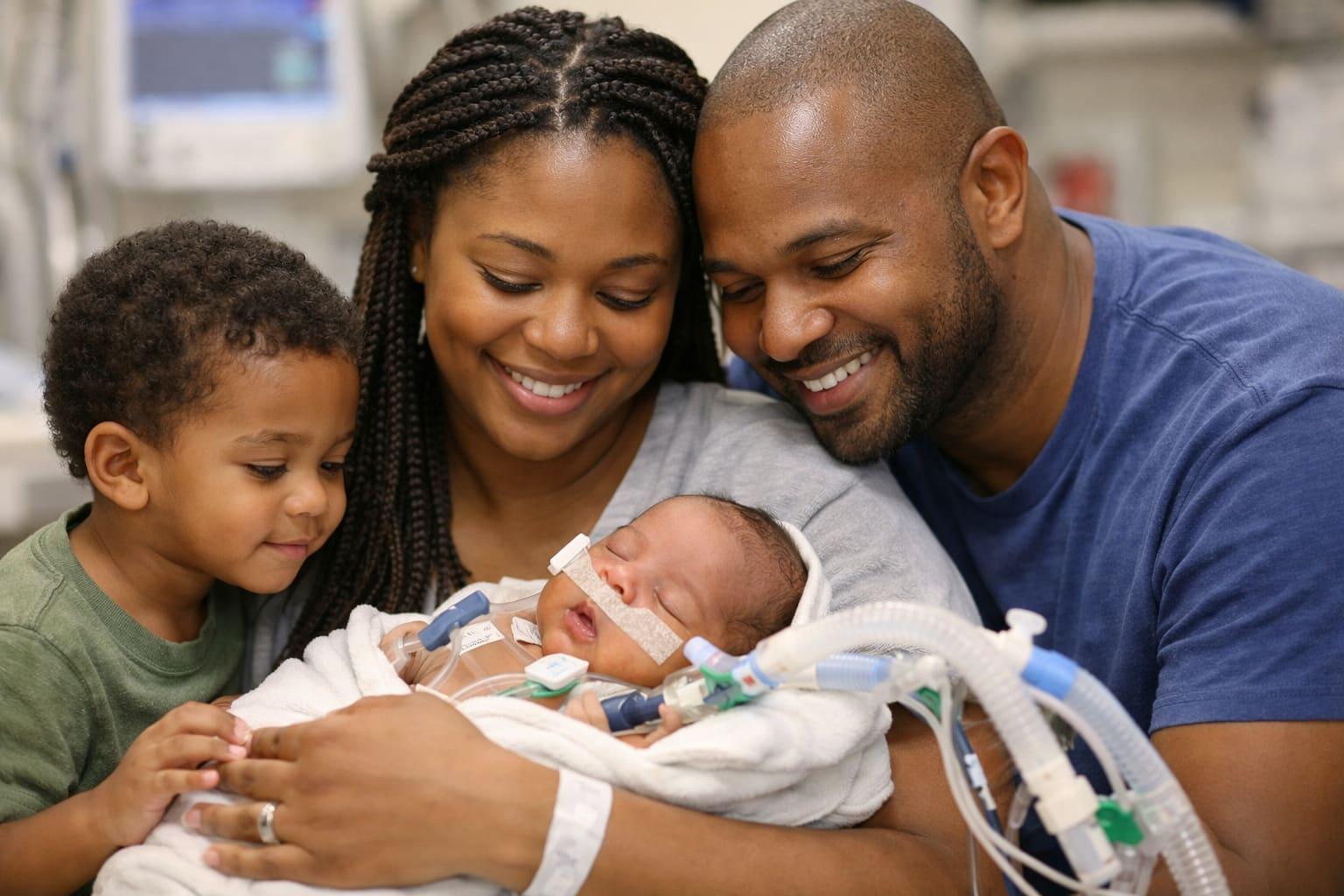
Cassian Joubert, a Florida infant, underwent a groundbreaking surgery that involved a partial delivery to save his life. This innovative procedure allowed doctors to create an airway for him while still in the womb, leading to his eventual birth. The Jouberts celebrate Cassian's unique journey with two birthdays, marking both his surgery and his birth.
At a glance
Location and topic
Region
Orlando, United States
Tag cluster
Trend count
+14 related briefs
What happened
Cassian Joubert's remarkable journey began when his mother, Keishera Joubert, learned she was pregnant in January 2025. The couple, who already had a two-year-old son named Mattias, were excited about welcoming a new addition to their family. However, their joy turned to concern when, at 19 weeks into the pregnancy, doctors diagnosed Cassian with congenital high airway obstruction syndrome (Chaos). This rare condition, affecting approximately one in every 50,000 births, involves a thick membrane that obstructs the fetus's airway, leading to potentially fatal complications due to fluid accumulation in the lungs. Dr. Emanuel "Mike" Vlastos, a physician at Orlando Health, informed the Jouberts that he had encountered only a dozen cases of Chaos in his 42-year career, with a mere three survivors. Faced with this grim prognosis, the Jouberts were determined to explore every possible option to save their unborn child. Initially, Dr. Vlastos attempted a less invasive procedure to clear the airway blockage using a laser scope, but this approach was unsuccessful. In a bold move, he proposed a groundbreaking surgical intervention: a partial delivery of Cassian through a caesarean section, where only his head and arms would be outside the womb while remaining attached to the placenta. This would allow an ear, nose, and throat specialist to create an airway for Cassian before he was returned to his mother's uterus. The Jouberts agreed to this high-stakes procedure, which took place at Orlando Health’s Winnie Palmer hospital in June 2025, when Keishera was 25 weeks pregnant. The surgery was described as "rare and novel" by the hospital, and it was a success. Six weeks later, Keishera went into labor, and Cassian was born, weighing just 3 pounds (1.4 kg). He spent over four months in the neonatal intensive care unit (NICU) before finally being discharged just in time for Christmas. Despite ongoing health challenges, including the need for a ventilator, the Jouberts expressed immense gratitude for the medical team that supported them throughout this journey. Cassian's story is a testament to medical innovation and the resilience of family bonds, as they now celebrate two birthdays: one for his surgery and another for his birth.
Why this matters
Cassian's journey underscores the transformative potential of modern medicine in addressing life-threatening conditions before birth. The innovative surgical approach taken by Dr. Vlastos and his team not only saved Cassian's life but also highlights the critical role of specialized medical care in managing complex pregnancies. This case serves as a beacon of hope for families facing similar challenges, demonstrating that advanced medical interventions can lead to positive outcomes even in dire situations. Furthermore, Cassian's story may inspire further advancements in prenatal surgical techniques, encouraging medical professionals to explore new possibilities in treating congenital conditions. The emotional impact of such experiences on families cannot be overstated, as they navigate the uncertainties of high-risk pregnancies while holding onto hope for their child's future.
What changed
The successful outcome of Cassian's surgery has significantly raised awareness about congenital conditions like Chaos and the potential for prenatal interventions. This case has highlighted the importance of specialized medical teams in managing complex pregnancies, showcasing how innovative surgical techniques can alter the course of a child's life. The Jouberts' experience may inspire other families facing similar challenges to seek advanced medical options, fostering a greater understanding of the possibilities available in prenatal care. Additionally, Cassian's story has the potential to influence healthcare policies and funding for research into prenatal surgeries, ultimately benefiting more families dealing with high-risk pregnancies. As awareness grows, it may lead to increased collaboration among medical professionals to share knowledge and techniques that can improve outcomes for future patients.
Bigger picture
Cassian's case is emblematic of a broader trend in medicine where prenatal surgeries are becoming increasingly common and sophisticated. As technology advances, the ability to perform life-saving procedures before birth is improving, potentially transforming the landscape of neonatal care. This shift is not only about saving lives but also about enhancing the quality of life for infants born with congenital conditions. The success of Cassian's surgery may lead to increased research funding and interest in prenatal surgery, encouraging medical institutions to invest in training and resources for such interventions. Furthermore, as more cases like Cassian's emerge, they could pave the way for new protocols and best practices in managing high-risk pregnancies. The implications of this trend extend beyond individual cases, as it may influence healthcare systems to prioritize prenatal care and surgical options, ultimately benefiting families facing similar challenges. The ongoing dialogue surrounding prenatal surgery will likely continue to evolve, with Cassian's story serving as a catalyst for further advancements in this vital area of medicine.
History
The field of prenatal surgery has evolved significantly over the past few decades, driven by advancements in imaging technology and surgical techniques. Historically, many congenital conditions were deemed untreatable before birth, leaving families with few options and often devastating outcomes. However, innovations in minimally invasive surgical procedures have opened new avenues for care, allowing for earlier and more effective interventions. The development of techniques such as fetoscopy and in-utero surgery has revolutionized the way medical professionals approach high-risk pregnancies. Cassian's case exemplifies how far this field has come, showcasing the potential for life-saving interventions that were once thought impossible. As medical knowledge continues to expand, the future of prenatal surgery holds promise for even more breakthroughs that could change the lives of countless families.
Looking Towards the Future
As Cassian's story continues to gain attention, it will be important to monitor developments in prenatal surgical techniques and their applications in clinical practice. The upcoming presentation of Cassian's case at an international medical conference in Japan in October will likely spark further discussions and research in this area, potentially influencing future medical protocols. Additionally, observing how healthcare systems adapt to incorporate advanced prenatal interventions will be crucial in understanding the broader impact of such cases on maternal and infant health. Families facing similar challenges may also benefit from increased awareness and access to specialized care, making it essential to follow the ongoing dialogue surrounding prenatal surgery and its implications for high-risk pregnancies.
Story timeline
Diagnosis of Chaos
Keishera Joubert learns about her baby's congenital condition during pregnancy.
Innovative Surgery
Cassian undergoes a groundbreaking partial delivery surgery to create an airway.
Birth of Cassian
Cassian is born six weeks after the surgery, marking a significant milestone.
Homecoming
Cassian returns home after spending over four months in the NICU.
Sources behind this brief
2 total
The Guardian
Original reporting on Cassian Joubert's story.
Orlando Health
Information on the medical procedures and team involved.
Further reading on this topic
4 links
National Library of Medicine
Presents a study on the prenatal diagnosis and management of CHAOS, discussing diagnostic methods and potential outcomes.
Wikipedia
Reference background on Orlando Health.
Wikipedia
Reference background on Medicine.
Wikipedia
Reference background on Health care.
Context zone
United States
Context zone
United States
On this map
Florida baby ‘born twice’ after elaborate surgery involving partial delivery
Orlando, United States
Good vibrations for quantum communications: Engineers couple single phonon to single atomic spin
Cambridge, United States
Researchers at Harvard have successfully coupled a single quantum of vibrational energy, or phonon, to a single atomic spin in diamond. This breakthrough paves the way for using sound as a medium for quantum information, potentially revolutionizing quantum technologies. The findings, published in Nature, highlight the promise of phonons as compact and long-lived carriers of quantum information.
Every dollar spent on forest fuel treatments saves $3.75 in wildfire damages, study finds
United States
A recent study from UC Davis reveals that investing in forest fuel treatments, such as thinning and prescribed burns, can save $3.75 for every dollar spent by preventing wildfire damages. The research analyzed nearly 300 wildfires across the western United States and found that these treatments significantly reduced wildfire spread and severity, preventing an estimated $2.8 billion in damages. The findings highlight the importance of investing in preventive forest management to mitigate the increasing risks of wildfires due to climate change.
Hundreds of animals rescued from ‘appalling’ conditions at California sanctuary
Julian, United States
Over 400 animals, including horses, cats, and dogs, were rescued from a California sanctuary facing bankruptcy and severe neglect. The San Diego Humane Society led the operation, uncovering widespread malnutrition and untreated injuries among the animals. This rescue highlights the ongoing challenges in animal welfare and the importance of vigilance in ensuring proper care.
NASA Laser Terminal enhances views during Artemis II mission
United States
NASA's Artemis II mission showcased the effectiveness of laser communications, enabling high-definition data transfer between the Orion spacecraft and Earth. The optical terminal transmitted 484 gigabytes of data, significantly improving real-time science operations and public engagement. This advancement marks a pivotal step in enhancing future space missions.
Astronauts Experience Awe-Inspiring Solar Eclipse from Lunar Orbit
United States
During the Artemis II mission, astronauts witnessed a total solar eclipse from lunar orbit, marking a historic first. This unique perspective allowed them to see the moon completely obscuring the sun, with Earthshine illuminating the lunar surface. Such experiences can profoundly impact astronauts' perceptions of their place in the universe.
AI Outperforms Doctors in Harvard Trial of Emergency Triage Diagnoses
Boston, United States
A recent Harvard study reveals that AI systems have surpassed human doctors in emergency triage diagnoses, particularly in high-pressure situations. The AI demonstrated a significant advantage in accuracy, diagnosing correctly in 67% of cases compared to 50-55% for human doctors. This breakthrough suggests a transformative shift in medical technology, potentially reshaping the role of healthcare professionals in emergency settings.