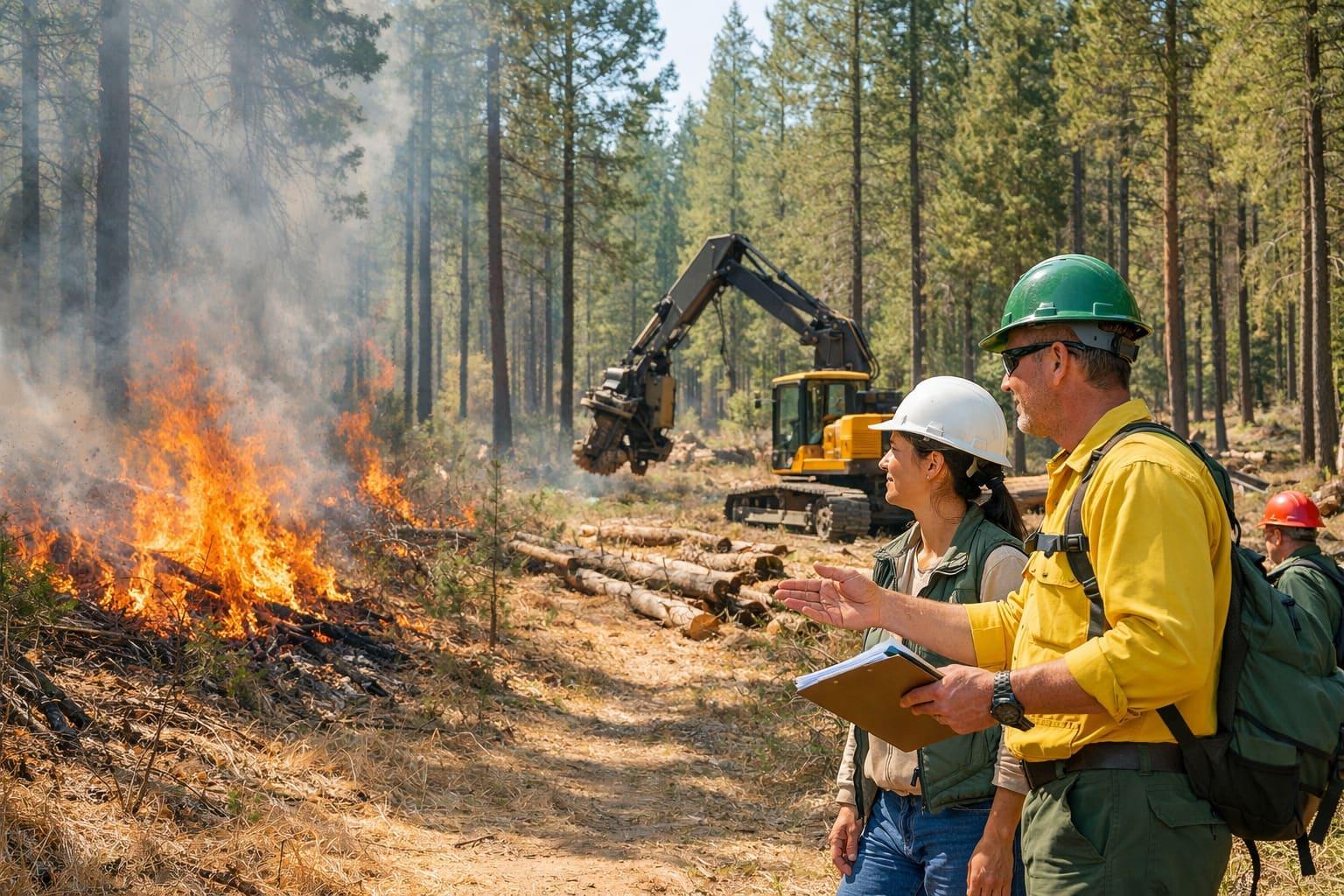
Every dollar spent on forest fuel treatments saves $3.75 in wildfire damages, study finds
A recent study from UC Davis reveals that investing in forest fuel treatments, such as thinning and prescribed burns, can save $3.75 for every dollar spent by preventing wildfire damages. The research analyzed nearly 300 wildfires across the western United States and found that these treatments significantly reduced wildfire spread and severity, preventing an estimated $2.8 billion in damages. The findings highlight the importance of investing in preventive forest management to mitigate the increasing risks of wildfires due to climate change.
The story
Researchers at the University of California, Davis, conducted a comprehensive study analyzing nearly 300 wildfires that intersected with USDA Forest Service fuel reduction treatments across 11 states from 2017 to 2023. The study found that every dollar spent on forest fuel treatments saved approximately $3.75 in wildfire damages, totaling an estimated $2.8 billion in avoided losses. The treatments, which included forest thinning and prescribed burns, were shown to significantly reduce wildfire spread and severity, with treated areas experiencing a 36% reduction in total burned area compared to untreated areas. The analysis revealed that fires were more than 13 percentage points less likely to continue spreading after reaching treated areas. Prescribed burns were particularly effective, outperforming mechanical thinning alone. The study also highlighted the importance of larger landscape-scale treatments, which were found to be the most effective in limiting wildfire spread. Overall, the findings emphasize the critical need for increased investment in preventive forest management to mitigate the escalating risks associated with wildfires. The researchers measured wildfire damage, including structure losses, carbon emissions, and health impacts from exposure to fine particulate matter. As climate change has intensified wildfires in recent decades, those damages are estimated to total between $185 billion and $540 billion annually. The study, published in the journal Science, is the first to evaluate the economic value of Forest Service fuel treatments across the West on a large scale using data from wildfires that encountered fuel treatments rather than relying on wildfire simulation models. Lead author Frederik Strabo, a postdoctoral scholar with the UC Davis Department of Agricultural and Resource Economics, emphasized that fuel treatments and forest management are critically underfunded public goods. He noted that when fewer resources are available to agencies like the Forest Service, more of the economic burden of wildfires falls on the public. The findings underscore the importance of investing more in preventive forest management, especially as climate change continues to exacerbate wildfire risks.
Why it matters
The economic implications of this study are profound, as it illustrates how strategic investments in forest management can lead to substantial savings in wildfire damages. With climate change exacerbating wildfire risks, understanding the cost-effectiveness of preventive measures is crucial for policymakers. This research advocates for a shift in focus from reactive suppression to proactive management, which could enhance community resilience and environmental health. The study's findings suggest that investing in forest fuel treatments not only protects property and lives but also mitigates the broader economic impacts associated with wildfires, such as health care costs from smoke exposure and loss of productivity. As wildfires become more frequent and severe, the need for effective management strategies becomes increasingly urgent. The study provides a clear economic rationale for policymakers to allocate more resources toward preventive measures, potentially leading to a more sustainable approach to wildfire risk reduction. This shift could also foster greater public awareness and support for forest management initiatives, ultimately contributing to safer and healthier communities.
Evidence and context
As wildfires continue to threaten communities and ecosystems, the findings from this study highlight the urgent need for effective forest management strategies. The economic analysis provided by the researchers serves as a compelling argument for investing in preventive measures, which could not only save lives and property but also reduce the financial burden on public resources. In a time when climate change is intensifying the frequency and severity of wildfires, adopting a proactive approach to forest management is essential for safeguarding both human and environmental health. The study underscores the importance of viewing forest management as a critical investment rather than a cost, particularly in light of the escalating damages associated with wildfires. As communities grapple with the realities of climate change, the need for innovative and effective solutions becomes increasingly clear. The findings may also resonate beyond the United States, as countries worldwide face similar challenges related to wildfire management and climate adaptation. By prioritizing preventive forest treatments, governments can not only protect their citizens but also contribute to broader efforts to combat climate change and preserve biodiversity. The study's implications extend to various stakeholders, including policymakers, environmental organizations, and local communities, all of whom play a role in shaping the future of forest management and wildfire resilience. Ultimately, the research advocates for a comprehensive approach that integrates economic, environmental, and social considerations in wildfire management strategies.
Limits and unknowns
Historically, wildfire management has primarily focused on suppression efforts, often neglecting the importance of preventive measures. This reactive approach has been driven by the immediate need to protect lives and property from the devastating impacts of wildfires. However, as climate change has intensified the frequency and severity of wildfires, the need for effective forest management strategies has become increasingly apparent. The study from UC Davis represents a significant shift in understanding the economic value of proactive forest treatments, advocating for a more balanced approach to wildfire management. By demonstrating the substantial cost savings associated with preventive measures, the research challenges traditional paradigms and highlights the necessity of investing in forest health and resilience. This shift in perspective is crucial as communities face the growing threat of wildfires, necessitating a reevaluation of how resources are allocated and managed. The findings contribute to a broader dialogue about sustainable land management practices and the role of forests in mitigating climate change impacts, emphasizing the need for a long-term vision that prioritizes prevention over reaction.
What happens next
In the coming months, it will be important to monitor how policymakers respond to the findings of this study. Increased funding for forest management initiatives and a shift in wildfire policy towards prevention could emerge as key developments. Additionally, the effectiveness of implemented treatments in reducing wildfire damages will be crucial to observe as climate conditions continue to evolve. Stakeholders, including local governments, environmental organizations, and community groups, may begin to advocate more strongly for preventive measures based on the economic benefits outlined in the research. Furthermore, the study may inspire additional research into the most effective forest management practices, leading to innovations in how communities prepare for and respond to wildfire threats. As the impacts of climate change become more pronounced, the urgency for effective wildfire management strategies will only grow, making it essential to track the implementation of these findings in real-world scenarios.
Follow the story
Share it, watch the explainer, or continue with the reporting trail.
Story timeline
Study Published
The study detailing the economic benefits of forest fuel treatments is published.
Research Conducted
Researchers analyze nearly 300 wildfires across 11 states to assess the impact of fuel treatments.
Wildfire Severity Increases
Climate change has led to an increase in the frequency and severity of wildfires.
Further reading on this topic
4 links
US Forest Service
Analyzes the impact of fuel treatments on wildfire suppression costs and property damage.
Wikipedia
Reference background on University of California, Davis.
Wikipedia
Reference background on United States Forest Service.
Wikipedia
Reference background on Environmental science.
Every dollar spent on forest fuel treatments saves $3.75 in wildfire damages, study finds
A short visual explainer for readers who want the story in a different rhythm.