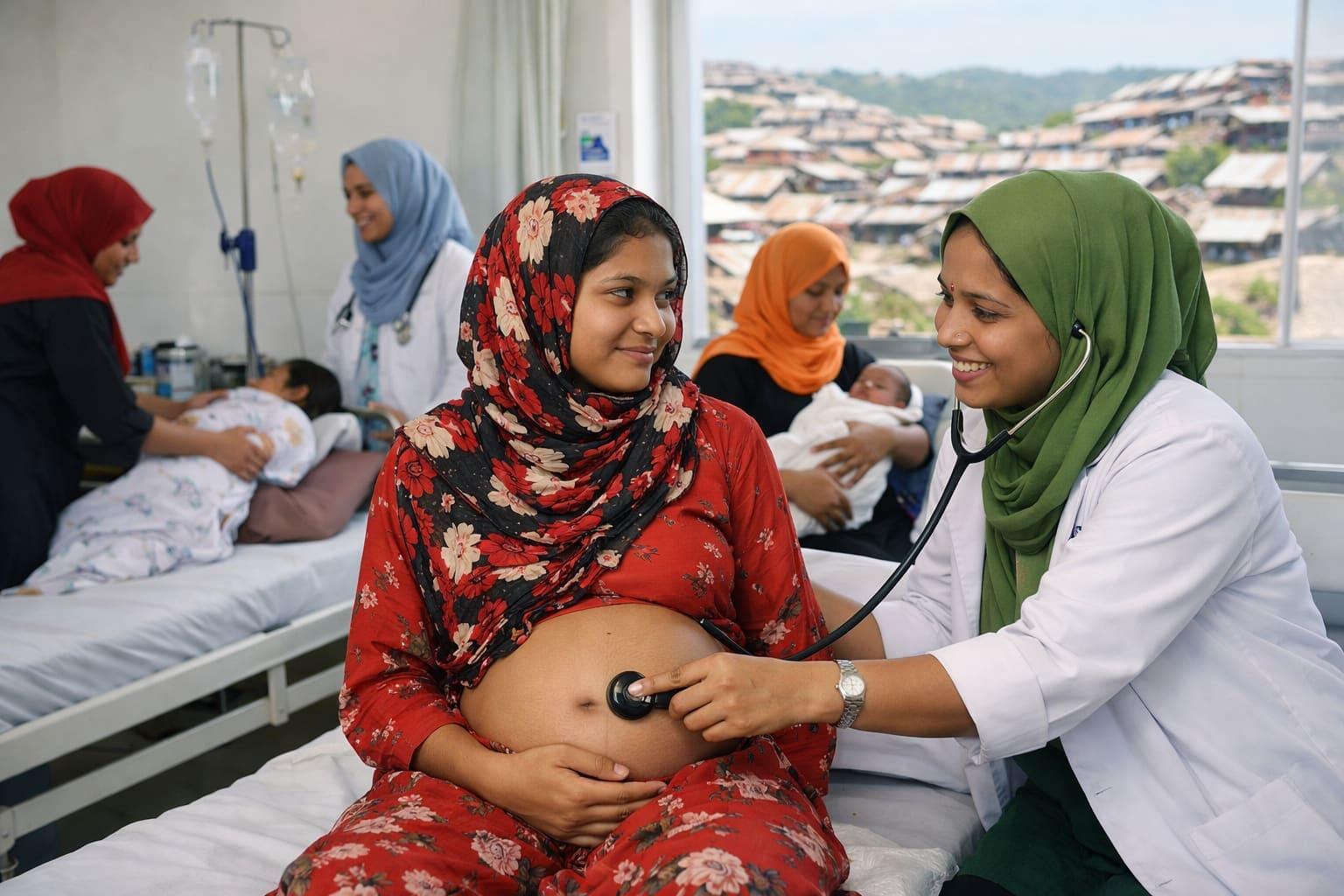
New Maternal Hospital Opens in World's Largest Refugee Camp
A new maternal hospital has opened in Cox's Bazar, Bangladesh, providing essential care for Rohingya women in the world's largest refugee camp. Amidst significant aid cuts, this facility offers hope for safer childbirth and improved maternal health. The hospital, run by Save the Children, is a critical resource for over a million refugees, particularly women and girls, who face precarious conditions during pregnancy.
The story
In a significant development for maternal health, a new hospital has opened in the Kutupalong refugee camp in Cox's Bazar, Bangladesh. This facility aims to provide comprehensive obstetric care, including emergency services, to the Rohingya women who have faced dire conditions during childbirth. Previously, many women had to give birth in inadequate settings, often leading to complications and increased mortality rates. The hospital, operated by Save the Children, is designed to address these challenges directly, offering a range of services from routine check-ups to emergency interventions. The hospital's opening comes at a critical time, as the camp has seen a reduction in foreign aid since 2025, leading to the closure of health centers and schools. With over half of the more than one million Rohingya refugees being women and girls, the need for reliable maternal healthcare has never been more urgent. Health workers at the facility report that the availability of services like C-sections and ultrasounds has already begun to change the landscape of maternal care in the camp, providing hope and security to expectant mothers. Inside the hospital, health worker Rozina Akhter, 29, emphasizes the importance of the facility in reducing maternal and child mortality. She notes that before the hospital opened, women experiencing complications often had to travel long distances to receive care, which could be life-threatening. Now, with the hospital's resources available, women can receive timely interventions, significantly improving their chances of safe childbirth. The hospital is modest but functional, equipped with surgical tools and staffed by trained professionals who are dedicated to providing care in a challenging environment. The facility represents a beacon of hope for many women who have endured years of uncertainty and fear regarding their reproductive health. For instance, 17-year-old Najma Khatun, who is nine months pregnant, expresses her relief at being able to access regular check-ups and plans to give birth at the hospital, stating, "Now I feel better and less worried about what could go wrong. The doctors will take good care of me." However, the hospital's opening does not erase the broader challenges faced by the Rohingya community, as many women still arrive at the facility in distress, often after attempting to manage complications at home. The hospital cannot change the overall trajectory of life in the camps, but it offers a critical lifeline in a precarious situation.
Why it matters
The establishment of this hospital is crucial for improving maternal health outcomes in a context where many women face life-threatening risks during childbirth. It represents a commitment to addressing the healthcare needs of one of the most vulnerable populations globally. By providing essential services, the hospital not only saves lives but also empowers women to make informed choices about their reproductive health. The facility's presence in the camp is particularly significant given the backdrop of reduced foreign aid, which has led to the closure of many health centers and schools. The hospital stands as a testament to the resilience of the Rohingya community and the ongoing efforts of humanitarian organizations to provide care in the face of adversity. It also highlights the importance of international support for maternal health initiatives, especially in refugee settings where women often face compounded risks due to displacement and lack of resources. The hospital's services are not just about immediate medical care; they also represent a shift towards recognizing and addressing the unique challenges faced by women in these circumstances. As more women access the hospital's services, it is expected that maternal and infant mortality rates will decline, contributing to a healthier future for the next generation of Rohingya children.
Evidence and context
The opening of this hospital is a critical response to the ongoing humanitarian crisis faced by the Rohingya people, who have been displaced since 2017. As aid cuts continue to impact the camp, the establishment of reliable healthcare services becomes increasingly vital. This hospital not only addresses immediate health needs but also serves as a symbol of resilience and hope for a community that has endured significant hardships. The situation highlights the importance of sustained international support for refugee health initiatives, especially in regions experiencing prolonged crises. The Rohingya have faced decades of persecution in Myanmar, culminating in a mass exodus to Bangladesh in 2017. Since then, the Kutupalong camp has grown to become the largest refugee camp in the world, housing over a million people. The ongoing humanitarian crisis has been exacerbated by cuts in international aid, leading to severe shortages in food, healthcare, and education. The establishment of the maternal hospital marks a rare improvement in conditions for refugees, particularly for women who have historically faced significant barriers to accessing healthcare. The hospital's services are not only essential for immediate maternal health but also play a role in empowering women within the camp, allowing them to take control of their reproductive health and make informed decisions about their futures. As the international community continues to grapple with the complexities of the Rohingya crisis, the hospital stands as a reminder of the urgent need for comprehensive support and sustainable solutions to improve the lives of those affected by displacement.
Limits and unknowns
The Rohingya have faced decades of persecution in Myanmar, culminating in a mass exodus to Bangladesh in 2017. Since then, the Kutupalong camp has grown to become the largest refugee camp in the world, housing over a million people. The ongoing humanitarian crisis has been exacerbated by cuts in international aid, leading to severe shortages in food, healthcare, and education. The establishment of the maternal hospital marks a rare improvement in conditions for refugees, particularly for women who have historically faced significant barriers to accessing healthcare. The hospital's opening is a response to the urgent need for maternal health services in a context where many women have faced life-threatening risks during childbirth. It represents a commitment to addressing the healthcare needs of one of the most vulnerable populations globally, providing essential services that can save lives and empower women to make informed choices about their reproductive health.
What happens next
As the hospital begins operations, it will be important to monitor its impact on maternal and infant health outcomes in the camp. Observers should also watch for potential changes in aid policies and international support for healthcare initiatives in refugee settings. The ongoing situation in Cox's Bazar will likely influence future humanitarian responses and funding allocations. Additionally, the hospital's ability to maintain its services amid ongoing aid cuts will be crucial in determining its long-term effectiveness. Stakeholders should pay attention to the experiences of women utilizing the hospital, as their feedback will be vital in shaping future healthcare initiatives in the camp. The success of this facility could serve as a model for similar interventions in other refugee settings, highlighting the importance of accessible maternal healthcare in crisis situations.
Follow the story
Share it, watch the explainer, or continue with the reporting trail.
Story timeline
Rohingya Exodus Begins
Mass displacement of Rohingya people from Myanmar to Bangladesh due to violence.
Cox's Bazar Camp Established
Formation of the Kutupalong refugee camp to accommodate Rohingya refugees.
Aid Cuts Impact Refugees
Significant reductions in foreign aid lead to closures of health centers and schools.
Maternal Hospital Opens
A new maternal hospital opens in the Kutupalong camp, providing essential healthcare services.
Further reading on this topic
4 links
New Maternal Hospital Opens in World's Largest Refugee Camp
A short visual explainer for readers who want the story in a different rhythm.