Hundreds of animals rescued from ‘appalling’ conditions at California sanctuary
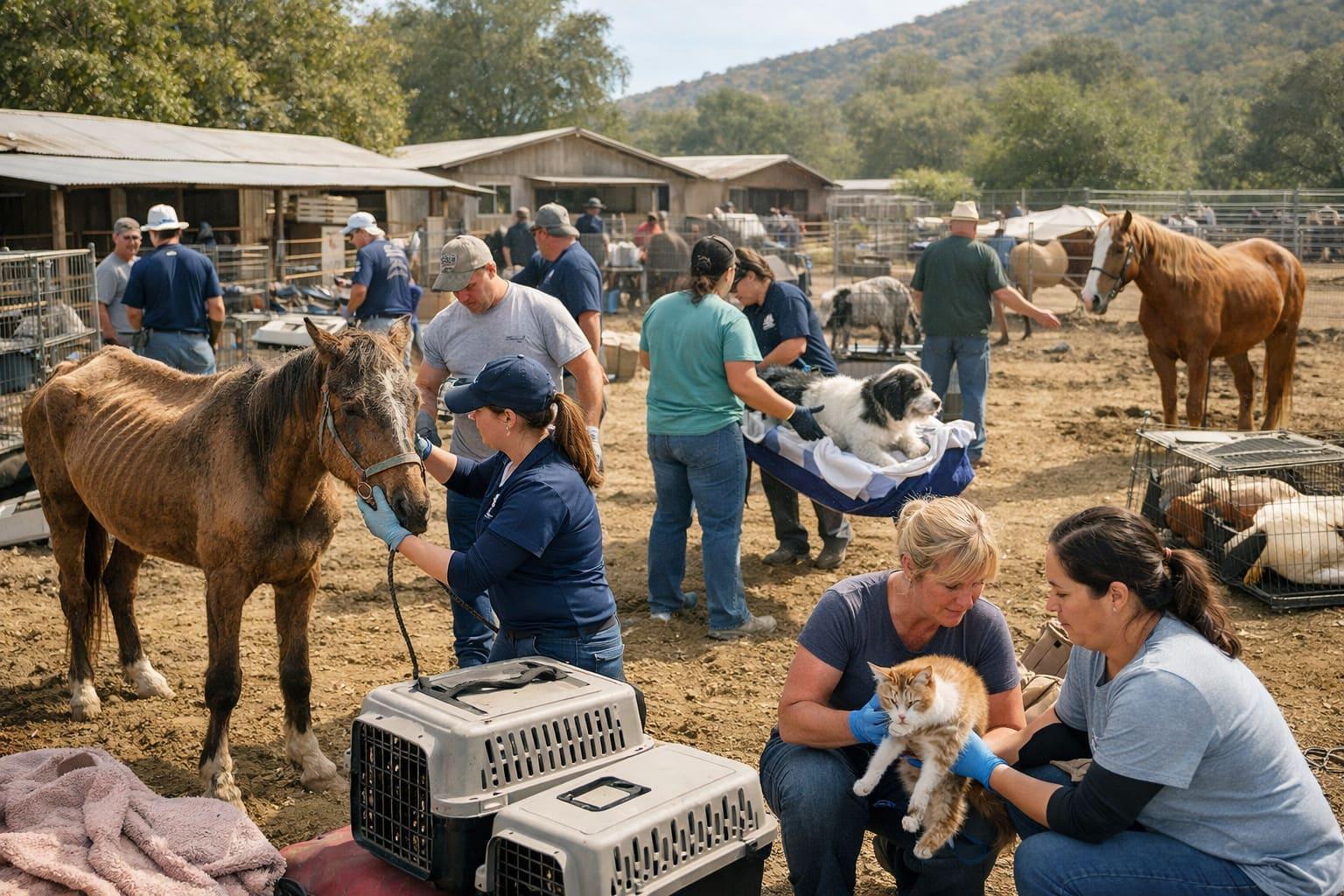
Over 400 animals, including horses, cats, and dogs, were rescued from a California sanctuary facing bankruptcy and severe neglect. The San Diego Humane Society led the operation, uncovering widespread malnutrition and untreated injuries among the animals. This rescue highlights the ongoing challenges in animal welfare and the importance of vigilance in ensuring proper care.
At a glance
Location and topic
Region
Julian, United States
Tag cluster
Trend count
+8 related briefs
What happened
On May 1, 2026, the San Diego Humane Society undertook a significant rescue operation at Villa Chardonnay, a sanctuary located in Julian, California, which had been in operation since 2003. This facility, which claimed to provide a safe haven for abandoned and abused animals, was found to be in a state of severe neglect, prompting the humane society to act. Reports of malnutrition, untreated injuries, and overall poor living conditions had raised alarms among animal welfare advocates for some time. The situation escalated when the sanctuary filed for bankruptcy, leading to a legal transfer of the animals to the humane society by the bankruptcy trustee. During the rescue, over 400 animals were recovered, including approximately 165 horses, 30 dogs, and more than 300 cats, along with various other animals such as chickens, ducks, geese, goats, and pigs. Many of these animals were in dire health, suffering from widespread malnutrition, open wounds, and parasitic infections like giardia. Tragically, some animals, including four horses and a pony, had to be euthanized to alleviate their suffering. Dr. Gary Weitzman, the president and CEO of the San Diego Humane Society, described the conditions as “appalling,” emphasizing the clear evidence of neglect. Despite the sanctuary's spokesperson, Heidi Redman, asserting that the animals were well cared for and that the organization had hoped to recover from its financial troubles, the overwhelming evidence of neglect contradicted these claims. The rescue operation not only aimed to save the lives of these animals but also highlighted the urgent need for better oversight and regulation of animal sanctuaries.
Why this matters
The rescue of over 400 animals from Villa Chardonnay underscores the critical importance of animal welfare and the need for stringent oversight of sanctuaries and care facilities. This incident serves as a stark reminder of the responsibilities that come with caring for animals, as well as the dire consequences of neglect. The San Diego Humane Society's intervention not only saved lives but also brought to light systemic issues within animal care facilities that can lead to such tragic situations. The public's awareness of these issues is crucial, as it can drive demand for better regulations and accountability in the animal welfare sector. Furthermore, this rescue operation may inspire other organizations and authorities to take a more proactive approach in monitoring animal sanctuaries, ensuring that they adhere to proper care standards and do not fall into neglect. The implications of this rescue extend beyond the immediate welfare of the animals involved; they highlight a broader societal obligation to protect vulnerable creatures and ensure their well-being.
What changed
The rescue operation at Villa Chardonnay has led to a significant shift in the management and care of the rescued animals. The San Diego Humane Society has taken over the responsibility for their rehabilitation, ensuring that they receive the necessary medical attention and care that they were previously denied. This change is crucial, as many of the animals were suffering from severe health issues that require immediate and ongoing treatment. The humane society's involvement also raises the possibility of increased scrutiny and potential reforms in the regulations governing animal sanctuaries. As the public becomes more aware of the conditions at such facilities, there may be a push for stricter guidelines and oversight to prevent similar incidents in the future. This incident could serve as a catalyst for change, prompting lawmakers and animal welfare organizations to advocate for better standards and practices in animal care, ultimately leading to improved outcomes for animals across the state and beyond.
Bigger picture
The rescue of these animals from Villa Chardonnay is part of a larger conversation about animal welfare and the responsibilities of sanctuaries. It raises critical questions about the adequacy of current regulations and the need for better oversight to prevent neglect and abuse in animal care facilities. As public awareness of animal welfare issues grows, there is likely to be increased pressure on lawmakers to implement stricter guidelines for sanctuaries and other animal care organizations. This incident highlights the importance of vigilance in ensuring that facilities claiming to provide safe havens for animals are held accountable for their care practices. The broader implications of this rescue extend to the entire animal welfare movement, which has seen a significant evolution over the past few decades. As society becomes more attuned to the needs and rights of animals, there is a growing expectation that sanctuaries and shelters operate with transparency and integrity. The Villa Chardonnay case may serve as a pivotal moment, prompting discussions about the ethical treatment of animals and the responsibilities of those who care for them. It also emphasizes the need for collaboration among animal welfare organizations, government agencies, and the public to create a more humane environment for all animals.
History
The issue of animal welfare has gained increasing attention over the past few decades, with a growing awareness of the conditions in which many animals are kept. Sanctuaries are often viewed as safe havens for abandoned or abused animals, yet incidents like the one at Villa Chardonnay reveal the potential for neglect within these facilities. The evolution of animal rights movements has led to more stringent regulations and a push for better care standards. Historically, many sanctuaries have operated with minimal oversight, which can result in situations where animals are not provided with the care they need. The Villa Chardonnay case serves as a reminder of the ongoing challenges in the animal welfare sector and the importance of vigilance in ensuring that sanctuaries fulfill their mission to protect and care for vulnerable animals. As society continues to grapple with these issues, the need for reform and better oversight remains critical to prevent future cases of neglect and abuse.
Looking Towards the Future
In the aftermath of this rescue, it will be essential to monitor the conditions of the rescued animals and their rehabilitation process. The San Diego Humane Society will likely provide updates on the health and recovery of these animals as they receive the necessary medical care. Additionally, it will be important to watch for potential legislative changes regarding animal welfare regulations in California and beyond. The response from the public and animal welfare organizations may influence future practices in animal care, potentially leading to increased scrutiny of sanctuaries and stricter enforcement of care standards. Advocacy groups may also push for reforms to ensure that similar situations do not occur in the future, emphasizing the need for accountability and transparency in the management of animal care facilities.
Story timeline
Sanctuary Founded
Villa Chardonnay was established as a sanctuary for abandoned and neglected animals.
Bankruptcy Filed
The sanctuary filed for bankruptcy, raising concerns about its ability to care for the animals.
Rescue Operation
The San Diego Humane Society conducted a rescue operation, saving over 400 animals from neglect.
Sources behind this brief
2 total
The Guardian
Original reporting on the rescue operation.
San Diego Humane Society
Information on the rescue and animal welfare efforts.
Further reading on this topic
4 links
San Diego Humane Society
Official website of the San Diego Humane Society, providing information on their mission, services, and ongoing rescue operations.
Wikipedia
Reference background on San Diego Humane Society.
Wikipedia
Reference background on Veterinary medicine.
Wikipedia
Reference background on Animal welfare.
Context zone
United States
Context zone
United States
On this map
Hundreds of animals rescued from ‘appalling’ conditions at California sanctuary
Julian, United States
Good vibrations for quantum communications: Engineers couple single phonon to single atomic spin
Cambridge, United States
Researchers at Harvard have successfully coupled a single quantum of vibrational energy, or phonon, to a single atomic spin in diamond. This breakthrough paves the way for using sound as a medium for quantum information, potentially revolutionizing quantum technologies. The findings, published in Nature, highlight the promise of phonons as compact and long-lived carriers of quantum information.
Every dollar spent on forest fuel treatments saves $3.75 in wildfire damages, study finds
United States
A recent study from UC Davis reveals that investing in forest fuel treatments, such as thinning and prescribed burns, can save $3.75 for every dollar spent by preventing wildfire damages. The research analyzed nearly 300 wildfires across the western United States and found that these treatments significantly reduced wildfire spread and severity, preventing an estimated $2.8 billion in damages. The findings highlight the importance of investing in preventive forest management to mitigate the increasing risks of wildfires due to climate change.
Florida baby ‘born twice’ after elaborate surgery involving partial delivery
Orlando, United States
Cassian Joubert, a Florida infant, underwent a groundbreaking surgery that involved a partial delivery to save his life. This innovative procedure allowed doctors to create an airway for him while still in the womb, leading to his eventual birth. The Jouberts celebrate Cassian's unique journey with two birthdays, marking both his surgery and his birth.
US Supreme Court asked to restore abortion pill access
United States
Danco Laboratories has requested the US Supreme Court to intervene after a Fifth Circuit ruling reinstated in-person requirements for obtaining mifepristone, the abortion pill. This decision temporarily limits access to the medication, which has been available by mail since 2023. The case highlights ongoing tensions surrounding abortion access in the US, particularly in states with restrictive laws.
NASA Laser Terminal enhances views during Artemis II mission
United States
NASA's Artemis II mission showcased the effectiveness of laser communications, enabling high-definition data transfer between the Orion spacecraft and Earth. The optical terminal transmitted 484 gigabytes of data, significantly improving real-time science operations and public engagement. This advancement marks a pivotal step in enhancing future space missions.
Astronauts Experience Awe-Inspiring Solar Eclipse from Lunar Orbit
United States
During the Artemis II mission, astronauts witnessed a total solar eclipse from lunar orbit, marking a historic first. This unique perspective allowed them to see the moon completely obscuring the sun, with Earthshine illuminating the lunar surface. Such experiences can profoundly impact astronauts' perceptions of their place in the universe.