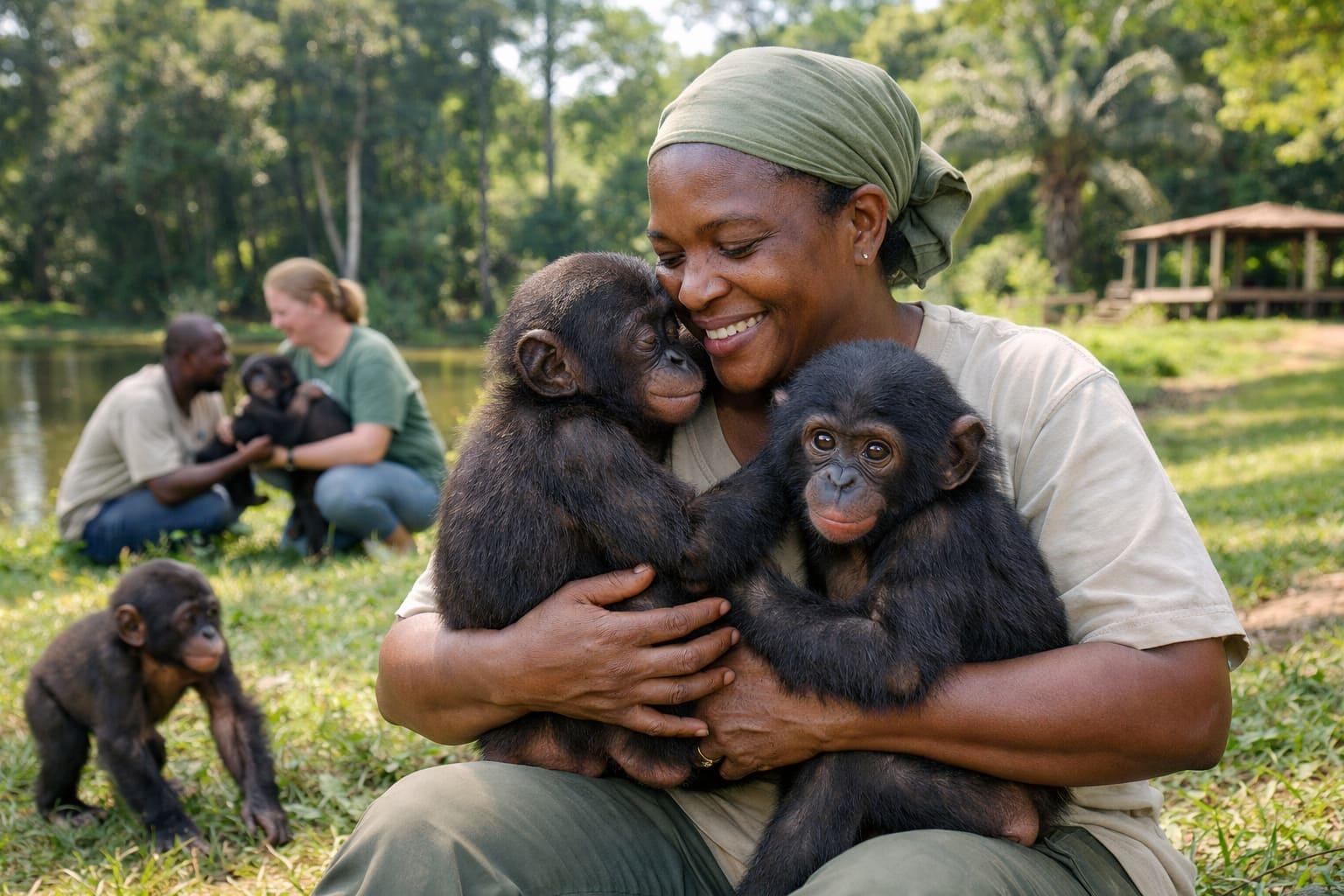
A rare sanctuary in Congo looks after baby bonobos away from poaching threat
The Lola ya Bonobo sanctuary in Kinshasa, Congo, provides a safe haven for orphaned bonobos, who are often victims of poaching. Caregivers nurture these young apes, emphasizing the importance of human affection in their survival. The sanctuary also aims to educate the public about the threats bonobos face and promote conservation efforts, including the proposed 'bonobo credits' program to incentivize habitat protection.
The story
The Lola ya Bonobo sanctuary, located on the forested outskirts of Kinshasa, Democratic Republic of the Congo, serves as the world's only dedicated refuge for orphaned bonobos, a species that has faced a staggering decline in population due to poaching and the bushmeat trade. Established in 2002 under the auspices of the conservation nonprofit Les Amis des Bonobos du Congo, the sanctuary has become a critical lifeline for these endangered great apes. Caregivers like Micheline Nzonzi, who has been a foster mother to bonobos for 24 years, provide essential nurturing, ensuring that these young apes receive the affection and care they need to thrive. Each orphaned bonobo is paired with a foster mother who will care for it for several years, fostering social bonds that are crucial for their development. The sanctuary currently houses dozens of bonobos, including 11 young infants, with the most recent arrivals being rescued from poachers or found in unsuitable living conditions. The sanctuary's mission extends beyond immediate care; it also focuses on educating the public about the importance of bonobos and the threats they face. Despite legal protections, bonobos are still targeted for bushmeat, and the sanctuary's educators, like Arsène Madimba, work tirelessly to change cultural perceptions about hunting these primates. The Congolese government has proposed a program of 'bonobo credits,' akin to carbon credits, to incentivize local communities to preserve forests and protect bonobos, although this initiative is still in its early stages. The sanctuary's work is vital in raising awareness and fostering a culture of protection for bonobos in the Congo, as the population has plummeted from an estimated 100,000 in the 1980s to around 20,000 today, primarily due to poaching and habitat loss.
Why it matters
The Lola ya Bonobo sanctuary plays a crucial role in the survival of bonobos, a species that shares nearly 99% of its DNA with humans. This close genetic relationship underscores the importance of protecting these primates, as their fate is intricately linked to human actions. By caring for orphaned bonobos, the sanctuary not only saves individual lives but also contributes to the broader conservation narrative, emphasizing the need for sustainable practices that protect wildlife and their habitats. The sanctuary's educational efforts aim to shift cultural perceptions about bonobos, which is essential for their long-term survival. As poaching continues to threaten their existence, the sanctuary's work highlights the urgent need for community engagement and awareness in conservation efforts. The proposed 'bonobo credits' program could serve as a model for incentivizing local populations to prioritize wildlife protection, ultimately fostering a more harmonious relationship between humans and nature.
Evidence and context
The plight of bonobos is emblematic of broader environmental issues facing many species worldwide. As human activities encroach on natural habitats, the survival of species like the bonobo becomes increasingly precarious. The sanctuary's efforts to educate the public and promote conservation initiatives are part of a larger movement to protect biodiversity and ensure that future generations can experience these remarkable creatures. The proposed 'bonobo credits' could serve as a model for similar programs aimed at incentivizing conservation efforts globally, highlighting the interconnectedness of human and environmental health. The sanctuary's work also reflects a growing recognition of the need for sustainable practices that balance human needs with wildlife conservation. As the global community grapples with the consequences of climate change and habitat destruction, the lessons learned from the Lola ya Bonobo sanctuary could inform broader conservation strategies. The sanctuary's commitment to nurturing orphaned bonobos and advocating for their protection is a vital part of the ongoing struggle to preserve not only this species but also the rich biodiversity of the Congo Basin, often referred to as Earth's second lung. The future of bonobos, and indeed many other species, hinges on our ability to foster a culture of conservation that values and protects the natural world.
Limits and unknowns
Bonobos were first identified as a distinct species in the late 1920s, when German anatomist Ernst Schwarz noted differences in the skull of a specimen previously thought to be a chimpanzee. This discovery was further elaborated upon by American zoologist Harold Coolidge, who helped classify the bonobo as a separate species in 1933. Over the decades, bonobo populations have drastically declined due to hunting and habitat loss, primarily driven by the bushmeat trade. The establishment of the Lola ya Bonobo sanctuary in 2002 marked a significant step in conservation efforts for this endangered species. The sanctuary has become a vital resource for orphaned bonobos, providing care and rehabilitation while also raising awareness about the threats they face. The sanctuary's work is not only about saving individual animals but also about fostering a broader understanding of the ecological and cultural factors that contribute to the bonobo's precarious situation. As conservationists continue to advocate for the protection of bonobos, the sanctuary stands as a testament to the importance of human intervention in preserving this unique species.
What happens next
As the Lola ya Bonobo sanctuary continues its vital work, observers should pay attention to the implementation of the 'bonobo credits' program and its potential impact on local conservation efforts. This initiative could serve as a groundbreaking model for engaging communities in wildlife protection, and its success or failure will be closely monitored. Additionally, tracking the population trends of bonobos in the wild will be crucial in assessing the effectiveness of current conservation strategies. The sanctuary's educational initiatives may also influence public attitudes towards wildlife protection in the region, making it essential to observe how these efforts evolve over time. Furthermore, the ongoing challenges posed by poaching and habitat loss will require adaptive strategies and sustained commitment from both local communities and international conservation organizations.
Follow the story
Share it, watch the explainer, or continue with the reporting trail.
Story timeline
Establishment of Lola ya Bonobo
The sanctuary was founded to provide care for orphaned bonobos.
Bonobo population decline
Bonobo populations have decreased from an estimated 100,000 to around 20,000 due to poaching and habitat loss.
Proposed 'bonobo credits'
Congolese authorities proposed a program to incentivize communities to protect bonobo habitats.
Further reading on this topic
3 links