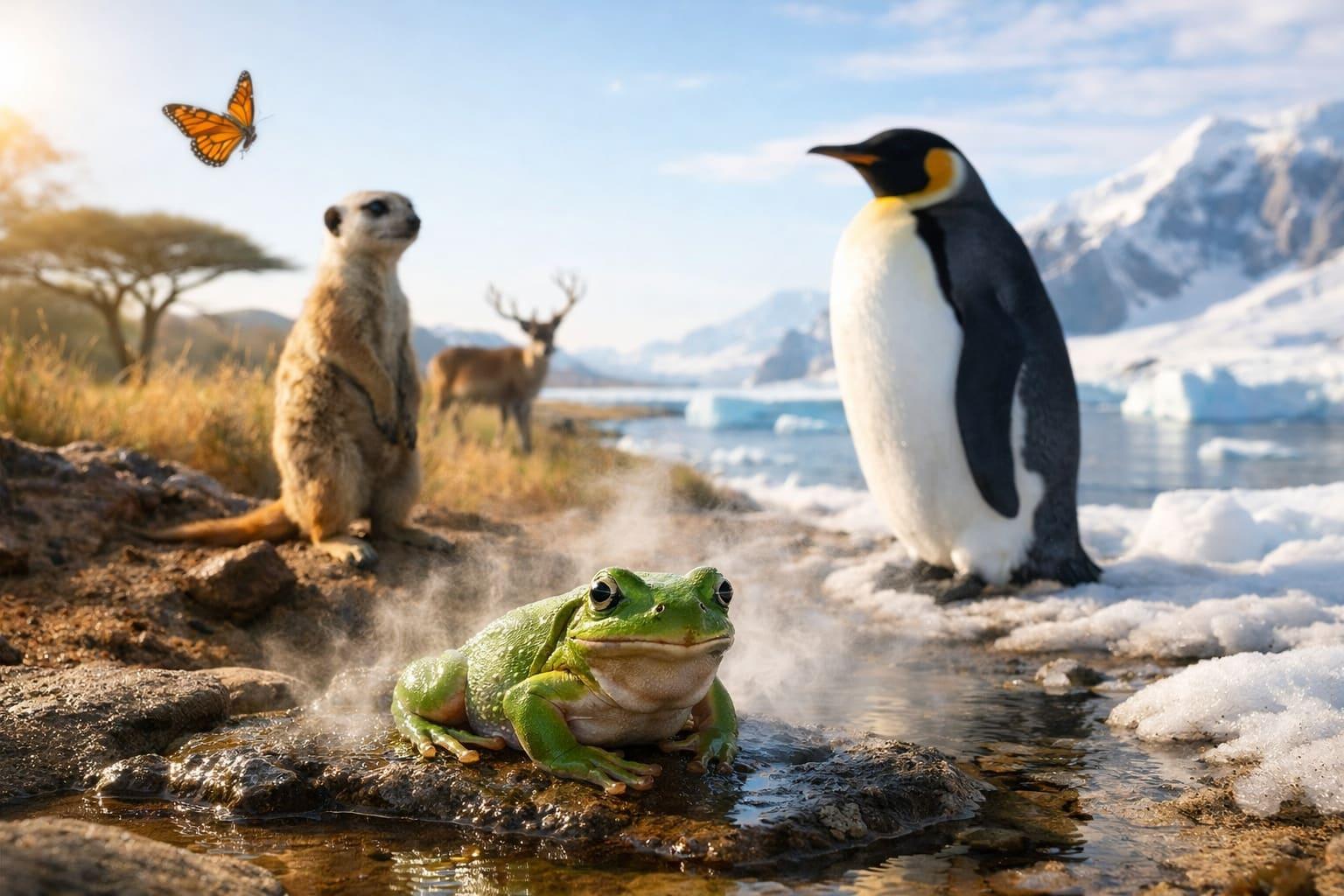
Heat and cold alter how animals fight disease. As the climate changes, this knowledge may be vital
Research indicates that temperature significantly impacts animal immune systems, affecting their ability to combat diseases. As climate change progresses, understanding these dynamics becomes crucial for wildlife conservation. The study highlights potential strategies, such as using temperature management to enhance immune responses in vulnerable species. This knowledge could be vital in mitigating the effects of climate change on animal health.
The story
Recent research published in the journal 'Frontiers in Immunology' has shed light on the significant role temperature plays in the immune responses of animals. The study reveals that each animal species has an optimal temperature range that enhances its ability to metabolize food and effectively combat pathogens. Interestingly, while slightly elevated temperatures can boost immune responses, extreme heat can create conditions that favor the proliferation of pathogens, leading to increased disease susceptibility. This is particularly concerning in the context of climate change, as many pathogens found in warmer climates are likely to expand their range, posing a significant threat to wildlife. For instance, the study highlights how the lethal Ebola virus thrives at temperatures around 41°C, while the common cold virus prefers the cooler temperatures of 33°C found in human airways. The research emphasizes the need for a deeper understanding of these dynamics to inform conservation strategies, especially as climate change continues to alter habitats and pathogen distributions. The findings suggest that temperature management could be a viable strategy for protecting vulnerable species. For example, Australian researchers are developing 'frog saunas' to help infected frogs combat the chytrid fungus, which has been responsible for numerous amphibian extinctions. By creating environments that allow for controlled temperature increases, these interventions could enhance the immune responses of affected species, providing a potential lifeline in the face of climate-induced challenges. Overall, this research underscores the intricate relationship between temperature and immune function, highlighting the urgent need for conservationists to adapt their strategies in response to the changing climate.
Why it matters
Understanding how temperature affects animal immune systems is crucial for wildlife conservation, especially in the face of climate change. As global temperatures rise, the dynamics of host-pathogen interactions are shifting, leading to increased disease outbreaks in wildlife populations. This research provides valuable insights into how different species respond to temperature changes, which can inform targeted conservation strategies. For instance, by recognizing that certain species may benefit from warmer habitats, conservationists can implement measures to create these environments, thereby enhancing the immune responses of vulnerable populations. Additionally, this knowledge is vital for maintaining biodiversity and ecosystem health, as the loss of species can have cascading effects on entire ecosystems. As pathogens expand their ranges due to climate change, understanding the relationship between temperature and immune function will be essential for developing effective interventions to protect wildlife. Ultimately, this research highlights the importance of integrating climate considerations into conservation planning to ensure the survival of threatened species.
Evidence and context
The implications of this research extend far beyond individual species, affecting entire ecosystems and biodiversity. As climate change continues to alter habitats and pathogen distributions, understanding the interactions between temperature, immune function, and disease dynamics becomes crucial for effective conservation efforts. The findings underscore the need for adaptive management strategies that consider the physiological responses of animals to temperature changes. For instance, as warmer temperatures allow heat-loving pathogens to thrive, wildlife managers must anticipate shifts in disease patterns and implement proactive measures to protect vulnerable species. This holistic approach could help mitigate the impacts of climate change on wildlife and preserve ecological balance. Furthermore, the research highlights the interconnectedness of species within ecosystems, as the decline of one species can have cascading effects on others. For example, the decline of amphibians due to chytridiomycosis can disrupt food webs and lead to population declines in predators that rely on them for sustenance. Therefore, understanding the broader ecological implications of temperature-induced changes in immune function is essential for developing comprehensive conservation strategies that address the multifaceted challenges posed by climate change.
Limits and unknowns
Historically, the relationship between temperature and animal health has been recognized, but recent climate changes have intensified these concerns. As global temperatures rise, the dynamics of host-pathogen interactions are shifting, leading to increased disease outbreaks in wildlife. For example, the emergence of diseases like chytridiomycosis in amphibians and white-nose syndrome in bats can be linked to changing temperature patterns that favor pathogen proliferation. Understanding these historical patterns is essential for developing effective conservation strategies in the face of ongoing climate change. The recognition that temperature can significantly influence immune responses is not new, but the urgency to address these issues has grown as climate change accelerates. This research serves as a critical reminder of the need to adapt our conservation efforts to the realities of a warming world, ensuring that we are equipped to protect vulnerable species and maintain biodiversity in the face of unprecedented environmental changes.
What happens next
Future research should focus on developing practical applications of temperature management in wildlife conservation. Monitoring how different species respond to temperature changes will be crucial in predicting their vulnerability to diseases. Additionally, observing the spread of pathogens in relation to climate change will provide insights into necessary conservation interventions. For instance, tracking the movements of heat-sensitive pathogens and their hosts can help conservationists anticipate outbreaks and implement preemptive measures. Furthermore, studies exploring the effectiveness of temperature management techniques, such as the use of 'frog saunas,' will be essential in determining their viability as conservation tools. As climate change continues to pose challenges for wildlife, ongoing research in this area will be vital for informing adaptive management strategies that prioritize the health and resilience of animal populations.
Follow the story
Share it, watch the explainer, or continue with the reporting trail.
Story timeline
Research Publication
Study published in 'Frontiers in Immunology' detailing the effects of temperature on animal immune systems.
Climate Change Impact
The ongoing effects of climate change are altering pathogen ranges and host vulnerabilities.
Conservation Strategies
Future conservation strategies may incorporate temperature management to protect vulnerable species.
Further reading on this topic
4 links
Heat and cold alter how animals fight disease. As the climate changes, this knowledge may be vital
A short visual explainer for readers who want the story in a different rhythm.