New Bioreactor Efficiently Produces Human Immune Cells
Researchers at Hannover Medical School have developed a bioreactor that produces 40 million human macrophages weekly from stem cells. This innovation enhances the efficiency of immune cell production, crucial for disease research and therapeutic applications. The method, published in Nature Protocols, represents a significant advancement in biotechnological applications for medicine.
At a glance
Location and topic
Region
Hannover, Germany
Tag cluster
Trend count
+9 related briefs
What happened
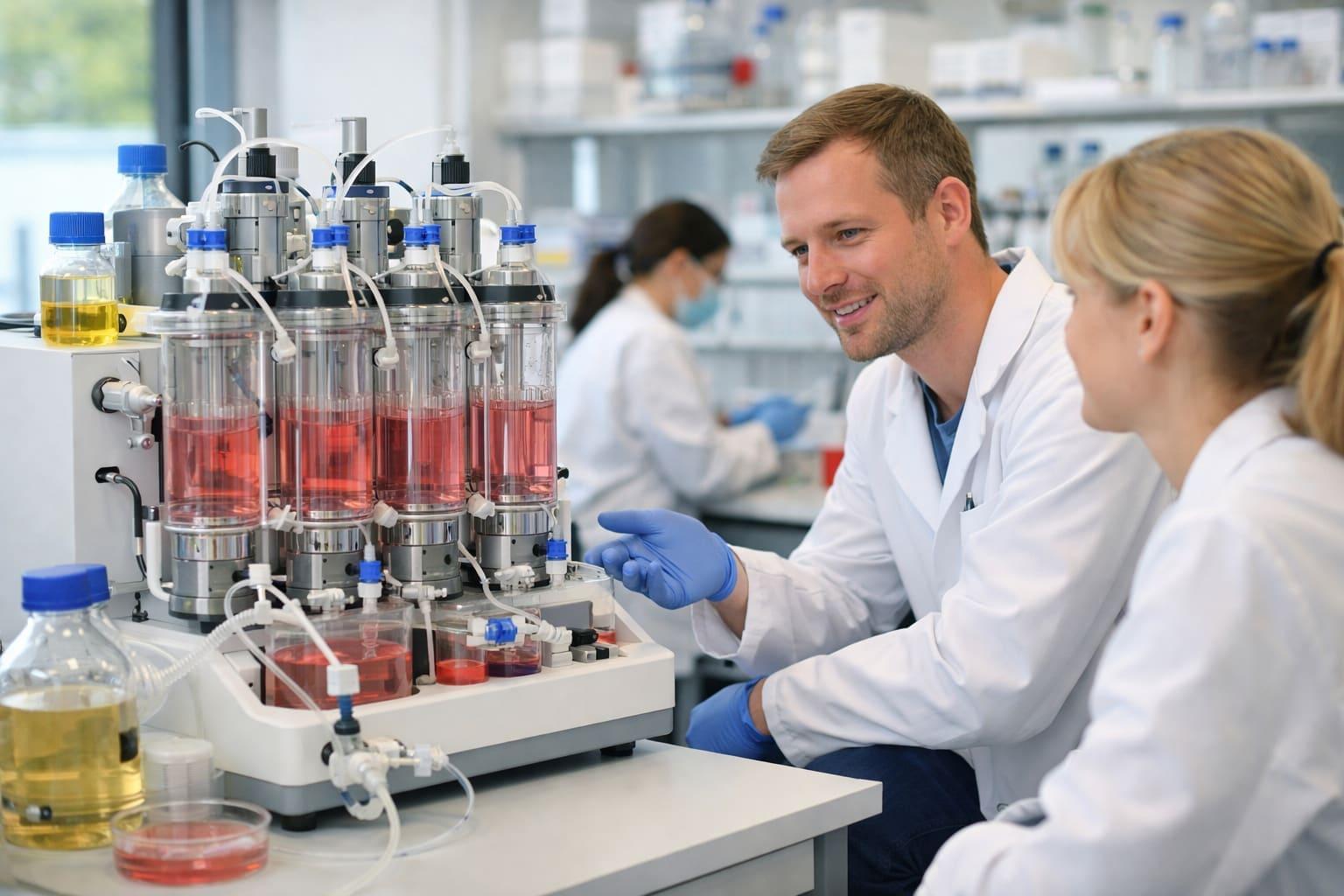
Researchers at Hannover Medical School (MHH) have made a significant breakthrough in the field of immunology with the development of a new bioreactor that can produce up to 40 million human macrophages weekly from induced pluripotent stem cells (iPS cells). This innovative method, detailed in a recent publication in the journal Nature Protocols, allows for the efficient and cost-effective generation of these crucial immune cells, which are essential for the human immune system's defense against pathogens and for tissue repair. The research team, led by Prof. Dr. Nico Lachmann from the Department of Pediatric Pneumology, Allergology, and Neonatology, has created a bioreactor that operates by allowing iPS cells to differentiate into organoid structures that continuously release macrophages over a period of 10 weeks. This process not only enhances the scalability of immune cell production but also provides a valuable tool for testing drugs for purity, safety, and efficacy. The bioreactor consists of four units combined into a single device, making it particularly suitable for preclinical research projects. The ability to produce macrophages in medium-sized bioreactors fills a significant gap in current methodologies, which have primarily focused on small-scale laboratory studies or large-scale industrial applications. This advancement is expected to have a profound impact on disease research and the development of new therapeutic approaches, particularly in areas such as cancer, infectious diseases, and neurodegenerative disorders like Alzheimer's. The researchers emphasize that this technology could lead to breakthroughs in treatment options and improve patient outcomes by providing a reliable source of immune cells for various applications.
Why this matters
The efficient production of human macrophages is crucial for advancing medical research and developing new therapies. Macrophages play a vital role in the immune response, acting as scavenger cells that engulf and digest cellular debris and pathogens. Their importance extends beyond basic immune functions; they are also integral to the development of therapies for a range of diseases, including cancer, autoimmune disorders, and neurodegenerative diseases. The new bioreactor technology represents a significant asset in the fight against these conditions, as it allows researchers to produce large quantities of high-quality macrophages for experimental and clinical use. This innovation could facilitate the testing of new drugs, enhance our understanding of immune responses, and ultimately lead to improved treatment options for patients. As the demand for personalized medicine and advanced therapies continues to grow, the ability to produce immune cells efficiently will be increasingly important in the development of targeted therapies that can address specific patient needs.
What changed
The introduction of this bioreactor technology marks a transformative shift in the production of immune cells for research and clinical applications. Previously, the production of macrophages was constrained by the limitations of existing methods, which either focused on small-scale laboratory studies or large-scale industrial applications. The new approach not only increases the quantity of macrophages produced but also enhances the quality and applicability of these cells in various therapeutic contexts. By enabling the continuous release of macrophages over an extended period, the bioreactor allows for a more sustainable and scalable production process. This advancement is expected to streamline the workflow for researchers and clinicians, making it easier to obtain the necessary immune cells for a wide range of applications, from drug testing to therapeutic development. The ability to produce macrophages in a medium-sized bioreactor also opens up new possibilities for preclinical research, where the demand for reliable and reproducible cell sources is critical.
Bigger picture
The development of this bioreactor aligns with a broader trend in biotechnology aimed at improving the efficiency and scalability of cell production for medical applications. As the field of personalized medicine continues to evolve, the need for reliable sources of immune cells has become increasingly apparent. Innovations like this bioreactor are essential for meeting the growing demands of researchers and clinicians who require large quantities of high-quality immune cells for various applications. This technology could pave the way for more effective treatments for a range of diseases, including cancer, autoimmune disorders, and infectious diseases. Furthermore, the ability to produce macrophages at scale may facilitate advancements in drug development pipelines, allowing for more comprehensive testing of new therapies. The implications of this technology extend beyond immediate research applications; it has the potential to transform the landscape of modern medicine by enabling the development of targeted therapies that can address specific patient needs. As researchers continue to explore the capabilities of this bioreactor, it may lead to further innovations in cell production and therapeutic development, ultimately improving patient outcomes and advancing the field of immunology.
History
The production of immune cells has undergone significant evolution over the past few decades, particularly with advancements in stem cell research and biotechnological methods. Historically, immune cells were produced in small quantities for laboratory studies, which limited their application in clinical settings. The introduction of induced pluripotent stem cells (iPS cells) has revolutionized the field, allowing for the generation of various cell types, including macrophages, from somatic cells. This breakthrough has led to innovations like the medium-sized bioreactor developed by researchers at Hannover Medical School. By enabling the efficient production of macrophages, this technology represents a significant step forward in the ability to harness the immune system for therapeutic purposes. The historical context of immune cell production highlights the importance of continuous innovation in biotechnology, as researchers strive to meet the increasing demands for effective treatments and personalized medicine.
Looking Towards the Future
As this bioreactor technology gains traction, it will be important to monitor its adoption in both research and clinical settings. Future studies may reveal its effectiveness in producing immune cells for specific therapeutic applications, as well as its potential integration into existing drug development pipelines. Researchers will likely explore the bioreactor's capabilities in generating other types of immune cells, which could further enhance its utility in various medical fields. Additionally, advancements in bioreactor design and functionality could lead to even greater efficiencies in immune cell production, making this technology a focal point for future research and development in immunology and biotechnology.
Story timeline
Bioreactor Development Announced
Hannover Medical School announces the development of a new bioreactor for producing immune cells.
Research Published in Nature Protocols
The findings regarding the bioreactor and its capabilities are published in the journal Nature Protocols.
Potential Applications Explored
Researchers begin exploring the potential applications of the produced macrophages in various therapeutic contexts.
Sources behind this brief
3 total
Phys.org
Original article on the bioreactor development.
Nature Protocols
Journal where the research was published.
Hannover Medical School
Institution involved in the research.
Further reading on this topic
4 links
Hannover Medical School
Read about Hannover Medical School's development of bioreactors for efficient immune cell production.
Wikipedia
Reference background on Hannover Medical School.
Wikipedia
Reference background on Biology.
Wikipedia
Reference background on Medicine.
Context zone
Germany
Context zone
Germany
On this map
New Bioreactor Efficiently Produces Human Immune Cells
Hannover, Germany
Timmy the humpback whale escapes to the North Sea
Germany
Timmy, a humpback whale calf that gained attention after being stranded near Germany, has been successfully released into the North Sea. The rescue operation involved transporting him in a water-filled barge, and he is now expected to swim towards the Arctic. This event highlights the challenges marine life faces and the efforts made to protect them.
Timmy the Stranded Whale Is Released After an Elaborate Rescue
Germany
Timmy, a whale that had been stranded, was successfully rescued and released back into the ocean. The rescue operation involved a collaborative effort from marine biologists and volunteers, showcasing the dedication to wildlife conservation. This event highlights the importance of protecting marine life and the positive outcomes of community involvement.
Successful Test of Space Camera for Artemis II Moon Mission
Germany
A specially modified Nikon Z9 camera has successfully passed radiation testing at the GSI/FAIR particle accelerator, confirming its reliability for space missions. This camera was utilized in the Artemis II lunar mission, capturing stunning images, including a solar eclipse. Its performance under extreme conditions paves the way for future lunar explorations.