Successful Test of Space Camera for Artemis II Moon Mission
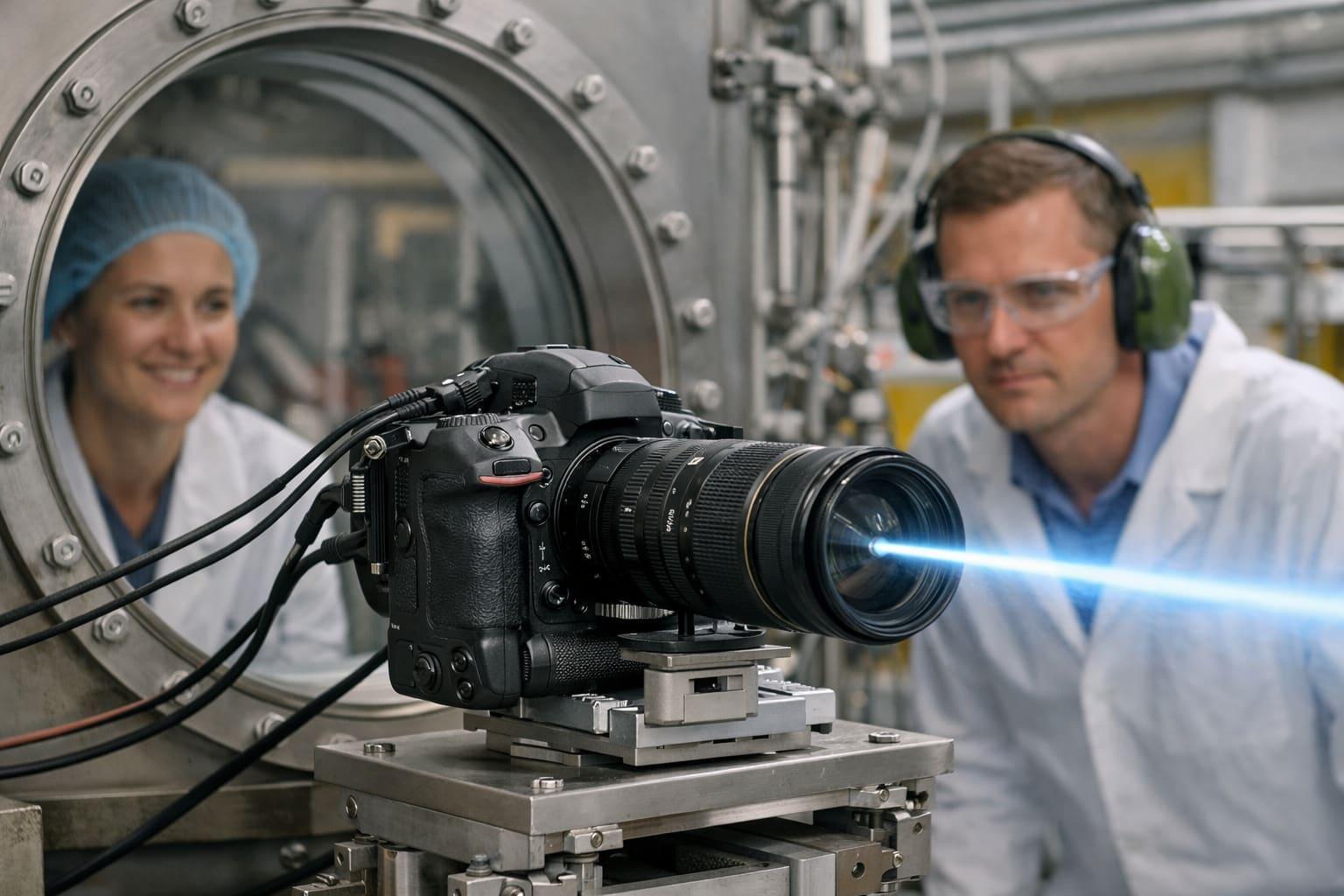
A specially modified Nikon Z9 camera has successfully passed radiation testing at the GSI/FAIR particle accelerator, confirming its reliability for space missions. This camera was utilized in the Artemis II lunar mission, capturing stunning images, including a solar eclipse. Its performance under extreme conditions paves the way for future lunar explorations.
The story
The GSI Helmholtzzentrum für Schwerionenforschung and the international accelerator facility FAIR have made a significant contribution to the Artemis II moon mission, which successfully launched on April 6, 2026. A specially modified Nikon Z9 camera underwent extensive radiation testing at the GSI/FAIR particle accelerator in March 2025. This testing was crucial as it simulated the high-energy heavy ions that the camera would encounter in space, effectively mimicking cosmic conditions. The goal was to ensure that the camera would function reliably under extreme radiation exposure, a critical factor for any equipment intended for lunar missions. The results of these tests were promising; they confirmed that the camera operated stably and reliably, even when subjected to intense radiation, thus validating its suitability for use in the harsh environment of space. During the Artemis II mission, the camera was successfully deployed and captured stunning images, including a remarkable solar eclipse from space. This event showcased the camera's capabilities and provided a unique perspective that is not possible from Earth. NASA has indicated plans to continue using this camera model in future Artemis missions, particularly for the anticipated return of astronauts to the lunar surface, marking a historic moment as it will be the first time in over 50 years that humans will set foot on the Moon. The successful testing and deployment of the Nikon Z9 camera not only demonstrate its performance under real operating conditions but also highlight the importance of rigorous testing protocols in the development of space technology.
Why it matters
The successful testing of the Nikon Z9 camera is a pivotal development for the Artemis program, which aims to advance human exploration of the Moon and beyond. Reliable technology is essential for ensuring the safety and success of future missions, especially as NASA prepares for the return of astronauts to the lunar surface. The camera's ability to withstand the harsh conditions of space and deliver high-quality images enhances our capabilities in space exploration. Furthermore, this development contributes to our understanding of cosmic radiation's effects on technology and humans, which is vital for long-duration space missions. As we venture further into space, the insights gained from this camera's performance will inform the design and testing of future equipment, ensuring that astronauts are equipped with the best tools for their missions.
Evidence and context
The Artemis program represents a renewed commitment to lunar exploration, aiming to establish a sustainable human presence on the Moon by the end of the decade. This initiative is not just about returning to the Moon; it is about laying the groundwork for future exploration of Mars and beyond. The successful testing of the Nikon Z9 camera is a key component of this initiative, ensuring that the technology used can withstand the harsh conditions of space. As humanity prepares for a return to the Moon, advancements in technology like this camera will play a crucial role in expanding our understanding of space. The collaboration between various international space agencies, including NASA and the European Space Agency (ESA), highlights the global effort to push the boundaries of human exploration. The Artemis missions are designed to gather data about the Moon's environment, which will be essential for future human exploration of Mars. The successful deployment of the Nikon Z9 camera during the Artemis II mission is a testament to the importance of rigorous testing and international collaboration in achieving these ambitious goals. As we look to the future, the lessons learned from this mission will inform the design and execution of subsequent missions, ensuring that we are better prepared for the challenges that lie ahead in our quest to explore the cosmos.
Limits and unknowns
The Artemis program is part of a long history of lunar exploration that began with the Apollo missions in the 1960s and 70s. The Apollo program successfully landed humans on the Moon six times, with Apollo 11 marking the first manned landing in 1969. After decades of limited human presence on the Moon, the Artemis initiative aims to reignite interest in lunar exploration and establish a sustainable human presence. The successful testing of advanced technologies, such as the Nikon Z9 camera, is essential for ensuring the success of these ambitious goals. The Artemis program not only seeks to return humans to the Moon but also aims to involve international partners and commercial entities in the exploration process, reflecting a more collaborative approach to space exploration. This shift in strategy is indicative of the growing recognition that the challenges of space exploration require a united effort, leveraging the strengths and expertise of various nations and organizations.
What happens next
As the Artemis program progresses, keep an eye on upcoming missions that will utilize the tested camera technology. Future lunar missions will likely focus on gathering more data about the Moon's environment and preparing for potential human exploration of Mars. Additionally, advancements in radiation testing and technology development will continue to be critical for ensuring the safety of astronauts. The next phases of the Artemis program will include the Artemis III mission, which aims to land astronauts on the lunar South Pole, a region rich in resources and scientific interest. Observers should also watch for developments in international collaborations, as partnerships with other space agencies and private companies will play a crucial role in the success of these missions. The ongoing evolution of space technology, including improvements in imaging and radiation protection, will be vital as humanity prepares for deeper space exploration.
Follow the story
Share it, watch the explainer, or continue with the reporting trail.
Story timeline
Artemis II Mission Launch
The Artemis II mission launched, marking a significant step in lunar exploration.
Camera Testing at GSI/FAIR
The Nikon Z9 camera underwent radiation testing to ensure its reliability for space conditions.
First Human Return to the Moon
The Artemis II mission successfully captured images from space, including a solar eclipse.
Further reading on this topic
2 links
Successful Test of Space Camera for Artemis II Moon Mission
A short visual explainer for readers who want the story in a different rhythm.