Scientists discover 27 potential new planets that orbit two stars in solar systems far, far away
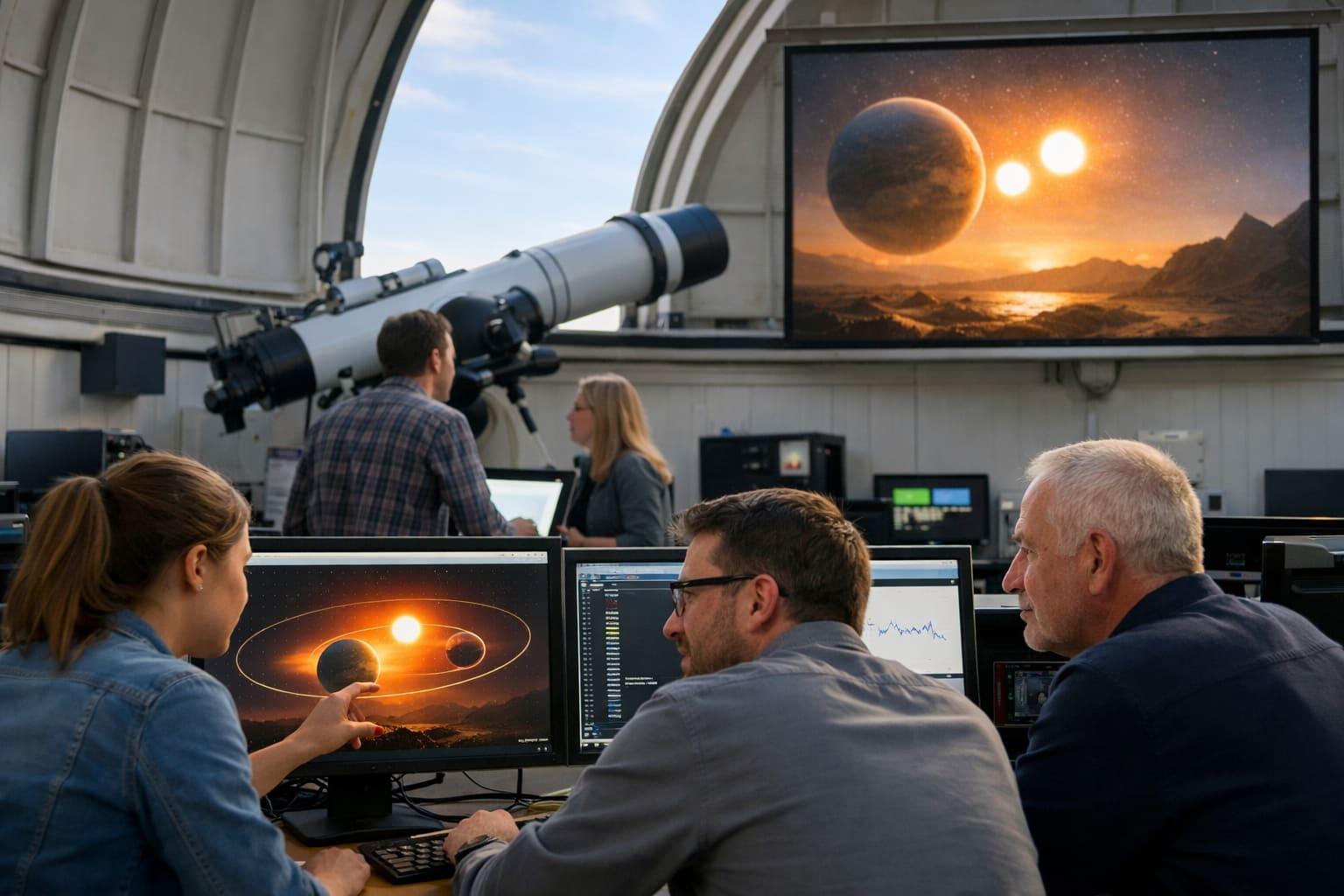
Astronomers have identified 27 new potential circumbinary planets, significantly increasing the known number of such planets. This discovery, published on Star Wars Day, highlights the innovative methods used to detect these distant worlds. The research opens new avenues for understanding planetary systems beyond our own.
At a glance
Location and topic
Region
Global
Tag cluster
Trend count
+4 related briefs
What happened
On May 4, 2026, a team of astronomers announced a groundbreaking discovery: 27 potential new circumbinary planets, which orbit two stars, akin to the fictional desert planet Tatooine from the Star Wars universe. This announcement was particularly timely, coinciding with Star Wars Day, a celebration among fans of the franchise. Prior to this discovery, only about 18 circumbinary planets had been identified, making this finding a significant leap in our understanding of such celestial bodies. The newly identified planets are located at varying distances from Earth, ranging from 650 to an astonishing 18,000 light years away, underscoring the vastness of the universe and the diversity of planetary environments that may exist beyond our solar system. The research team, led by Associate Professor Ben Montet from the University of New South Wales (UNSW), employed a novel detection method known as apsidal precession. This technique involves observing the gravitational interactions between stars in binary systems, which can reveal the presence of additional bodies that might not be directly observable. Traditional methods of detecting planets, such as monitoring transits—when a planet passes in front of a star and causes a temporary dimming—are limited by the need for precise alignment between the planet, the star, and Earth. Montet noted that this alignment is rare, leading to the potential oversight of many planetary systems. The researchers meticulously analyzed the timing of eclipses between the two stars in 1,590 star systems, identifying 36 systems where the behavior could only be explained by the presence of a third body. Out of these, 27 candidates were deemed to be of planetary mass, although further research is required to confirm their exact nature. The potential planets range in size from those comparable to Neptune to those that could be ten times the mass of Jupiter. This discovery not only expands the catalog of known circumbinary planets but also highlights the innovative techniques being developed in the field of astronomy to uncover the mysteries of the cosmos.
Why this matters
The discovery of these 27 potential circumbinary planets is a significant advancement in our understanding of planetary formation and the variety of environments that may exist in the universe. Circumbinary planets, which orbit two stars, present unique conditions that differ from those found in our solar system. The identification of these planets emphasizes the importance of innovative research methods in astronomy, particularly as traditional techniques often miss many potential candidates due to alignment issues. As more circumbinary planets are discovered, scientists can gain valuable insights into the conditions that could support life beyond Earth. This research not only enriches our knowledge of planetary systems but also fuels the ongoing quest to understand the potential for life in the universe, a question that has fascinated humanity for centuries. The implications of these findings extend beyond mere numbers; they challenge our perceptions of where life might exist and how diverse planetary environments can be.
What changed
The identification of these 27 potential circumbinary planets marks a substantial increase in the known number of such planets, which previously stood at just 18. This leap in discoveries highlights the effectiveness of new detection techniques, such as apsidal precession, which allow astronomers to uncover planets that traditional methods might overlook. The research opens new avenues for exploration and study, as scientists will now focus on confirming the status of these potential planets and investigating their characteristics. This shift in understanding not only enhances our knowledge of planetary systems but also encourages further research into the extreme environments that circumbinary planets may present. The findings underscore the dynamic nature of astronomical research, where advancements in technology and methodology continually reshape our understanding of the universe.
Bigger picture
The discovery of these 27 potential circumbinary planets is part of a broader trend in astronomy, where advanced techniques and technologies are revealing the complexities of planetary systems. As observational tools improve, astronomers are increasingly able to identify and study distant worlds, expanding our understanding of the universe and the potential for life beyond our solar system. The existence of circumbinary planets raises intriguing questions about the diversity of environments that may exist in these systems. For instance, while some circumbinary planets may experience extreme conditions due to the gravitational forces of two stars, others could potentially reside in habitable zones where conditions are just right for life. This discovery encourages further exploration and research in the field, as scientists seek to understand the implications of these findings for the search for extraterrestrial life. The cultural impact of science fiction, particularly the Star Wars franchise, has also played a role in shaping public interest in such discoveries, making them more relatable and exciting. As we continue to explore the cosmos, the intersection of science and imagination will likely inspire future generations of astronomers and enthusiasts alike.
History
The concept of circumbinary planets has evolved significantly since the first exoplanets were discovered in the 1990s. Initially, the focus was primarily on planets orbiting single stars, as these were easier to detect and study. However, advancements in technology and methodology have allowed astronomers to explore more complex systems, including those with multiple stars. The first confirmed circumbinary planet, Kepler-16b, was discovered in 2011, and since then, interest in these unique planetary systems has grown. The cultural impact of science fiction, particularly the Star Wars franchise, has also influenced public interest in such discoveries, making them more relatable and exciting. The idea of planets orbiting two suns, as depicted in the Star Wars universe, has captured the imagination of many, and this recent discovery serves to bridge the gap between fiction and reality, showcasing how scientific exploration can sometimes mirror the visions of creative storytelling.
Looking Towards the Future
Future research will focus on confirming the status of these potential circumbinary planets and exploring their characteristics in greater detail. Scientists will analyze the light spectra emitted by these planets to determine their mass and composition, which will help clarify whether they are indeed planets, brown dwarfs, or stars. Additionally, advancements in observational technology, such as the upcoming James Webb Space Telescope, may lead to the discovery of even more circumbinary planets, further enriching our understanding of the universe. As researchers continue to refine their techniques and expand their search, the potential for discovering new worlds and understanding the conditions that support life will remain a central focus in the field of astronomy.
Story timeline
Discovery Announcement
Researchers announce the discovery of 27 potential circumbinary planets.
Star Wars Day
The discovery is published on Star Wars Day, linking cultural significance to scientific achievement.
Previous Circumbinary Planets
Only 18 circumbinary planets had been identified before this discovery.
Sources behind this brief
2 total
The Guardian
Original article detailing the discovery of new circumbinary planets.
NASA
Information on the Transiting Exoplanet Survey Satellite and its role in exoplanet discovery.
Further reading on this topic
4 links
University of Central Lancashire
Provides a comprehensive database of exoplanetary systems, including those in binary systems.
Wikipedia
Reference background on NASA.
Wikipedia
Reference background on University of New South Wales.
Wikipedia
Reference background on Astronomy.
Context zone
Context zone
On this map
Scientists discover 27 potential new planets that orbit two stars in solar systems far, far away
Global
No other published articles from this region yet. This marker anchors the story for future regional clustering.