Israel and Lebanon hold first direct talks since 1993
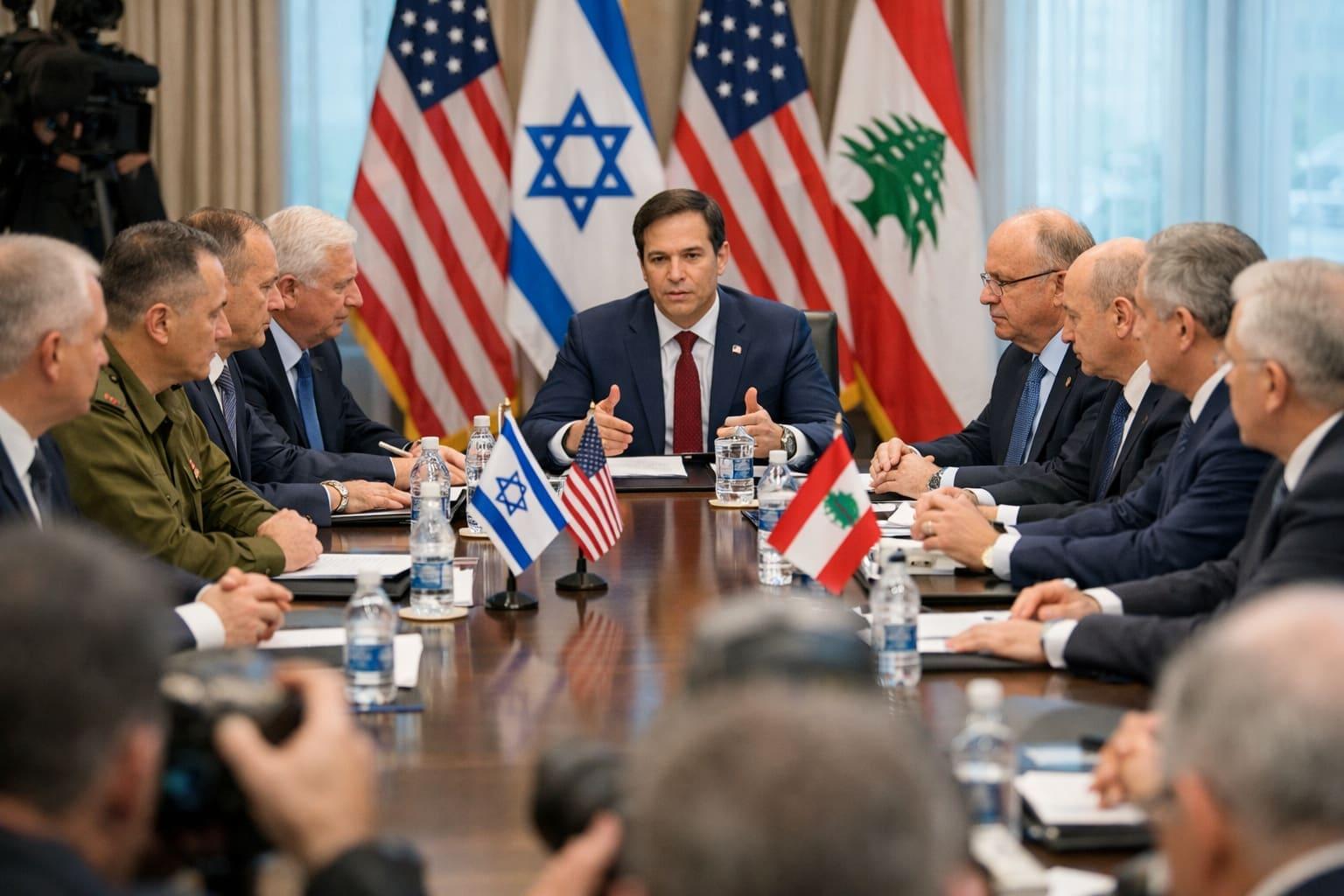
Israel and Lebanon have engaged in their first direct diplomatic talks in over three decades, mediated by US Secretary of State Marco Rubio. The discussions aim to address the ongoing conflict involving Hezbollah and seek a ceasefire amid a humanitarian crisis in Lebanon. Both sides have expressed a desire to reduce Hezbollah's influence in the region.
At a glance
Location and topic
Region
Israel
Tag cluster
Trend count
+3 related briefs
What happened
In a significant diplomatic development, Israel and Lebanon have initiated their first direct talks since 1993, focusing on the ongoing conflict with Hezbollah. US Secretary of State Marco Rubio described the meeting as a 'historic opportunity' to address Hezbollah's influence, with both nations agreeing to negotiate further. The discussions come amid a backdrop of violence, with over 2,000 casualties reported since military operations began in Lebanon on March 2, just days after US and Israeli strikes commenced in Iran. Hezbollah has continued to launch attacks on Israel, complicating the situation further. During the talks, Lebanon called for a ceasefire and measures to alleviate its humanitarian crisis, while Israel emphasized the need to disarm non-state terror groups, specifically targeting Hezbollah. The Lebanese President, Joseph Aoun, expressed hope that these discussions would mark a turning point for the Lebanese people, particularly those suffering in the south. He stated that the only viable solution would involve the Lebanese armed forces taking sole responsibility for security in the region. However, Hezbollah's leadership has indicated it will not adhere to any agreements made in Washington, highlighting the challenges ahead for both nations in reaching a sustainable resolution. As the talks unfolded, Hezbollah claimed responsibility for at least 24 attacks on Israeli positions, further escalating tensions. Drone and rocket alarms sounded across northern Israel throughout the day, underscoring the precarious security situation. The US State Department reiterated its support for Israel's right to defend itself against Hezbollah's aggression, while also acknowledging Lebanon's humanitarian needs. The meeting, which took place in Washington, was characterized by Rubio as a 'process' that would require time and effort to yield results. He emphasized the importance of building on this historic gathering to foster a more stable and peaceful future for both nations.
Why this matters
These talks represent a crucial step towards potentially ending decades of hostility between Israel and Lebanon. The involvement of the US as a mediator underscores the international community's interest in stabilizing the region. A successful outcome could lead to improved security and humanitarian conditions for millions affected by the ongoing conflict. The humanitarian crisis in Lebanon has reached alarming levels, with approximately one million people displaced and countless others suffering from the effects of the ongoing violence. The discussions also highlight the urgent need for a ceasefire, as the Lebanese government grapples with the dire consequences of the conflict. The potential for a reduction in Hezbollah's influence could reshape the political landscape in Lebanon, allowing for a more unified approach to national security and governance. Furthermore, the talks may pave the way for broader regional discussions, as the dynamics between Israel, Lebanon, and Iran continue to evolve. The international community is watching closely, as the outcome of these negotiations could have far-reaching implications for peace and stability in the Middle East.
What changed
The initiation of direct talks marks a significant shift in the diplomatic landscape between Israel and Lebanon, which have not engaged in high-level discussions for over 30 years. This change reflects a growing recognition of the need for dialogue amidst escalating violence and humanitarian crises. The talks also signal a potential shift in US foreign policy, emphasizing mediation in regional conflicts. Historically, Israel and Lebanon have maintained a contentious relationship, with the absence of diplomatic relations complicating any efforts for peace. The current discussions, mediated by the US, represent a departure from previous approaches that often sidelined Lebanon's concerns. The acknowledgment of Lebanon's humanitarian crisis and the call for a ceasefire indicate a more nuanced understanding of the complexities involved. Additionally, the talks may influence Hezbollah's position within Lebanon, as the group faces pressure from both the Lebanese government and the international community. The outcome of these negotiations could redefine the parameters of future interactions between the two nations, potentially leading to a more stable and secure environment in the region.
Bigger picture
The Israel-Lebanon talks are part of a broader context of Middle Eastern geopolitics, where the influence of Iran and its proxies, like Hezbollah, is a central concern. The ongoing conflict has resulted in significant humanitarian crises, with millions displaced and thousands killed. The international community, particularly the US, is increasingly involved in seeking resolutions to these conflicts, recognizing that stability in Lebanon is crucial for regional peace. The outcome of these talks could set a precedent for future negotiations in the region, potentially influencing other long-standing conflicts. The US has a vested interest in curbing Iranian influence in the region, and these talks could be a strategic move to bolster its position. Furthermore, the dynamics between Israel and Lebanon are emblematic of the larger struggle for power and influence in the Middle East, where sectarian divisions and historical grievances complicate efforts for peace. The potential for a ceasefire and a reduction in hostilities could provide a much-needed respite for civilians caught in the crossfire, but the path to lasting peace remains fraught with challenges. As the situation evolves, the international community will be closely monitoring developments, particularly the responses from Hezbollah and Iran, which could significantly impact the trajectory of these negotiations.
Looking Towards the Future
Observers should monitor the progress of the negotiations and any subsequent actions taken by both Israel and Lebanon. Key indicators will include statements from both governments, any ceasefire agreements, and the response from Hezbollah. Additionally, the international community's role, particularly that of the US, will be critical in shaping the future of these discussions. The reactions from regional players, including Iran, will also be pivotal in determining the sustainability of any agreements reached. As the situation develops, the humanitarian conditions in Lebanon will remain a pressing concern, and any measures taken to address these issues will be closely scrutinized. The potential for further escalations or retaliatory actions from Hezbollah could also influence the course of the talks, making it essential to stay informed about the evolving dynamics in this complex geopolitical landscape.
Story timeline
Start of Military Operations
Israeli military operations in Lebanon begin, escalating the conflict.
First Direct Talks
Israel and Lebanon hold their first direct diplomatic talks in over 30 years.
US Mediation
US Secretary of State Marco Rubio mediates the talks, emphasizing the need to address Hezbollah's influence.
Sources behind this brief
2 total
BBC World RSS
Original article detailing the talks.
NYT World RSS
PaywalledCorroborating source providing additional context.
Further reading on this topic
3 links
Context zone
Israel
Context zone
Israel
On this map
Israel and Lebanon hold first direct talks since 1993
Israel
Israel and Lebanon hold direct talks for first time in decades
Israel
Israel and Lebanon have initiated direct talks for the first time in decades, focusing on the security of both nations. This significant development marks a potential shift in relations, with ongoing negotiations expected to follow. U.S. Secretary of State Marco Rubio has described this meeting as a 'milestone' in the peace process.
Israel and Lebanon agree to 10-day ceasefire, Trump says in social media post
Israel
Israel and Lebanon have reached a historic agreement for a 10-day ceasefire, as announced by U.S. President Donald Trump. This marks a significant diplomatic breakthrough, with the two nations engaging in direct talks for the first time in over 30 years. The ceasefire is set to begin at 5 P.M. EST, aiming to foster peace between the countries.