Artemis crew returning to Earth with 'all the good stuff' from Moon discoveries
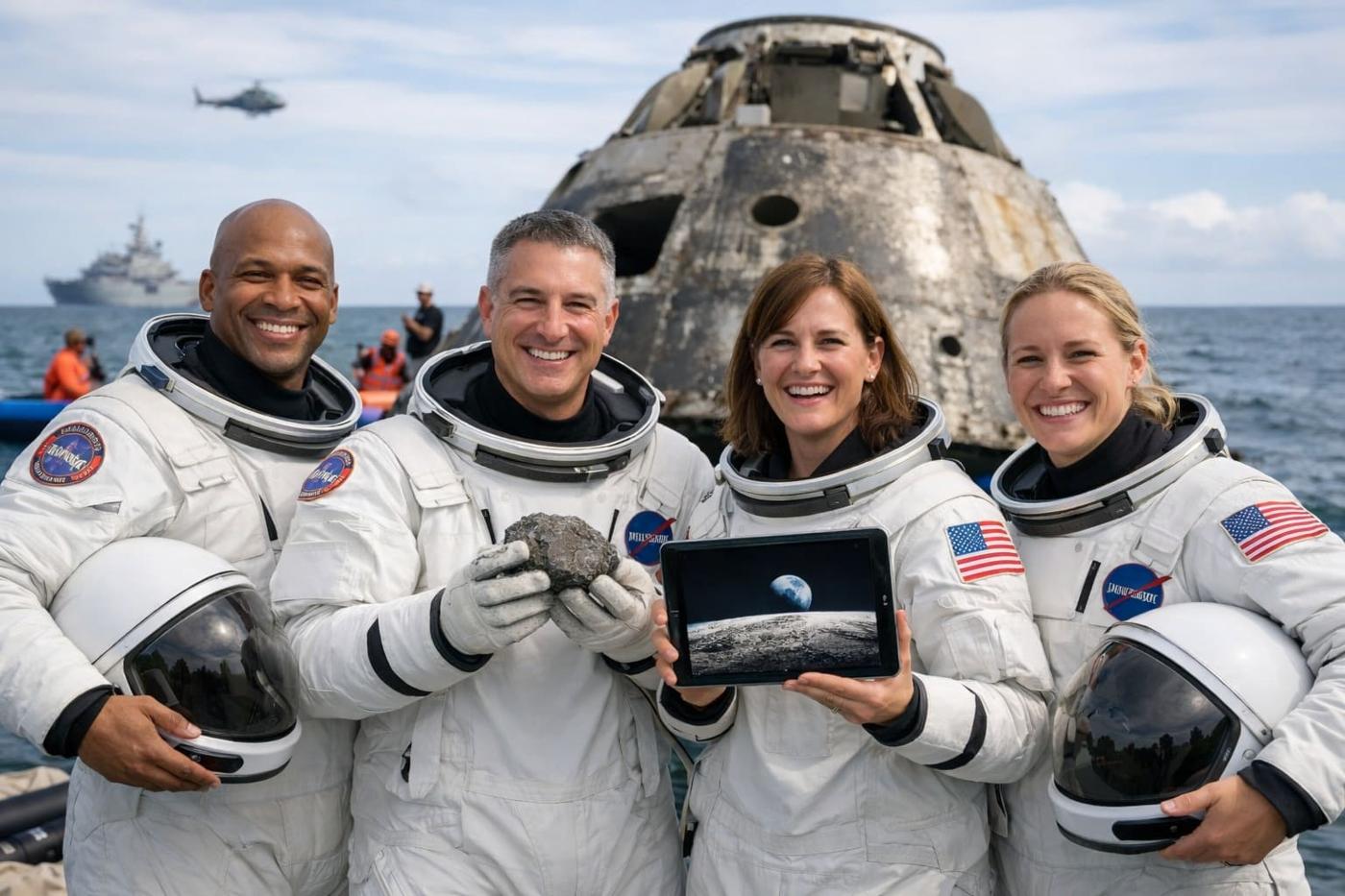
The Artemis II crew is set to return to Earth after a historic mission around the Moon, bringing back valuable data and experiences. The astronauts expressed excitement about sharing their discoveries, including stunning visuals and personal stories from their journey. This mission marks a significant milestone in human space exploration, as the crew traveled further from Earth than any humans before.
Why it's positive
The successful Artemis II mission showcases human ingenuity and the potential for future space exploration. The crew's eagerness to share their findings highlights the importance of collaboration in scientific discovery.
Why it matters
This mission represents a leap forward in our understanding of the Moon and paves the way for future lunar and Martian exploration.
Why now
The Artemis II mission is timely as it reignites interest in space exploration and demonstrates advancements in technology and international collaboration.
Impact analysis
The return of the Artemis II crew is expected to inspire a new generation of scientists and engineers. Their discoveries will contribute to ongoing research and development in space exploration. This mission also strengthens international partnerships in scientific endeavors.
Regional map
Where this story sits
On this map
Artemis crew returning to Earth with 'all the good stuff' from Moon discoveries
United States
Buried bounty: Caribou survival depends on lichen and snow
United States
A study from SUNY College of Environmental Science and Forestry highlights the critical role of lichen and snow depth in caribou winter survival. Researchers found that caribou in areas with abundant lichen are significantly more likely to survive harsh winters, but deep snow can hinder their access to this vital food source. As climate conditions evolve, understanding these dynamics is essential for caribou conservation.
Genetic markers fast-track breeding of seedless muscadine grapes
United States
Researchers have developed genetic markers that allow breeders to predict seedlessness and flower sex in muscadine grapes years before fruiting. This innovation is set to enhance the breeding process, making it more efficient and resource-effective. The study, involving collaboration among various institutions, aims to create flavorful, seedless grape varieties that appeal to a broader market.
Twin NASA Control Rooms Support Artemis Safety, Success
Huntsville, United States
NASA's Marshall Space Flight Center is utilizing twin control rooms, LUCA and LESA, to support the Artemis II mission. These rooms are crucial for monitoring astronaut safety and mission operations as the crew prepares for their return to Earth. LUCA focuses on science operations while LESA provides engineering support for lunar landings, showcasing NASA's commitment to advancing space exploration.
Water conservation works, but climate change is outpacing it: Phoenix, Denver and Las Vegas show the future
United States
Research highlights the success of water conservation efforts in cities like Phoenix, Denver, and Las Vegas, showcasing significant reductions in water use despite rising populations. However, the study indicates that these methods may not be sufficient to combat the challenges posed by climate change, necessitating innovative solutions. The findings emphasize the importance of community involvement in conservation efforts to enhance water supply reliability.
Space security moves to forefront as threats to satellites spread
United States
A new report from the Secure World Foundation highlights the increasing importance of space security as reliance on satellites grows and interference technologies proliferate. The report categorizes various counterspace capabilities and emphasizes the military, economic, and political implications of satellite disruptions. As more countries develop technologies to protect their space assets, the conversation around space security is becoming a central policy issue.
US and Iran agree to provisional ceasefire as Tehran says it will reopen strait of Hormuz
United States
The US and Iran have reached a two-week conditional ceasefire, allowing for the temporary reopening of the strait of Hormuz. This agreement, facilitated by Pakistan, comes after intense diplomatic efforts to prevent further escalation. President Trump has expressed optimism about the potential for lasting peace in the region.