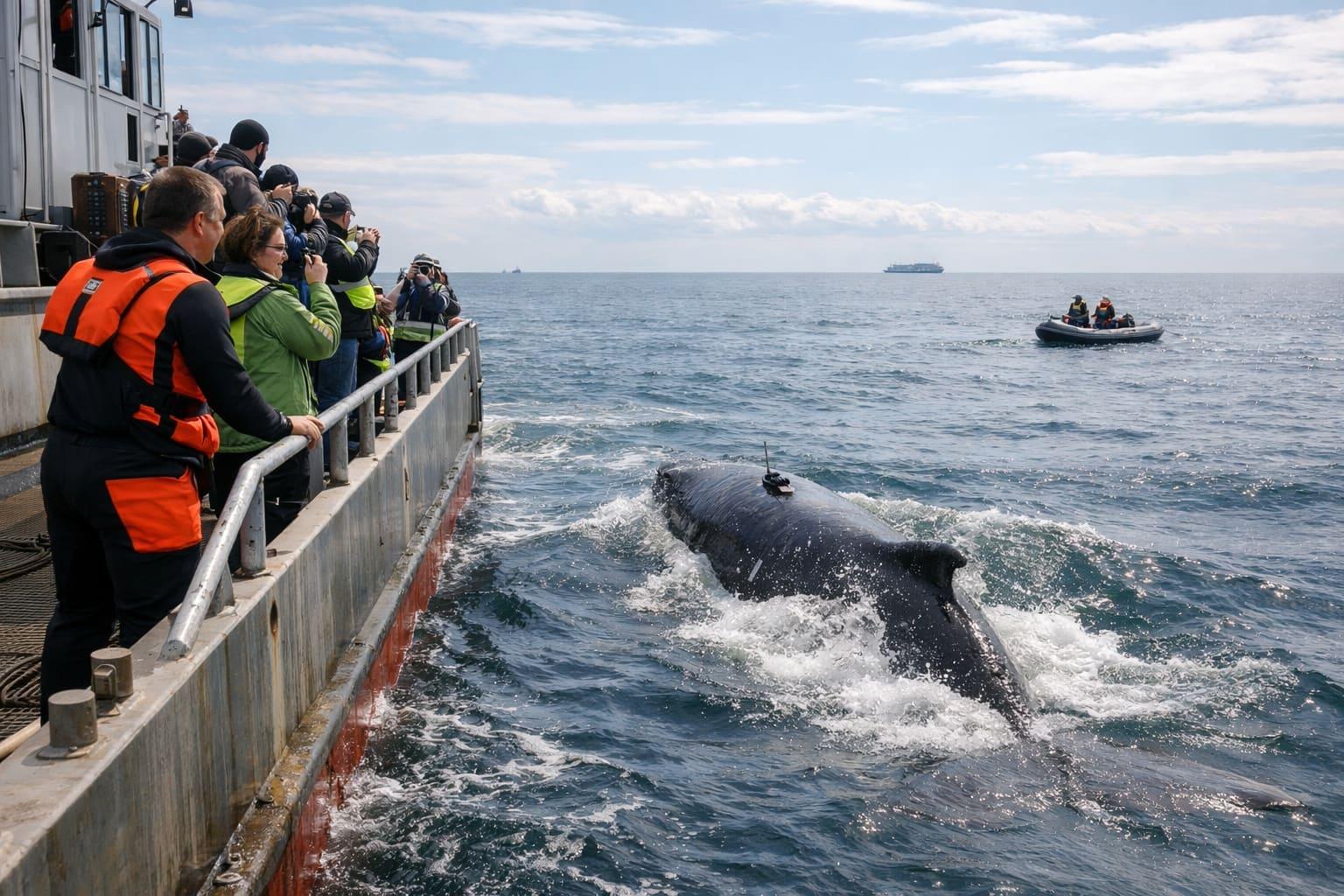
Timmy the humpback whale escapes to the North Sea
Timmy, a humpback whale calf that gained attention after being stranded near Germany, has been successfully released into the North Sea. The rescue operation involved transporting him in a water-filled barge, and he is now expected to swim towards the Arctic. This event highlights the challenges marine life faces and the efforts made to protect them.
The story
Timmy, a young humpback whale calf, became a focal point of public concern and media attention after he was repeatedly stranded in shallow waters along the German coast. His first sighting occurred on March 3, 2026, near the Baltic Sea, where he struggled to navigate the unfamiliar waters. Despite multiple rescue attempts, including the use of inflatable cushions and a pontoon to guide him back to deeper waters, Timmy's situation worsened. He developed a skin condition attributed to the low salinity of the Baltic Sea, which further compromised his health, leading to irregular breathing and periods of inactivity. As his condition deteriorated, experts from the International Whaling Commission expressed grave concerns, stating that each stranding diminished his chances of survival. The public's investment in Timmy's plight grew as news of his struggles spread, prompting a private initiative to rescue him, which was eventually sanctioned by the state of Mecklenburg-Western Pomerania. On April 29, 2026, a specialized rescue team transported Timmy in a water-filled barge to the North Sea, where he was released off the coast of Denmark. Observers reported that he swam away freely and appeared to be heading in the right direction, with hopes that he would make his way up the Norwegian coast toward the Arctic. A GPS transmitter was attached to Timmy before his release, allowing for future tracking of his movements and health. This operation not only marked a significant moment for Timmy but also highlighted the broader challenges faced by marine wildlife in navigating human-impacted environments.
Why it matters
Timmy's story underscores the urgent need for effective marine wildlife rescue operations and the critical role that public interest plays in conservation efforts. The plight of this young whale serves as a poignant reminder of the fragility of marine ecosystems and the profound impact of human activities, such as pollution and habitat destruction, on wildlife. The successful rescue and release of Timmy into the North Sea is a hopeful example of how collaborative efforts among private organizations, government agencies, and the public can lead to positive outcomes in wildlife conservation. It also emphasizes the importance of raising awareness about marine life and the challenges they face, encouraging more proactive measures to protect vulnerable species. As communities rally around such causes, it can lead to increased funding and support for conservation initiatives, ultimately benefiting marine biodiversity.
Evidence and context
Timmy's story is emblematic of the broader challenges faced by marine wildlife in the context of climate change, pollution, and habitat loss. As human activities continue to exert pressure on ocean ecosystems, the need for effective conservation strategies becomes increasingly urgent. The public's engagement in Timmy's rescue reflects a growing awareness of these issues and the importance of protecting marine biodiversity. This incident may inspire further initiatives aimed at safeguarding marine life, as it highlights the interconnectedness of human actions and the health of ocean ecosystems. The plight of Timmy also serves as a call to action for policymakers and conservationists to prioritize marine protection efforts, ensuring that vulnerable species receive the attention and resources they need to thrive. As the effects of climate change become more pronounced, the urgency for sustainable practices and habitat preservation will only intensify. Timmy's journey may serve as a catalyst for increased advocacy and funding for marine conservation, ultimately contributing to the resilience of ocean ecosystems.
Limits and unknowns
Historically, humpback whales have faced numerous threats, including extensive hunting and habitat degradation due to human activities. Conservation efforts have evolved significantly over the years, with increased awareness of the importance of protecting marine ecosystems and the species that inhabit them. The International Whaling Commission, established in 1946, has played a crucial role in regulating whaling practices and promoting the recovery of whale populations. The case of Timmy illustrates the ongoing challenges marine species encounter, particularly when they find themselves in non-native environments, such as the Baltic Sea. This incident highlights the need for continued advocacy and rescue efforts, as well as the importance of public engagement in conservation initiatives. As marine ecosystems face unprecedented threats, the story of Timmy serves as a reminder of the resilience of wildlife and the collective responsibility to protect it.
What happens next
In the coming weeks, observers will be closely monitoring Timmy's movements via the GPS transmitter attached during his release. This tracking will provide valuable data on his journey and behavior in the North Sea, offering insights into how he adapts to his natural habitat after his ordeal. Additionally, the public's response to Timmy's story may influence future marine conservation initiatives and policies aimed at protecting vulnerable species. Stakeholders in marine conservation will likely analyze the outcomes of this rescue operation to inform best practices for future interventions. As Timmy's story unfolds, it may inspire further community engagement and support for marine wildlife protection efforts, emphasizing the importance of collective action in addressing environmental challenges.
Follow the story
Share it, watch the explainer, or continue with the reporting trail.
Story timeline
Timmy's first sighting
Timmy was first spotted near Germany's Baltic Sea coast.
Rescue operation launched
A rescue team transported Timmy in a water-filled barge for release.
Timmy released into North Sea
Timmy was successfully released into the North Sea, with hopes for his recovery.
Further reading on this topic
3 links
International Whaling Commission
Official website of the International Whaling Commission, providing information on marine mammal conservation efforts.
Marine Conservation Society
UK-based charity dedicated to marine conservation, offering resources on protecting marine life.
National Oceanic and Atmospheric Administration (NOAA) Fisheries
U.S. government agency providing information on marine species and conservation efforts.
Timmy the humpback whale escapes to the North Sea
A short visual explainer for readers who want the story in a different rhythm.