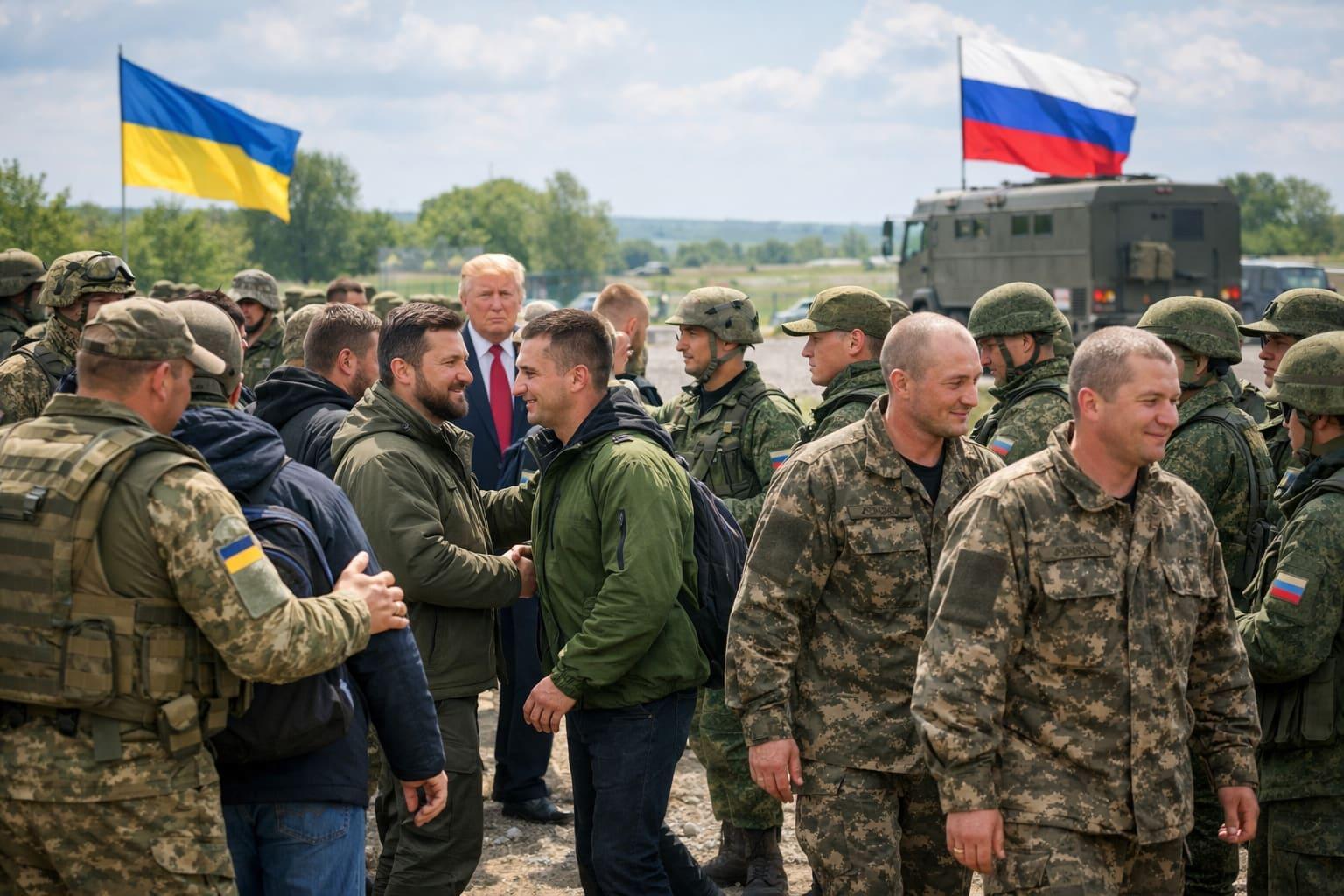
Russia and Ukraine Confirm Three-Day Ceasefire from 9 May
Russia and Ukraine have agreed to a three-day ceasefire starting on May 9, confirmed by both sides. The ceasefire will include a prisoner swap of 1,000 individuals from each country, as announced by U.S. President Donald Trump. This development marks a significant moment in the ongoing conflict, with hopes for a more lasting peace emerging from this temporary truce.
The story
On May 8, 2026, U.S. President Donald Trump announced a significant development in the ongoing conflict between Russia and Ukraine: a three-day ceasefire set to take effect from May 9 to May 11. This announcement was made via social media, where Trump stated that the ceasefire would involve a suspension of all "kinetic activity" and a prisoner exchange of 1,000 individuals from each country. Both Russian and Ukrainian leaders confirmed the ceasefire and the details of the prisoner swap, marking a notable diplomatic breakthrough amid ongoing hostilities. Ukrainian President Volodymyr Zelenskyy expressed gratitude for the U.S. involvement in facilitating this agreement, emphasizing the humanitarian aspect of the prisoner exchange. He stated on Telegram, "We received Russia’s agreement to conduct a prisoner exchange in the format of 1,000 for 1,000. A ceasefire regime must also be established on May 9, 10, and 11." This announcement came after Russia had previously declared a two-day unilateral ceasefire to commemorate its Victory Day on May 9, a significant national holiday in Russia. Zelenskyy had previously criticized Moscow for ignoring Ukraine's earlier proposals for a ceasefire, framing the situation as a test of the Kremlin's sincerity regarding peace talks. The Kremlin's foreign policy adviser, Yuri Ushakov, confirmed Russia's acceptance of the ceasefire and the prisoner swap, indicating a shift in the previously rigid stances of both nations. The ceasefire is particularly poignant given the backdrop of escalating violence and the humanitarian crisis that has unfolded over the years, with both sides accusing each other of violating previous ceasefires. The announcement has raised hopes for a more lasting peace, as Trump remarked, "Hopefully, it is the beginning of the end of a very long, deadly, and hard fought War."
Why it matters
The ceasefire is significant not only as a temporary halt to violence but also as a crucial step towards addressing the humanitarian crisis that has arisen from the prolonged conflict. With millions displaced and countless lives lost, the agreement to exchange prisoners highlights the urgent need for compassion and resolution in a war that has caused immense suffering. This development could pave the way for more extensive negotiations and a potential resolution to the conflict, which has destabilized the region and drawn international concern. The involvement of the United States in mediating this ceasefire underscores the importance of international diplomacy in resolving conflicts, particularly in a situation as complex and fraught as the Russia-Ukraine war. The hope is that this ceasefire could serve as a foundation for future discussions aimed at achieving a more permanent peace, ultimately benefiting not just the two nations involved but also the broader international community that has been affected by the fallout of this conflict.
Evidence and context
The ceasefire comes at a time when the international community is increasingly concerned about the humanitarian crisis resulting from the prolonged conflict. With millions displaced and countless lives lost, any step towards peace is crucial. The involvement of the U.S. in mediating this ceasefire highlights the importance of international diplomacy in resolving conflicts. Observers are hopeful that this temporary truce could lead to a more stable and peaceful future for both nations, as well as for the broader region. The ongoing war has not only affected Ukraine and Russia but has also had significant geopolitical implications, drawing in various international actors and affecting global security dynamics. The potential for a lasting peace agreement could reshape relationships in Eastern Europe and beyond, influencing how nations approach conflict resolution in the future. Furthermore, the ceasefire may provide an opportunity for humanitarian aid to reach those in need, alleviating some of the suffering caused by the war. As the world watches closely, the success or failure of this ceasefire could set a precedent for future diplomatic efforts in similar conflicts around the globe.
Limits and unknowns
The conflict between Russia and Ukraine has been ongoing since 2014, following Russia's annexation of Crimea, which was widely condemned by the international community. Over the years, numerous ceasefires have been attempted, but many have failed to hold, leading to continued violence and suffering. The recent announcement of a ceasefire is a notable moment in this long-standing conflict, reflecting changing dynamics and the potential for renewed diplomatic efforts. The war has resulted in thousands of deaths and has displaced millions, creating a humanitarian crisis that has drawn attention from global leaders and organizations. The ceasefire, while temporary, represents a critical juncture in the conflict, as it may open the door for more meaningful negotiations and a path towards a sustainable resolution. The historical context of this conflict underscores the complexities involved, as deep-seated grievances and geopolitical interests continue to shape the actions of both nations.
What happens next
As the ceasefire takes effect, it will be important to monitor compliance from both sides and the humanitarian impact of the agreement. Observers should pay close attention to the prisoner exchange process, as it will serve as a litmus test for the sincerity of both parties in adhering to the ceasefire. Additionally, the international community's response to the ceasefire will be crucial, as it may influence future diplomatic initiatives. Any signs of escalation or violations of the ceasefire could undermine the fragile peace and lead to renewed hostilities. Furthermore, the reactions of key stakeholders, including NATO and the European Union, will be important to watch, as they may play a role in shaping the future of the conflict and the broader geopolitical landscape in Eastern Europe.
Follow the story
Share it, watch the explainer, or continue with the reporting trail.
Story timeline
Ceasefire Announcement
U.S. President Donald Trump announces a three-day ceasefire between Russia and Ukraine.
Prisoner Swap Agreement
Both sides agree to a prisoner exchange of 1,000 individuals each as part of the ceasefire.
Ceasefire Effective Date
The ceasefire officially begins, coinciding with Russia's Victory Day celebrations.
Further reading on this topic
3 links
Russia and Ukraine Confirm Three-Day Ceasefire from 9 May
A short visual explainer for readers who want the story in a different rhythm.