Rock Dust Enhances Soil Nutrition, Supporting Cacao Farmers and Rainforest Restoration
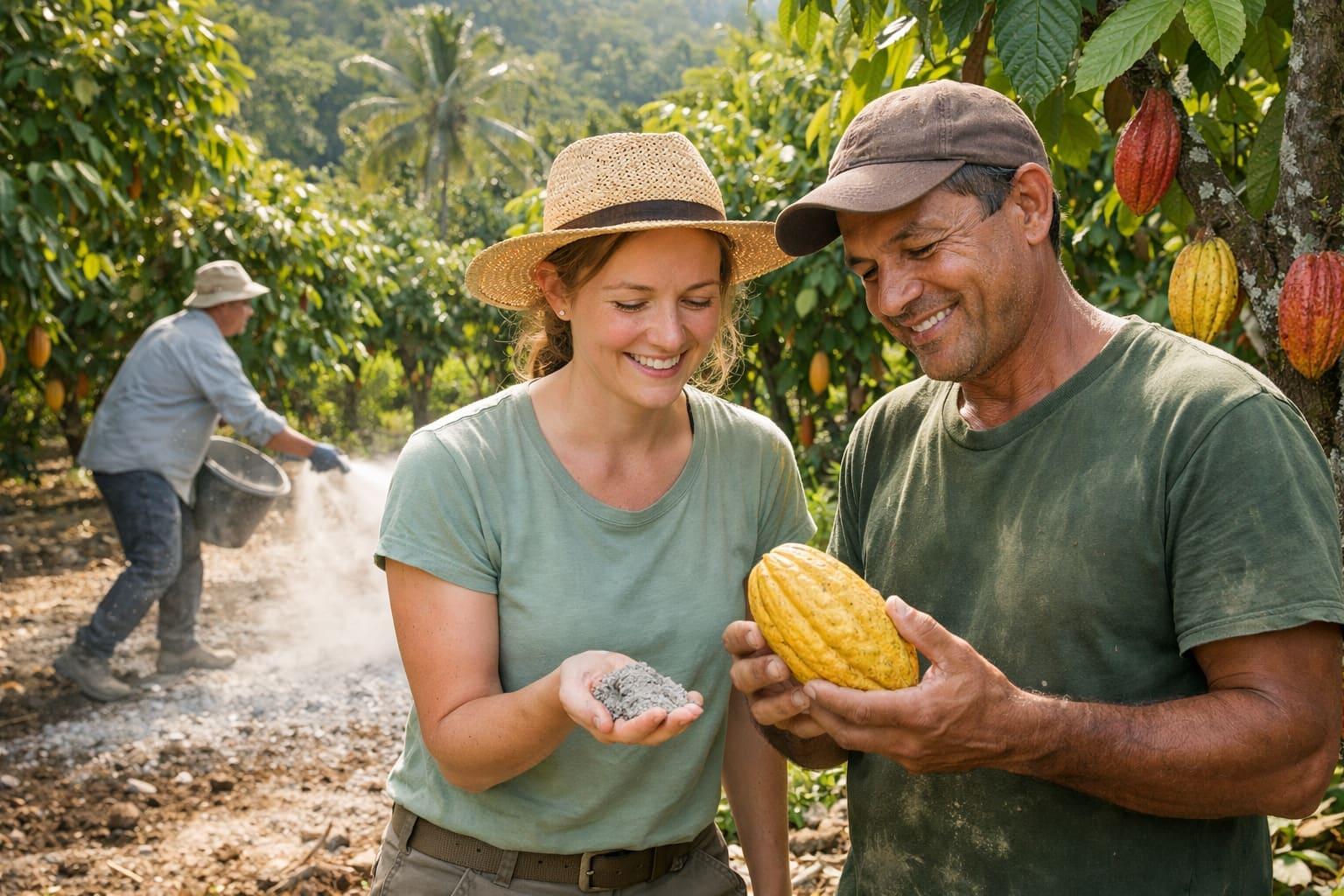
A study presented at the European Geosciences Union General Assembly reveals that applying rock dust to cacao farms in Brazil improves soil fertility and boosts yields. This method not only enhances nutrient availability but also sequesters atmospheric CO₂, potentially allowing smallholders to sell carbon credits. The findings suggest a sustainable approach to cacao farming that balances productivity with biodiversity conservation.
The story
Isabella Steeley, a doctoral student at the University of Sheffield, presented her findings on enhanced rock weathering at the European Geosciences Union General Assembly in May 2026. The study focused on two cacao farming systems in Brazil's Atlantic Rainforest, specifically examining how the application of rock dust can improve soil fertility and increase yields. The research highlights a critical issue: the average cacao yield currently stands at approximately 480 kilograms per hectare, but with the right interventions, it could potentially reach ten times that amount. The study involved applying andesitic basalt dust, a type of volcanic rock, to cacao farms. This dust works by neutralizing soil acidity, which is a significant barrier to nutrient uptake in tropical soils, and enhancing the availability of essential nutrients for the cacao trees. Early results from the first two years of a three-year study indicated that the commercial cacao farm experienced the most significant improvements in soil health. Interestingly, the research also suggested that traditional cabruca systems, which integrate cacao trees within native forest ecosystems, may capture more atmospheric CO₂ than commercial farms. This dual benefit of increased biodiversity and carbon sequestration presents a compelling case for the adoption of enhanced rock weathering in cacao farming. The study's findings are particularly relevant as they suggest that smallholder farmers, who typically manage farms smaller than 50 hectares, could benefit directly from improved yields and potentially engage in carbon credit markets. Steeley emphasized the collaborative nature of this research, noting that local farmers and agronomists have been integral to the study, expressing excitement about innovations that can help sustain their livelihoods while also contributing to environmental conservation.
Why it matters
This research is crucial as it addresses the pressing need for sustainable agricultural practices in the face of rising chocolate demand. The global appetite for chocolate has surged over the past four decades, leading to increased pressure on tropical forests as farmers clear land for cacao plantations. By improving soil health and increasing yields through the application of rock dust, farmers can enhance their livelihoods while also contributing to rainforest conservation efforts. The potential for carbon credit sales further incentivizes sustainable practices, making it a win-win for both the environment and local communities. This approach not only helps mitigate the environmental impacts of cacao farming but also supports the economic stability of smallholder farmers, who are often the most vulnerable to market fluctuations and climate change. As such, the findings from this study could serve as a model for other agricultural sectors facing similar challenges, highlighting the importance of integrating ecological health with agricultural productivity.
Evidence and context
The findings from this study contribute to a broader movement towards sustainable agriculture, particularly in regions facing deforestation pressures due to agricultural expansion. As global demand for chocolate continues to rise, innovative practices like enhanced rock weathering can help mitigate environmental impacts while supporting local economies. This approach aligns with global sustainability goals, emphasizing the importance of integrating ecological health with agricultural productivity. The potential for smallholder farmers to participate in carbon credit markets could reshape the economic landscape for cacao farmers, providing them with new revenue streams while incentivizing environmentally friendly practices. Furthermore, this research highlights the interconnectedness of agriculture, climate change, and biodiversity conservation, underscoring the need for holistic approaches to land management. As more studies emerge on the benefits of enhanced rock weathering and similar practices, they could pave the way for policy changes that support sustainable farming initiatives, ultimately contributing to the preservation of vital ecosystems and the livelihoods of those who depend on them.
Limits and unknowns
Historically, cacao farming has been linked to deforestation and biodiversity loss, particularly in tropical regions. As demand for chocolate surged over the past few decades, many farmers resorted to clearing forests to expand cacao plantations. This has led to significant ecological consequences, including habitat destruction and increased carbon emissions. The traditional methods of cacao farming often prioritize short-term yields over long-term sustainability, resulting in soil degradation and reduced productivity over time. In response to these challenges, there has been a growing recognition of the need for sustainable farming practices that can meet market demands without compromising environmental integrity. The introduction of enhanced rock weathering as a method to improve soil health and increase yields represents a promising development in this context, offering a potential solution to the dual challenges of food production and environmental conservation.
What happens next
As the study progresses, it will be important to monitor the long-term effects of rock dust application on soil health and cacao yields. Researchers will be looking closely at how these practices influence not only the immediate productivity of cacao farms but also their resilience to climate change and other environmental stressors. Additionally, the potential for smallholders to participate in carbon credit markets could reshape the economic landscape for cacao farmers, providing them with new opportunities for income generation. Observing how these practices are adopted across different farming systems will provide insights into their scalability and effectiveness. Stakeholders in the agricultural sector, including policymakers, environmental organizations, and farmers, will be keenly interested in the outcomes of this research, as it could inform future strategies for sustainable agriculture in tropical regions.
Follow the story
Share it, watch the explainer, or continue with the reporting trail.
Story timeline
Study Presentation
Isabella Steeley presents findings on enhanced rock weathering at the European Geosciences Union General Assembly.
Cacao Yield Research
Research indicates potential for significantly increased cacao yields through rock dust application.
Carbon Sequestration Potential
Study suggests cabruca systems may capture more CO₂ than commercial farms, enhancing biodiversity.
Further reading on this topic
2 links
Rock Dust Enhances Soil Nutrition, Supporting Cacao Farmers and Rainforest Restoration
A short visual explainer for readers who want the story in a different rhythm.