Myanmar Pardons Over 4,000 Prisoners, Including Deposed President
Myanmar has granted amnesty to over 4,000 prisoners, including former president Win Myint, as part of a traditional annual pardon. This decision follows the recent inauguration of coup leader Min Aung Hlaing as president. The move is seen as a significant step in the political landscape of Myanmar, particularly concerning the treatment of political prisoners.
The story
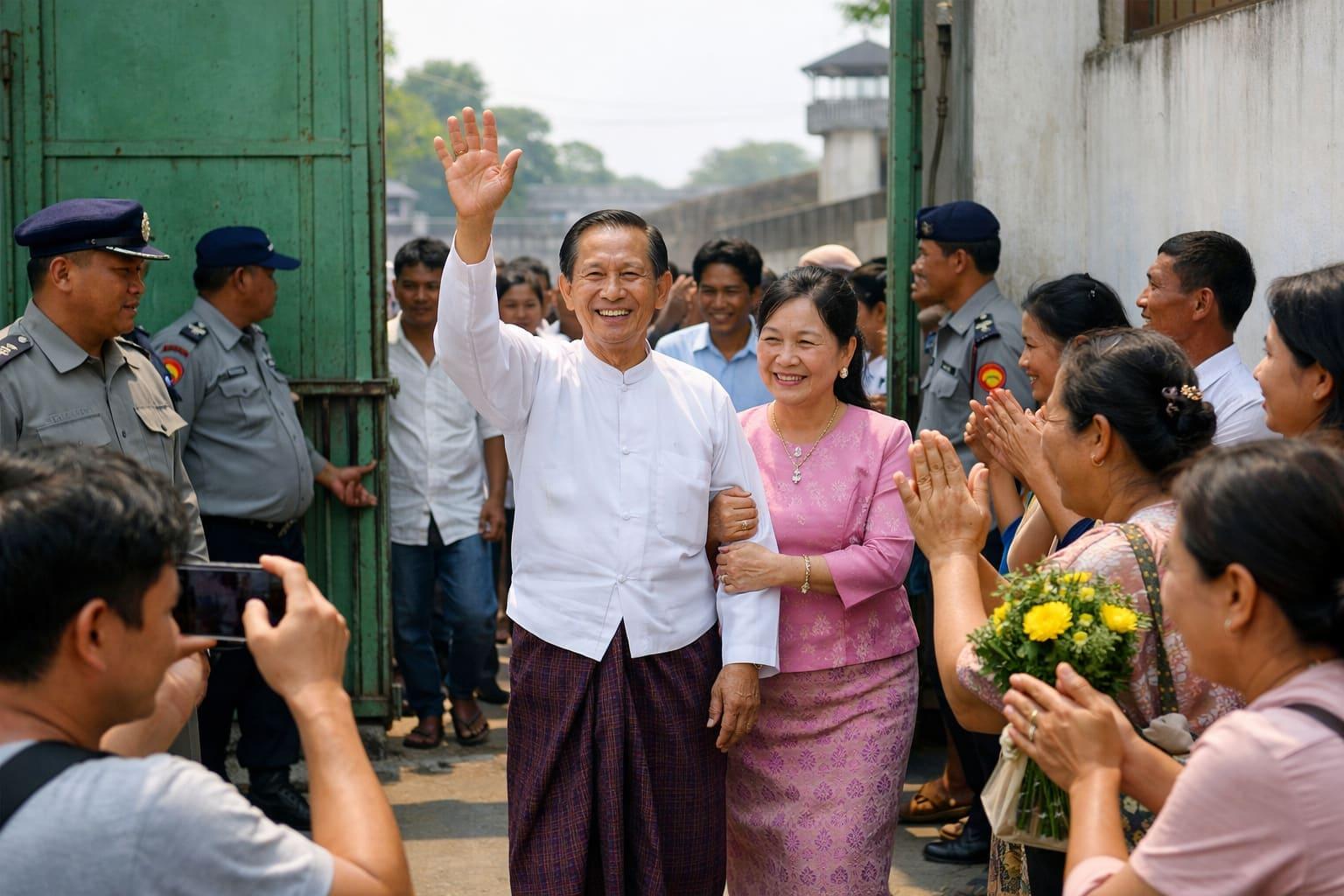
On April 17, 2026, Myanmar's newly inaugurated president, Min Aung Hlaing, announced a significant amnesty affecting 4,335 prisoners, including the release of former president Win Myint. This decision marks one of Hlaing's first official acts since he assumed the presidency earlier this month, following a military coup in February 2021 that ousted the democratically elected government. The amnesty aligns with traditional practices observed during Myanmar's New Year celebrations, a time when the government typically grants pardons. The state television MRTV reported that the amnesty includes the commutation of death sentences to life imprisonment and a one-sixth reduction in the sentences of other prisoners, including Aung San Suu Kyi, who is currently serving a 27-year sentence on charges widely regarded as politically motivated. Her lawyer confirmed the reduction of her sentence, although it remains unclear if she will be allowed to serve the remainder of her term under house arrest. The release of Win Myint, who has been detained since the coup, was also confirmed in a statement from Hlaing's office, which noted that he was granted a pardon under specified conditions. The amnesty also includes the deportation of 179 foreign nationals. Despite the scale of the pardon, concerns remain regarding the limited number of political prisoners released, as the Assistance Association for Political Prisoners estimates that over 30,000 individuals have been detained on political charges since the coup. Families of prisoners gathered outside Yangon’s Insein prison, expressing hope for their loved ones' release, but many remained skeptical given the historical context of previous amnesties, where only a small fraction of those released were political prisoners. The situation surrounding Aung San Suu Kyi remains particularly concerning, as she has not been seen in public since her trials concluded, and her health reportedly continues to decline, raising alarms among her supporters and family.
Why it matters
The mass pardon of over 4,000 prisoners in Myanmar is a pivotal moment in the country's ongoing political saga, particularly under the leadership of Min Aung Hlaing. This act of clemency could be interpreted as an attempt to soften the military's image both domestically and internationally, potentially easing tensions with the public and foreign governments. The release of high-profile figures like Win Myint and the reduction of Aung San Suu Kyi's sentence may signal a willingness to engage in dialogue and address some of the grievances stemming from the military's takeover. However, the limited scope of political prisoner releases raises significant concerns about the sincerity of these reforms. Many observers are wary that this amnesty is more of a strategic maneuver rather than a genuine commitment to democratic principles and human rights. The international community, including human rights organizations, will be closely monitoring the situation to assess whether this is a step towards meaningful change or merely a temporary gesture to placate dissent and criticism.
Evidence and context
The pardoning of prisoners in Myanmar is part of a broader context of political change following the military coup in February 2021, which has plunged the country into a state of turmoil and unrest. The military junta's actions have drawn widespread condemnation from both domestic and international actors, leading to sanctions and calls for accountability. The recent amnesty, while significant, must be viewed against the backdrop of ongoing human rights violations and the detention of over 30,000 political prisoners. The international community is watching closely, as these developments could influence Myanmar's path towards democracy and human rights. The military's narrative of returning to democracy, as articulated by Min Aung Hlaing during his inauguration, is met with skepticism given the regime's history of repression and violence against dissent. The situation remains precarious, with ongoing protests and resistance movements challenging the junta's authority. The true implications of these pardons will depend on the military's subsequent actions and whether they will engage in meaningful dialogue with opposition groups and civil society. The potential for reconciliation and reform exists, but it is contingent upon the military's willingness to genuinely address the political and social grievances that have fueled unrest since the coup.
What happens next
In the coming weeks, observers should closely monitor the reactions of political prisoners and their families, particularly those who were not included in the recent amnesty. The international community's response to these pardons will also be crucial, as it may influence future diplomatic relations with Myanmar. Additionally, any further announcements regarding political reforms or additional releases will be significant in assessing Myanmar's trajectory under the new leadership. The health and treatment of Aung San Suu Kyi will be particularly important to watch, as her status remains a focal point for both domestic and international stakeholders. The potential for further unrest or protests in response to the military's actions will also be a key indicator of the public's sentiment towards the junta and its policies.
Follow the story
Share it, watch the explainer, or continue with the reporting trail.
Story timeline
Amnesty Announced
Min Aung Hlaing announces the pardon of over 4,000 prisoners, including Win Myint.
Inauguration of Min Aung Hlaing
Min Aung Hlaing is sworn in as president of Myanmar.
Previous Political Detentions
Military coup leads to widespread detentions of political figures, including Aung San Suu Kyi.
Further reading on this topic
2 links
Myanmar Pardons Over 4,000 Prisoners, Including Deposed President
A short visual explainer for readers who want the story in a different rhythm.