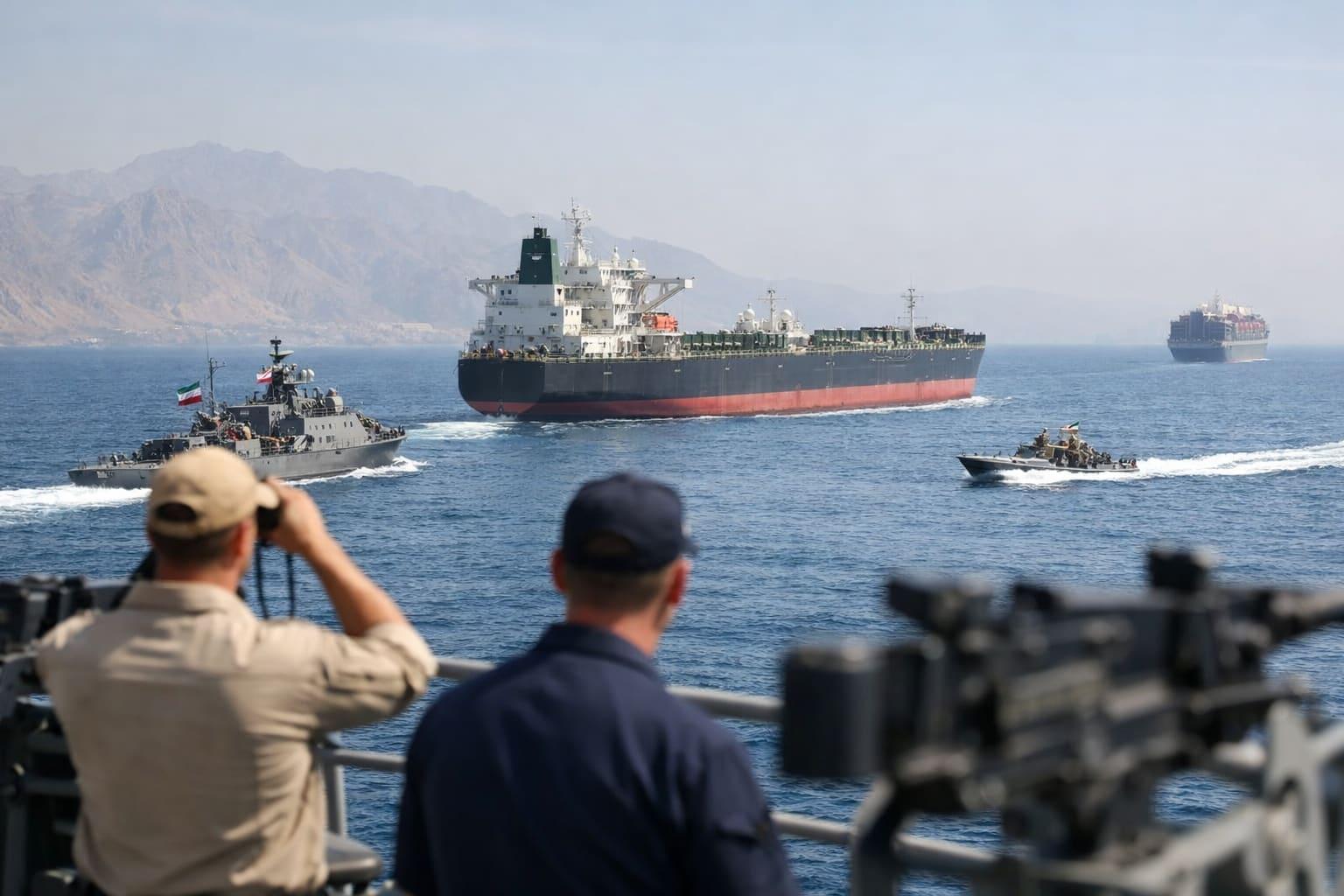
Global sigh of relief and mixed messages as US and Iran say Strait of Hormuz open
The US and Iran have announced that the Strait of Hormuz is open for maritime traffic, coinciding with a ceasefire in Lebanon. Iranian officials emphasized that passage is on a route coordinated by Tehran, leading to mixed interpretations of the announcement. This development is seen as a significant moment in regional diplomacy.
The story
On April 17, 2026, Iranian Foreign Minister Abbas Araghchi announced that the Strait of Hormuz was 'completely open' for maritime traffic during the ongoing ceasefire in Lebanon. This declaration was significant, as the Strait is a crucial maritime corridor through which approximately 20% of the world's oil supply passes. The announcement was quickly echoed by US President Donald Trump, who expressed gratitude for the news on his Truth Social platform, indicating a potential thaw in relations between the two nations. However, the Iranian statement included a caveat: passage through the Strait would occur on a 'coordinated route' set by Tehran. This stipulation suggests that while the Strait is open, Iran retains a degree of control over maritime navigation in the area, which has raised concerns among international observers. The mixed messages from both nations have led to a sense of relief tempered by skepticism. Analysts are closely monitoring the situation, as the Strait of Hormuz is a critical chokepoint for oil shipments, and any disruptions could have significant economic repercussions worldwide. The announcement coincides with a ceasefire in Lebanon, which has been a focal point of regional tensions. The ceasefire, brokered by international mediators, has provided a temporary respite from hostilities, but the underlying issues remain unresolved. The implications of this announcement extend beyond immediate economic concerns, as it reflects the complex interplay of diplomacy and military strategy in the region. As the world watches, the situation in the Strait of Hormuz remains fluid, with potential for both escalation and de-escalation depending on the actions of the involved parties.
Why it matters
The Strait of Hormuz is a vital maritime corridor for global oil trade, with approximately 20% of the world's oil passing through it. The announcement of its opening during a ceasefire could signal a shift towards de-escalation in a region often fraught with conflict. The Strait serves as a critical artery for oil shipments from the Persian Gulf to global markets, making its security paramount for energy-dependent economies. The potential for increased maritime traffic could alleviate some of the economic pressures faced by oil-importing nations, particularly in light of recent fluctuations in global oil prices. However, the conditions set by Iran for passage may complicate the situation, highlighting the delicate balance of power in the region. The Iranian emphasis on a 'coordinated route' suggests that while the Strait is open, Iran may still exert control over navigation, which could lead to tensions with other nations. This development is particularly important for countries that rely heavily on oil imports, as any disruptions in the Strait could have cascading effects on global energy markets and economic stability. The situation underscores the need for ongoing diplomatic engagement to ensure the security of this critical maritime route.
Evidence and context
The Strait of Hormuz is not only a critical passage for oil but also a focal point of geopolitical tensions involving multiple nations, including the US, Iran, and regional allies. The recent announcement reflects broader dynamics in Middle Eastern politics, where ceasefires and diplomatic overtures can quickly shift the balance of power. The Strait has historically been a flashpoint for conflict, with previous incidents involving military confrontations and threats to shipping lanes. The current ceasefire in Lebanon, which has been brokered by international mediators, adds another layer of complexity to the situation. As the world watches, the implications of this announcement could resonate beyond immediate economic concerns, influencing future diplomatic engagements and military posturing in the region. The situation underscores the importance of dialogue and cooperation in addressing longstanding conflicts. The potential for increased maritime traffic through the Strait could also lead to greater economic interdependence among nations reliant on oil trade, which may serve as a stabilizing factor in the region. However, the delicate balance of power remains precarious, and any missteps could quickly escalate tensions. The international community will be closely monitoring developments in the Strait of Hormuz, as the outcomes could have far-reaching consequences for global energy security and regional stability.
What happens next
Monitor developments regarding maritime traffic in the Strait of Hormuz and any subsequent statements from US and Iranian officials. Additionally, watch for reactions from global oil markets and other nations involved in Middle Eastern geopolitics, as these could signal shifts in diplomatic relations or military readiness. The response from international shipping companies and oil traders will also be crucial, as they assess the implications of Iran's conditions for passage. Furthermore, keep an eye on the broader geopolitical landscape, particularly any changes in military deployments or strategic alliances in the region, as these factors could influence the stability of the Strait and the surrounding areas.
Follow the story
Share it, watch the explainer, or continue with the reporting trail.
Story timeline
Iran announces Strait open
Iranian Foreign Minister declares the Strait of Hormuz open for maritime traffic.
Trump's response
US President Trump expresses gratitude for Iran's announcement on social media.
Ceasefire in Lebanon
The announcement coincides with a ceasefire in Lebanon, impacting regional dynamics.
Further reading on this topic
3 links
Global sigh of relief and mixed messages as US and Iran say Strait of Hormuz open
A short visual explainer for readers who want the story in a different rhythm.