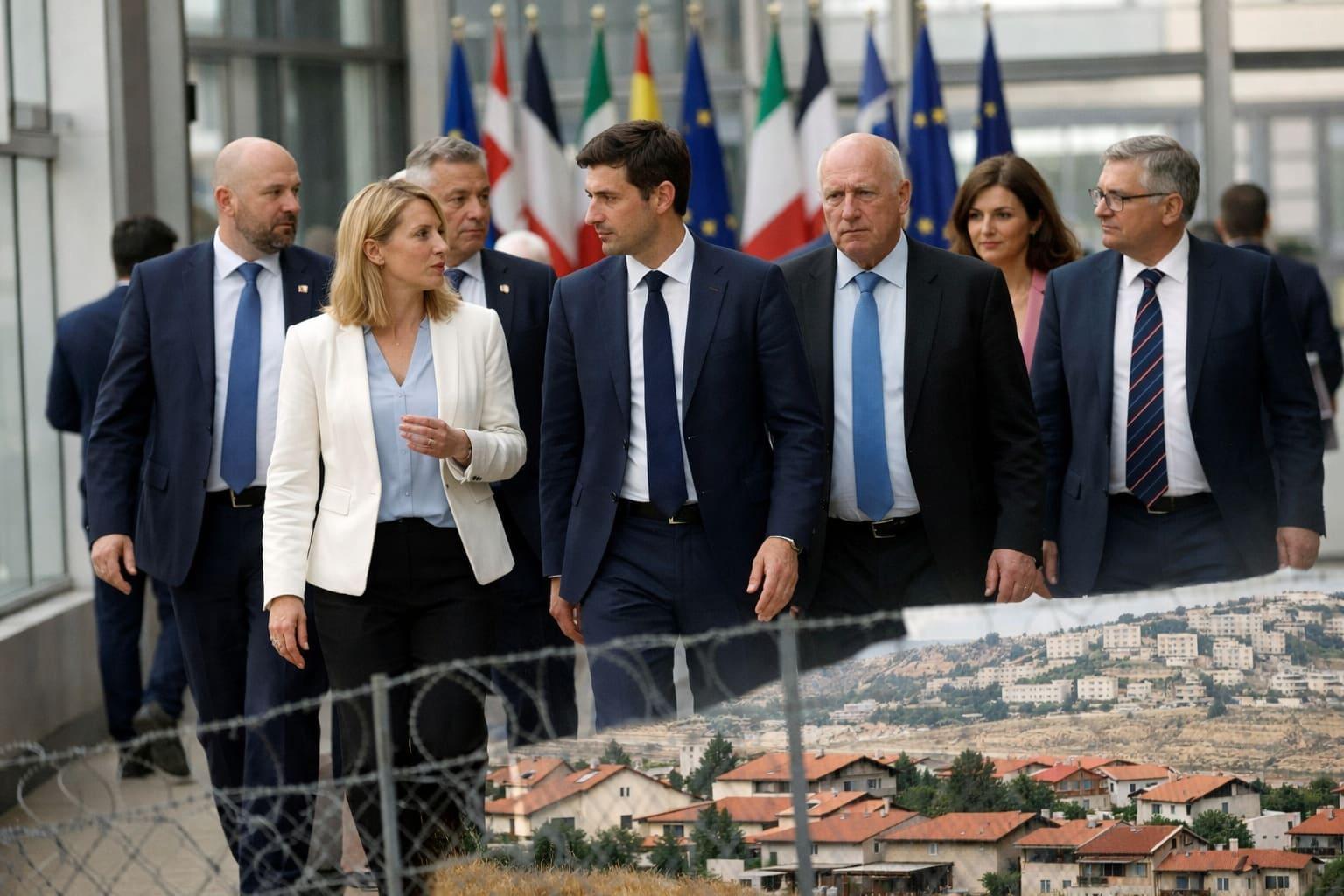
EU Greenlights Sanctions on Israeli West Bank Settlers
The European Union has approved sanctions targeting Israeli settlers in the occupied West Bank, following a rise in violence against Palestinians. This decision comes after Hungary's previous opposition was lifted with a change in government. The sanctions aim to address extremist actions and are part of a broader response to escalating tensions in the region.
The story
On May 11, 2026, the foreign ministers of the European Union convened and reached a significant decision to impose sanctions on Israeli settlers in the occupied West Bank. This move had been delayed for months due to opposition from Hungary's former government under Prime Minister Viktor Orban, who was recently ousted in a parliamentary election by Peter Magyar. The sanctions are a direct response to a troubling increase in violence against Palestinians, particularly following the October 7, 2025, terror attacks by Hamas, which resulted in the deaths of approximately 1,200 people in southern Israel. In 2026 alone, the United Nations Office for the Coordination of Humanitarian Affairs reported that at least 45 Palestinians, including 11 children, have been killed in the West Bank amid escalating tensions. EU foreign policy chief Kaja Kallas announced the sanctions on social media, emphasizing that "extremism and violence carry consequences." French Foreign Minister Jean-Noel Barrot echoed this sentiment, stating that the EU is targeting organizations and individuals responsible for supporting what he termed the "extremist and violent colonization" of the West Bank. The sanctions specifically target three settlers and four settler organizations, although their identities have not yet been disclosed. This is not the first time the EU has taken such measures; a previous sanctions package in 2024 included asset freezes and travel bans on individuals and entities linked to violence against Palestinians. Some EU member states, including Sweden, have called for even stricter measures, such as tariffs on products from Israeli settlements. The sanctions are set to enter into force following the completion of the EU's legislative procedures, marking a pivotal moment in the bloc's approach to the Israeli-Palestinian conflict.
Why it matters
The EU's decision to sanction Israeli settlers is a critical step in addressing ongoing human rights violations and promoting accountability in the Israeli-Palestinian conflict. By taking a firm stance against violence and extremism, the EU aims to uphold international law and support the rights of Palestinians who have faced increasing aggression in the West Bank. This move also signals a shift in the EU's foreign policy, reflecting a growing consensus among member states about the need for action in response to the deteriorating situation on the ground. The sanctions may influence international perceptions of the EU's role in Middle Eastern diplomacy, potentially encouraging other nations to adopt similar measures or to engage more actively in peace negotiations. Furthermore, the EU's actions could serve as a catalyst for broader discussions about the future of the Israeli-Palestinian conflict and the necessity of a comprehensive approach to achieving lasting peace in the region.
Evidence and context
The EU's decision to impose sanctions on Israeli settlers is part of a broader international effort to address the complexities of the Israeli-Palestinian conflict, which has persisted for decades. The sanctions come at a time when violence in the region is escalating, particularly following the recent Hamas attacks and the subsequent rise in settler violence against Palestinians. This situation has drawn widespread condemnation from various international bodies and human rights organizations, which have called for accountability and a cessation of hostilities. The EU's actions may influence other countries' policies, particularly those of the United States and neighboring Arab nations, as they navigate their own responses to the conflict. The sanctions could also spark internal debates within the EU regarding the effectiveness of such measures and the need for a more comprehensive approach to peace in the region. As the EU grapples with its role in Middle Eastern diplomacy, the challenge remains to balance political interests with humanitarian concerns, particularly in light of the ongoing suffering of Palestinian civilians. The sanctions against settlers may serve as a litmus test for the EU's commitment to human rights and its ability to influence positive change in a deeply entrenched conflict.
Limits and unknowns
The Israeli-Palestinian conflict has a long and intricate history, rooted in territorial disputes, national identities, and a series of violent confrontations. The expansion of Israeli settlements in the West Bank has been a particularly contentious issue, often exacerbating tensions between Israelis and Palestinians. Since the 1967 Six-Day War, when Israel occupied the West Bank, the settlement enterprise has grown significantly, leading to widespread international criticism and calls for a halt to such activities. The European Union has historically sought to mediate in the conflict, advocating for a two-state solution that would allow both Israelis and Palestinians to coexist peacefully. However, achieving consensus among EU member states on how to effectively address the situation has proven challenging, particularly in light of differing national interests and political pressures. The recent decision to sanction Israeli settlers marks a notable moment in the EU's ongoing efforts to respond to the humanitarian crisis in the region and to hold accountable those who perpetrate violence against Palestinians.
What happens next
As the EU prepares to implement these sanctions, it will be crucial to monitor the reactions from both Israeli officials and Palestinian representatives. Israeli Foreign Minister Gideon Saar has already condemned the sanctions as arbitrary and politically motivated, suggesting that the Israeli government may take steps to counteract the EU's actions. Additionally, the response from other international actors, including the United States and neighboring Arab countries, will be pivotal in shaping the future dynamics of the Israeli-Palestinian conflict. Observers should also keep an eye on potential changes in EU policy regarding broader measures against Israel, including discussions about trade restrictions or economic sanctions aimed at Israeli settlements. The effectiveness of the sanctions in curbing violence and promoting accountability will be closely scrutinized, as will the EU's ability to maintain a unified front among its member states in addressing this complex and sensitive issue.
Follow the story
Share it, watch the explainer, or continue with the reporting trail.
Story timeline
EU Sanctions Approved
EU foreign ministers agree to impose sanctions on Israeli settlers in the West Bank.
Hungary's Political Change
Hungary's new government allows the EU to move forward with previously blocked sanctions.
Surge in Violence
Reports of increased violence against Palestinians in the West Bank prompt international concern.
Further reading on this topic
2 links
EU Greenlights Sanctions on Israeli West Bank Settlers
A short visual explainer for readers who want the story in a different rhythm.