ASEAN Leaders Adopt Measures to Ease Economic Pain Caused by Iran War
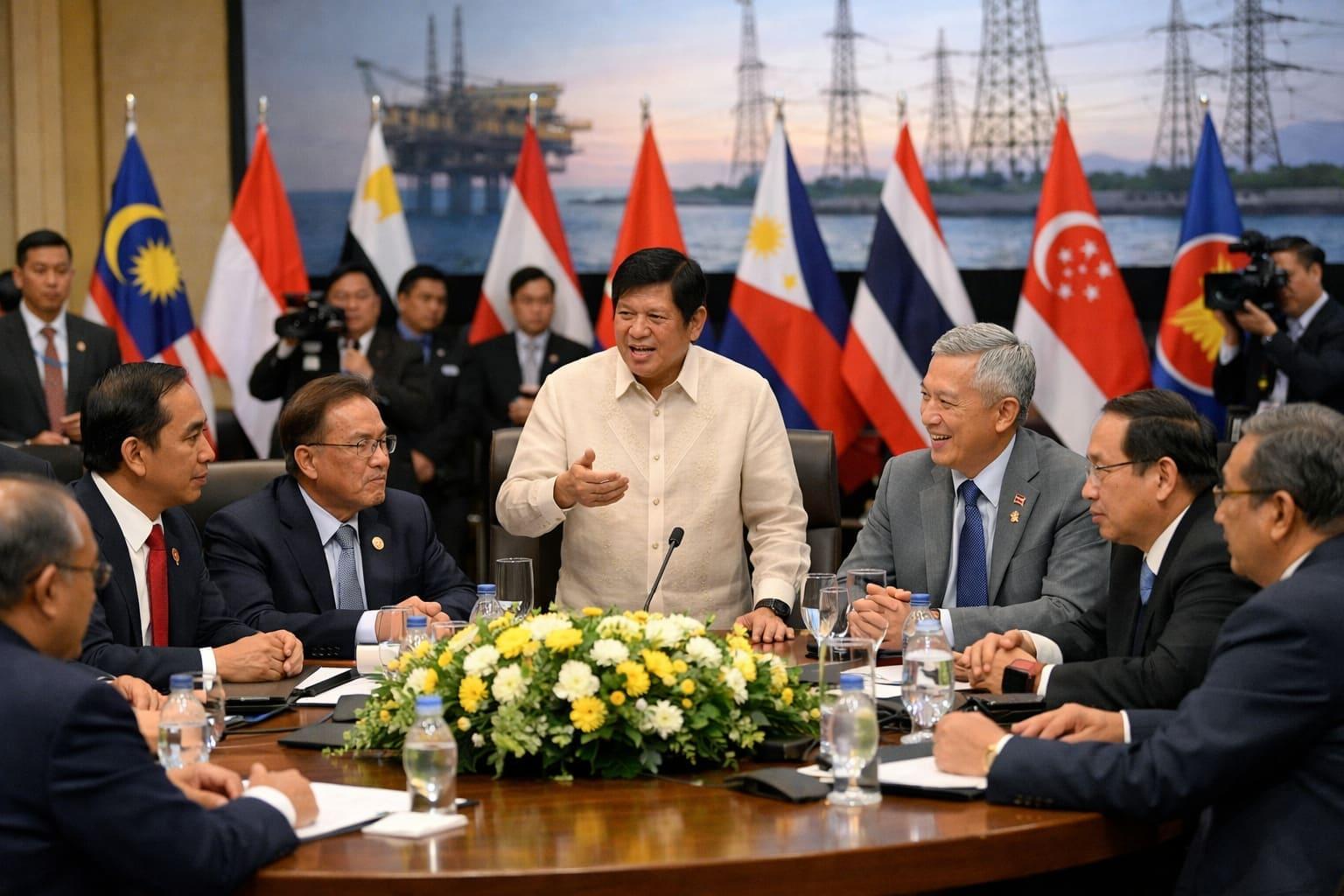
ASEAN leaders have agreed on measures to mitigate the economic impact of the Iran war during a summit in the Philippines. Key initiatives include a regional fuel-sharing framework and the development of a power grid to reduce dependence on Middle Eastern energy imports. While these measures aim to address immediate concerns, their implementation will take time and require further clarification.
The story
During the 48th ASEAN summit held in Cebu, Philippines, from May 5 to May 8, 2026, leaders from Southeast Asia convened to address the economic fallout from the ongoing Iran war, which has led to significant disruptions in global oil supplies. The closure of the Strait of Hormuz, a critical maritime route for oil transport, has exacerbated the energy crisis, prompting ASEAN to adopt a regional fuel-sharing framework aimed at alleviating the economic strain on member countries. This initiative is particularly crucial as ASEAN currently imports over half of its crude oil and 17 percent of its natural gas from the Middle East, according to the bloc’s Centre for Energy. Philippine President Ferdinand Marcos Jr., who chaired the summit, welcomed the agreement but acknowledged the need for further clarification on the operational details of the fuel-sharing program. He raised pertinent questions regarding the logistics of sharing resources, such as how countries would be prioritized during a crisis and the financial arrangements involved. In addition to the fuel-sharing framework, ASEAN leaders also agreed to develop a regional power grid and establish a fuel stockpile to reduce their dependence on energy imports from the Middle East. Marcos warned that the economic repercussions of the Iran war would persist for the foreseeable future, stating, "A few weeks worth of disruptions will take years to be corrected." The summit emphasized unity among ASEAN countries, with a commitment to coordinate responses while safeguarding national interests. This collaborative approach is seen as essential for navigating the ongoing challenges posed by the Iran war and other geopolitical tensions.
Why it matters
The measures adopted by ASEAN leaders are vital for ensuring economic resilience in the face of external shocks, particularly from geopolitical conflicts like the Iran war. By fostering collaboration and reducing dependency on volatile energy sources, ASEAN nations can better navigate future crises. The region's heavy reliance on energy imports has historically made it vulnerable to fluctuations in global markets and geopolitical tensions, particularly in the Middle East. The proactive stance taken by ASEAN not only addresses immediate economic concerns but also lays the groundwork for long-term stability and cooperation in the region. This initiative reflects a growing recognition among member states of the need to work together to mitigate risks and enhance collective security. As ASEAN countries implement these measures, they will be better positioned to respond to future disruptions, ensuring that their economies remain robust and resilient in an increasingly uncertain global landscape.
Evidence and context
The initiatives taken by ASEAN leaders reflect a broader trend of regional cooperation in response to global challenges. As geopolitical tensions rise and energy markets become increasingly volatile, Southeast Asian nations are recognizing the importance of unity and collaboration. The ongoing Iran war serves as a catalyst for renewed efforts to enhance energy security and economic stability within the ASEAN framework. By developing shared resources and strategies, ASEAN countries can enhance their collective bargaining power and reduce reliance on external energy sources. This shift not only addresses immediate economic concerns but also positions ASEAN as a more cohesive and resilient bloc in the face of future crises. The region's ability to adapt to changing global dynamics will be crucial in maintaining economic stability and fostering sustainable development. Furthermore, the ASEAN response to the Iran war may set a precedent for how the bloc addresses future geopolitical conflicts, emphasizing the need for a coordinated approach to regional security and economic resilience. As ASEAN continues to navigate these challenges, its actions will likely influence the broader geopolitical landscape in Asia and beyond, highlighting the interconnectedness of regional stability and global economic health.
Limits and unknowns
Historically, ASEAN has faced various economic challenges, often exacerbated by external conflicts and market fluctuations. The region's heavy reliance on energy imports has made it vulnerable to geopolitical tensions, particularly in the Middle East. Past initiatives aimed at fostering regional cooperation have laid the groundwork for the current measures, highlighting the importance of collective action in addressing shared challenges. The ongoing Iran war serves as a catalyst for renewed efforts to enhance energy security and economic stability within the ASEAN framework. Previous crises, such as the Asian Financial Crisis in the late 1990s, demonstrated the need for stronger regional ties and collaborative strategies to mitigate economic shocks. The current situation underscores the lessons learned from history, as ASEAN countries strive to build a more resilient economic structure that can withstand external pressures and ensure long-term prosperity for their populations.
What happens next
In the coming months, it will be crucial to monitor the implementation of the fuel-sharing framework and the development of the regional power grid. Observers should pay attention to how ASEAN countries prioritize energy distribution during crises and the effectiveness of these measures in stabilizing their economies. Additionally, the response of ASEAN nations to future geopolitical developments will be indicative of their commitment to regional cooperation and resilience. Key indicators to watch include the establishment of operational protocols for the fuel-sharing initiative, the timeline for the regional power grid's completion, and any shifts in energy import patterns as member states seek to diversify their sources. Furthermore, the political dynamics within ASEAN, particularly in relation to major powers like the United States and China, will play a significant role in shaping the bloc's future strategies and responses to global challenges.
Follow the story
Share it, watch the explainer, or continue with the reporting trail.
Story timeline
ASEAN Summit
ASEAN leaders convene in Cebu, Philippines to discuss economic measures in response to the Iran war.
Closure of the Strait of Hormuz
The strategic waterway's closure triggers a global energy crisis impacting ASEAN economies.
Philippines Declares National Emergency
The Philippines becomes the first country to declare a national emergency over dwindling energy stockpiles.
Further reading on this topic
3 links
ASEAN Centre for Energy
Details ASEAN's reliance on Middle Eastern oil and gas, highlighting the need for regional energy security measures.
ASEAN Centre for Energy
Analyzes ASEAN's energy supply chain disruptions due to Middle East conflicts and suggests mitigation pathways.
ASEAN Power Grid Financing Initiative
Outlines the ASEAN Power Grid initiative aimed at enhancing regional energy interconnection and security.
ASEAN Leaders Adopt Measures to Ease Economic Pain Caused by Iran War
A short visual explainer for readers who want the story in a different rhythm.