Advanced mirror technology now powers a breakthrough X-ray telescope
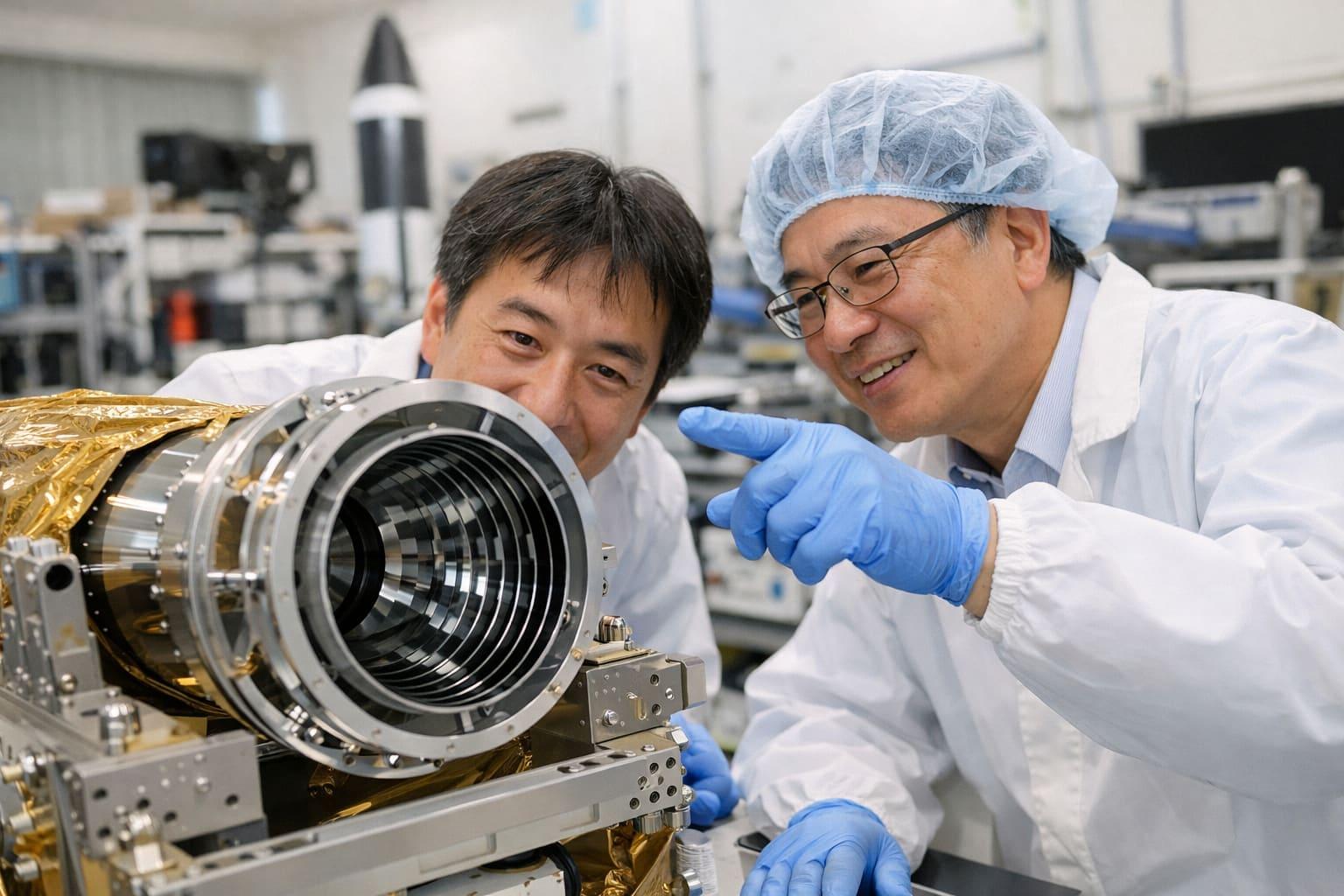
Scientists in Japan have developed a high-resolution X-ray telescope capable of distinguishing objects just 3.5 mm wide from one kilometer away. This achievement combines precision mirror-making technology with space astronomy, validated through ground-based testing before its launch on the FOXSI sounding rocket mission. The findings mark a significant milestone for Japanese X-ray astronomy and set the stage for future high-resolution observations from smaller satellites.
At a glance
Location and topic
Region
Japan
Tag cluster
Trend count
+11 related briefs
What happened
Scientists in Japan have developed a high-resolution X-ray telescope capable of distinguishing objects just 3.5 mm wide from one kilometer away. This achievement combines precision mirror-making technology with space astronomy, validated through ground-based testing before its launch on the FOXSI sounding rocket mission. The findings mark a significant milestone for Japanese X-ray astronomy and set the stage for future high-resolution observations from smaller satellites.
Why this matters
The new telescope's capabilities could revolutionize X-ray astronomy, allowing for unprecedented observations of cosmic events. Its design also opens avenues for miniaturization, potentially enabling CubeSats to conduct high-resolution X-ray observations in the future. This could democratize access to space research and enhance our understanding of the universe.
What changed
This moment is crucial as it aligns with ongoing advancements in space technology and the upcoming FOXSI-5 mission, which aims to further explore solar phenomena.
Bigger picture
The new telescope's capabilities could revolutionize X-ray astronomy, allowing for unprecedented observations of cosmic events. Its design also opens avenues for miniaturization, potentially enabling CubeSats to conduct high-resolution X-ray observations in the future. This could democratize access to space research and enhance our understanding of the universe.
Looking Towards the Future
This moment is crucial as it aligns with ongoing advancements in space technology and the upcoming FOXSI-5 mission, which aims to further explore solar phenomena.
Context zone
Japan
Context zone
Japan
On this map
Advanced mirror technology now powers a breakthrough X-ray telescope
Japan
Scientists identify kinesin-2 motor assemblies that selectively transport proteins to specific regions within neurons
Japan
A recent study has revealed that kinesin-2 motor proteins form distinct assemblies that play a crucial role in the selective transport of proteins within neurons. This research highlights how a specific KIF3B/B/KAP3 complex is responsible for transporting the TRIM46 protein to the axon initial segment, essential for neuronal function. The findings provide insights into the mechanisms of intracellular transport, which is vital for maintaining neuronal health and function.
Unraveling the complexities of the Borna disease virus 1
Japan
Researchers from Kyoto University and others have made significant strides in understanding the Borna disease virus 1 (BoDV-1) by revealing the detailed structure of its nucleoprotein-RNA complex. This study, published in Science Advances, provides insights into the virus's assembly and RNA binding mechanisms, which are crucial for developing antiviral strategies. The findings highlight the unique binding mode of nucleoprotein subunits and pave the way for future research on Bornaviridae and related viruses.